

The Best Addition To A Classic Italian Sub Isn't An Ingredient At All
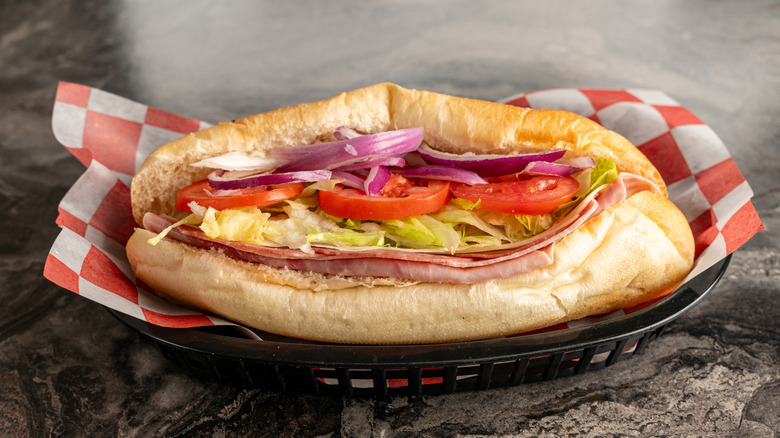
If I were to talk to you about the perfect Italian sub, your mind would immediately go to the ingredients, right? Cured meats, provolone, tomatoes, shredded lettuce, and some good quality bread. But according to Helen Rosner, restaurant critic at The New Yorker, there is another unexpected element that separates a good sub from a great one. And it isn't a topping, or a dressing, or even a vegetable: air.
Yes, air. When Rosner picked up a sandwich from the Parisi Bakery and sat down to enjoy it on an Instagram Reel, it amassed 1.6 million views, not because of the sandwich itself but because of the argument she made as she ate it. "The single most important ingredient in 99 percent of sandwiches is air," Rosner said. It sounds farfetched at first, but once you start thinking about how a good sandwich is constructed, it makes more sense.
The best subs are never tightly packed and dense, the way a panini would be. Instead, there are usually small pockets of empty space throughout the sandwich to give it a light texture. What deli meats actually go on an Italian sub is the subject of some debate. But regardless of which cold cuts make the cut, when they are layered thinly and loosely in folds, they naturally trap air, making the sandwich feel airy and pillowy. This allows the flavors to develop slowly in your mouth instead of hitting all at once.
How sandwich makers build air into a sub
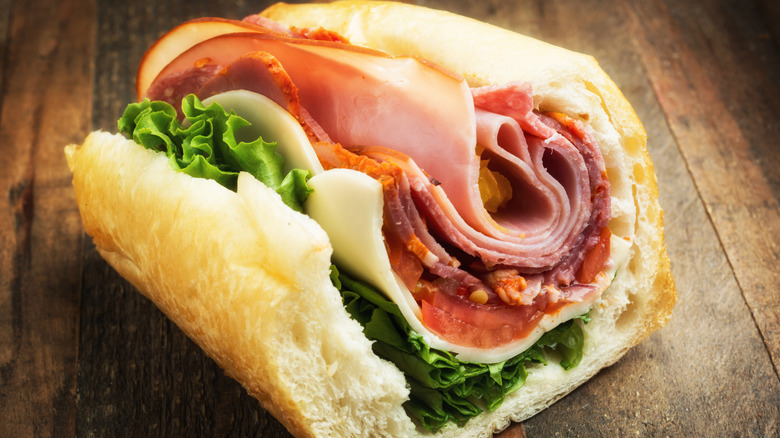
As someone who ran a sandwich shop for four years, I noticed a similar principle when testing recipes myself. The best sub-style sandwiches always have some space in them, because this actually improves the mouthfeel.
To use this method in your own sandwich making, try layering thin slices of meat down with folds and bends instead of stacking them totally flat against one another, as that just creates one big slab. It works regardless of what type of deli meat you use on your Italian sub, be it salami, mortadella, capicola, ham, or a vegetarian substitute. I even found that by having pockets of air throughout the sandwich, dressings and spreads almost squeeze into the cracks, instead of just dripping out of the sides.
The best bread for an Italian sandwich will be light and airy, full or crags and pockets of air. Finally, shredded lettuce and thinly sliced vegetables do the final job in creating loose texture between the bread and the other layers of the sandwich. Too often sandwich architecture is overlooked as we focus on the flavors, but how you stack a sandwich is actually just as important as what you stack it with.