

Why Aldi Shoppers Are Upset Over Misleading 'Shrinkflation' Serving Sizes
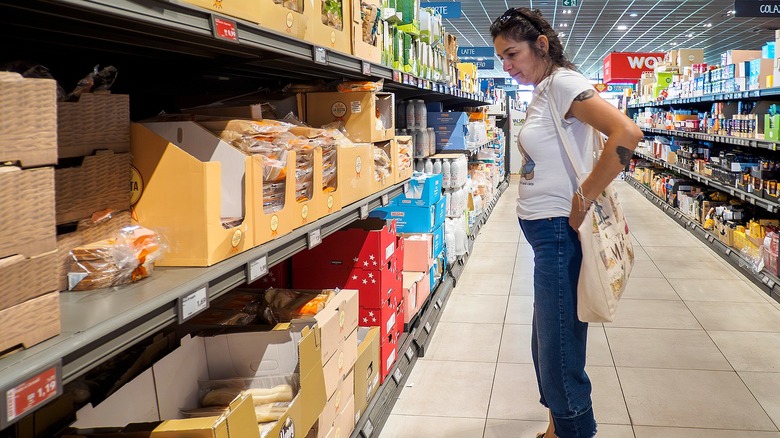
It's no surprise most people shop at Aldi for the brand's outstanding price points on countless food items. As a matter of fact, once you surpass Aldi's quirks and learn to appreciate the store's minimalist layout, you may rely on Aldi more and more for weekly food products that are both clearly-labeled and affordable. However, as of late, many longtime customers have been noticing discrepancies regarding the serving size and portions of certain private-label products. Through various social media platforms like Reddit and TikTok, customers are accusing Aldi of mislabeling its products' serving sizes and charging customers the same prices for less food.
For example, in the TikTok video below, one Aldi customer individually counts out a bag of the brand's private-label frozen chicken fries, showcasing that it contains less than the intended seven servings stated on the packaging. Instead of 56 chicken fries, there are 41. This type of discrepancy points to shrinkflation — or reducing a product's size while keeping its price the same over time.
@chickpeanoodles Don't even get me started on the chicken fingers that are mostly batter chunks in the bottom of the bag. #groceries #shrinkflation #aldi #macncheese #capitalism
Besides this one instance, many other customers feel just as cheated and let down by a company they consistently trusted for affordable food products, citing the same serving size inconsistencies for products like boxed mac and cheese and lettuce. Aldi has built its brand around quality products at competitive prices. However, customers didn't think the store's low-price guarantee would mean less food. Unfortunately, with production and manufacturing costs on the rise, Aldi seems to have found a way for customers to absorb these rising costs while maintaining lower price points in-store.
How to combat potential shrinkflation while shopping at Aldi
Among the many reasons people avoid shopping at Aldi, high prices have never been one of them. However, in order to avoid the impact of shrinkflation, customers need to practice more vigilance in-store and pay attention to the labeled portions in each pre-packaged container. Sadly, Aldi isn't the only grocery store or business using shrinkflation tactics to retain a profit while minimizing customer impact as much as possible. In recent years, many major brands and businesses have experienced rising costs in materials, transportation, and manufacturing. Even restaurant chains like Chipotle brought back larger portions after a skimping backlash in 2024.
Fortunately, for die-hard Aldi fans, there is one surefire way to combat shrinkflation. All customers need to do is use Aldi's solid return policy. Aldi's Twice as Nice Guarantee ensures that with a receipt, customers can get their money back on any unused food items if they're not 100% satisfied.
That being said, weighing and measuring every semi-questionable product takes a sufficient amount of work and time. Especially since some of the items Aldi customers question have murky rules regarding contents and serving size. For example, the net weight of a can of beans measures both the liquid and beans together, yet there may be a considerably smaller amount of beans than liquid compared to previous cans purchased. Dissatisfied customers should still continue to return items when they can and issue complaints directly to their preferred Aldi location.