

15 Types Of Spritzes, Explained
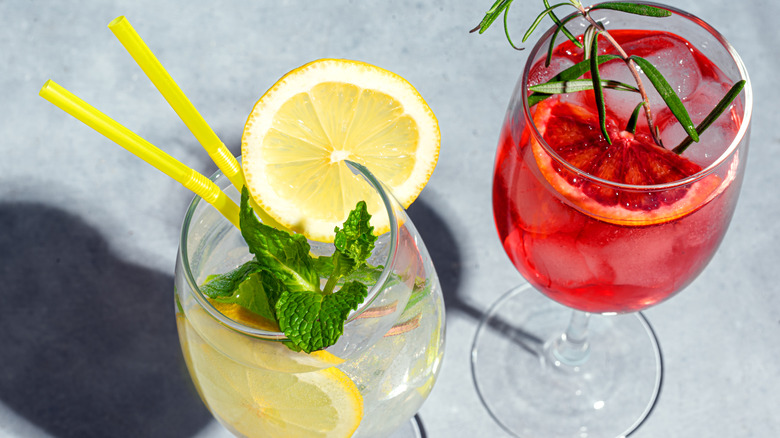
As a former bartender and lover of anything cold and slightly bitter in a stemmed wine glass, I have to admit I am absolutely obsessed with spritzes. I moved to Italy over four years ago, and while I thought I would be switching my drink of choice to classic cocktails, I find myself ordering a spritz at nearly every aperitivo I attend. Thankfully, I live in the land of spritzes, where you can find mainstay classics like Campari and Aperol variations at nearly every bar or cafe — but you can also find unique, regional ones made with local ingredients.
The drink was invented in the 19th century, when Austrian soldiers occupying Venice found local wines too strong and diluted them with sparkling water and named it "spritz" after the German word for "spray or splash". Ever since then, the drink has evolved, and now it traditionally consists of a Prosecco and soda water mixed with flavoring base ingredients like an aperitif or cordial, with different cultures making their own offshoot versions.
If you're just sticking with Aperol spritzes, you may be doing yourself a disservice since there's a whole world of different variations awaiting you — and why I've compiled a list of 15 types of spritzes everyone should have on their radar.
1. Aperol spritz

The Aperol spritz is by far one of the most recognized spritzes in the world, and is a mainstay beverage for a good reason. The drink is well-known for its refreshing, bittersweet, and slightly citrusy flavor profile and its low alcohol by volume (ABV). The spritz combines Aperol — an Italian aperitif made from a secret recipe containing a variety of botanicals and ingredients like rhubarb and oranges — Prosecco, and soda water, resulting in a thirst-quenching blend of zesty orange and herbs with a light effervescence.
The Aperol spritz is typically served in a stemmed wine glass filled with crushed ice and garnished with an orange slice. In Italy, you'll find locals in neighborhood bars and cafes sipping on these spritzes as soon as the clock hits 5 p.m., where it's served with tiny bowls of salted nuts, potato chips, and olives as a light pre-dinner snack called "aperitivo."
2. Campari spritz
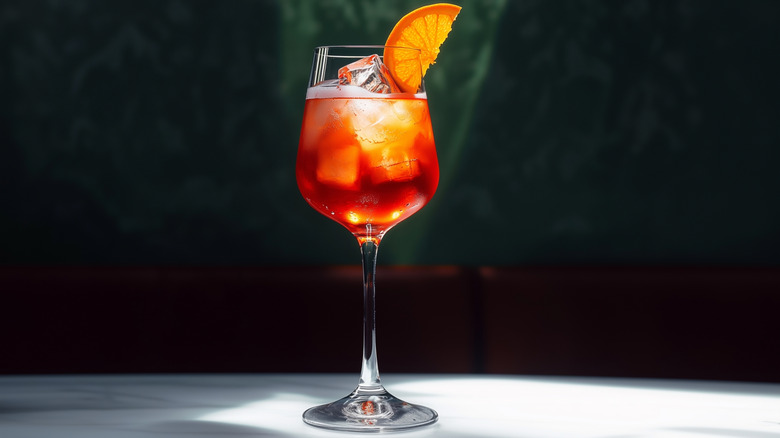
Another popular spritz you'll find being served alongside the Aperol spritz during aperitivo hour is its much more bitter cousin, the Campari spritz. This delectable drink combines Campari (another bitter Italian aperitif made from a blend of citrus, herbs, aromatic plants, and fruit), Prosecco, and soda water in the same 3-2-1 ratio as its counterpart. Campari is often described as a bolder, more sophisticated rival to Aperol. The aperitif has a much deeper dark red color with a drier finish and more profound bitterness. It's the perfect spritz to order if the Aperol version is a bit too sweet for your liking.
Like many aperitifs, the recipe has been a closely guarded secret since 1860, when Gaspare Campari developed it in Norava, Italy. After developing the drink for nearly 20 years, he opened Caffe Campari in Milan's iconic Galleria Vittorio Emanuele in 1867, where he introduced the bitter to the public, and it immediately became a hit. After his passing in 1882, his two sons, Guido and Davide, inherited the business, along with their father's secret recipe, and expanded it into an international empire. By the late 1920s, you could find Campari being served at bustling cafes across Milan and in high-end speakeasies in New York City.
3. Select spritz
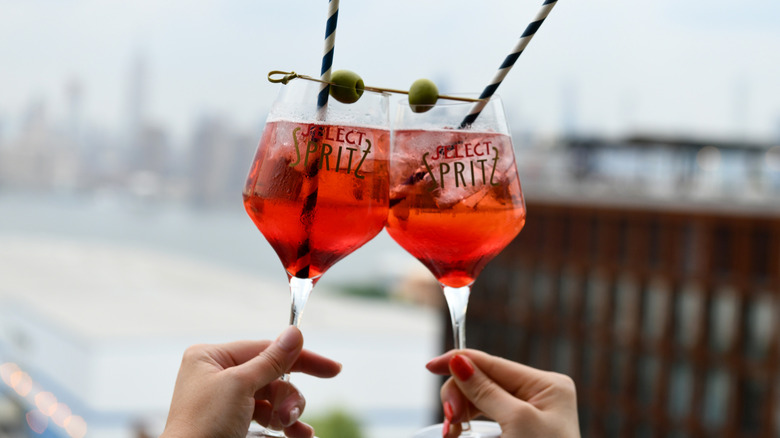
Beyond the famous Aperol and Campari brands, there's a lesser-known Italian option called the Select spritz. This unique drink is what you'll find locals sipping on in dimly lit piazzas and back alley bars of its birthplace, Venice. If you haven't heard of it before, Select is an Italian aperitif made from a secret blend of 30 botanicals, including juniper berries, rhubarb, and citrus rind. It was invented in 1920 by the Pilla brothers on the Venetian island of Murano.
Slightly less sweet than Aperol, this aperitif is known for its balsamic floral notes and its intense bittersweet flavor. It's often described as a happy medium between Aperol and Campari, making it perfect for people who find Aperol a bit too sweet and Campari too bitter. It's made in the same 3-2-1 ratio as its counterparts, featuring Select, Prosecco, and soda water, and is typically served in a stemmed wine glass over ice, garnished with an orange slice or olives.
4. Hugo spritz
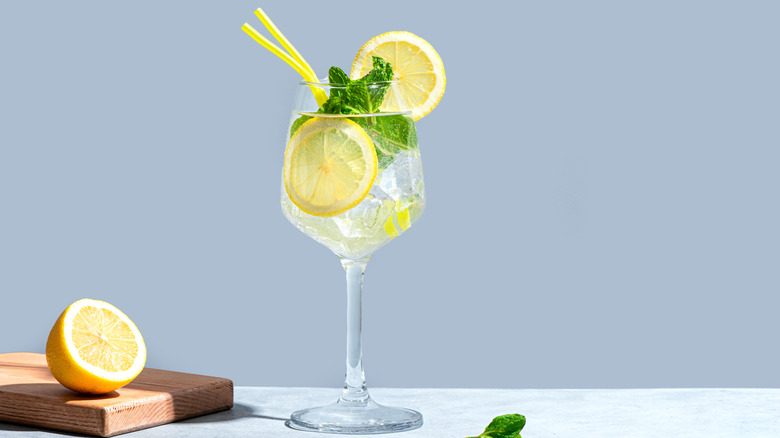
A Hugo spritz is a light, floral, refreshing Italian cocktail, featuring elderflower liqueur or syrup (often St-Germain) with Prosecco and soda water. It's well-loved for its delicate, sweet, and botanical flavor profile, often described as a sweeter, more floral, and non-bitter version of the Aperol and Campari spritz. It's served in a large, stemmed wine glass with ice and is often garnished with sliced fruit, fresh mint, and a lime wedge.
The spritz was invented in the South Tyrol region of Italy, in the German-speaking town of Naturno (Naturns), by bartender Roland Gruber, who sought to create a light, refreshing alternative to the Aperol spritz. Initially, Gruber made the cocktail with lemon balm cordial, but he later switched to elderflower cordial. Relatively new to the cocktail scene, you can find the Hugo spritz being served throughout Europe during the summertime, where its light, effervescent character is perfect for keeping your thirst quenched.
5. Lillet spritz
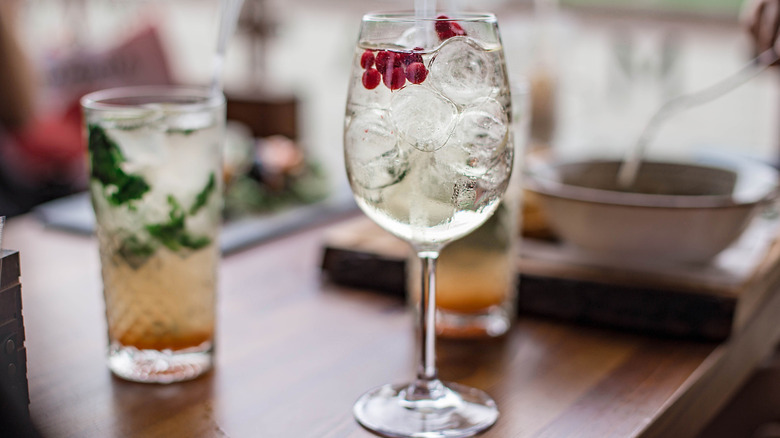
Hopping across the border to France, you'll find the Lillet spritz. This drink features Lillet liqueur mixed with sparkling wine and soda water, and is a refreshing, light, sweet cocktail that will surely make any mouth water. Lillet is a unique French aperitif wine from Bordeaux, where it blends 85% Bordeaux produced wine with 15% citrus liqueurs and quinine, resulting in a low 17% ABV that is just perfect for making spritzes.
There are three main types of this liqueur: Lillet Blanc (white), Lillet Rosé (pink), and Lillet Rouge (red), and each one has its own unique flavor profile. Blanc has notes of citrus and honey, Rosé is the lightest and most floral option, and Rouge is known for its dark-berry and bitter-citrus flavors. Lillet Blanc and Rosé are commonly used to make spritzes in France, where they're served in large wine glasses filled with ice and garnished with fashionable additions like peeled cucumber, sliced fruit, and sprigs of mint.
6. Cynar spritz
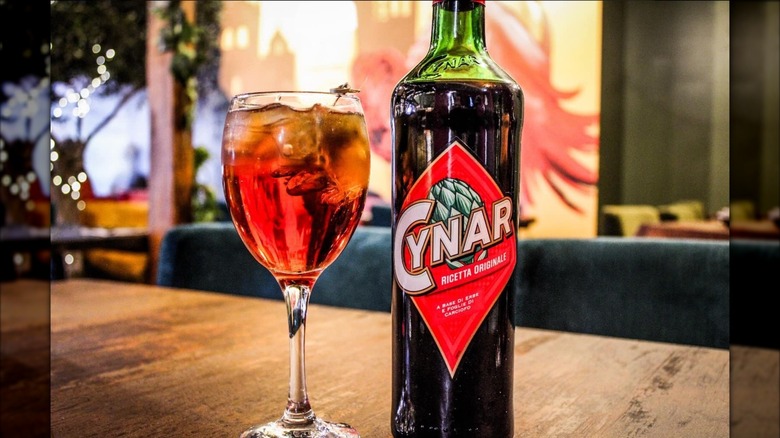
Popular in central Italian regions of Tuscany and Umbria, Cynar is an Italian amaro made primarily from artichoke and 13 other secret herbs and botanicals, resulting in its distinct earthy, bitter flavor. It's commonly used throughout Italy to make the Cynar spritz — a drier, more savory alternative to its bittersweet cousins Campari and Aperol.
The spritz combines three parts of Prosecco with two parts Cynar and one part soda water, and is often garnished with olives and orange slices. It's typically served in a wine glass filled with crushed ice alongside salty nuts and olives to help cut through its earthy bitterness. Its toffee-brown appearance has earned it the nickname "adult Coca Cola" and has become a favorite among Italians and cocktail connoisseurs who prefer their drinks more on the savory side. If you enjoy cocktails like the Negroni, Boulevardier, and the Old Fashioned, then you'll fall in love with the Cynar spritz on the first sip.
7. Limoncello spritz
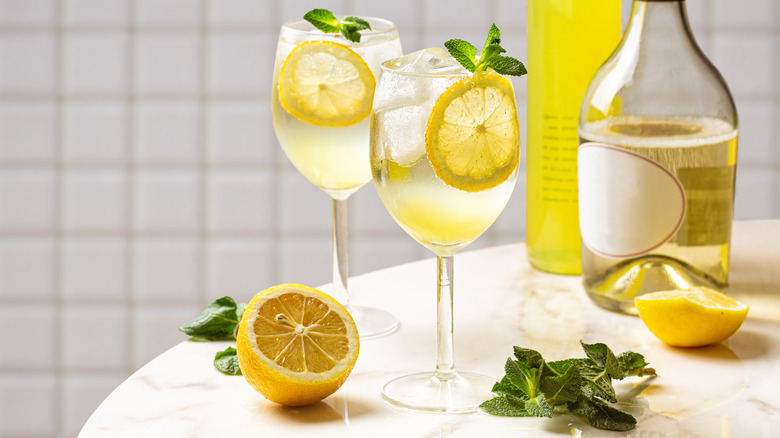
Looking to transport your taste buds to the sunny beaches on the Amalfi coast? Then you should be sipping the famous limoncello spritz, featuring limoncello mixed with Prosecco and soda water, garnished with lemon slices and mint. It has a bright, sweet, slightly tangy lemony flavor profile with a light, bubbly, zesty finish. The limoncello adds a rich, sugary sweetness to the spritz, making it a great option for those who prefer their cocktails on the sweeter side.
Its main ingredient, limoncello, is made by infusing lemon zest in a high-proof liquor like vodka or gin for a few weeks; then, it is strained and mixed with a simple syrup. The mixture is rested for an additional few weeks, then filtered one last time, and served chilled directly from the freezer. On the Amalfi coast, the liqueur is made with the peels of the local Sufasto Amalfitano lemon, which is known for its large size and thick, wrinkled skin, and high concentration of essential oils. You can find bars, coffee shops, and coastal Italian restaurants throughout this region serving their own house-made limoncellos as a digestive.
8. Fernet spritz
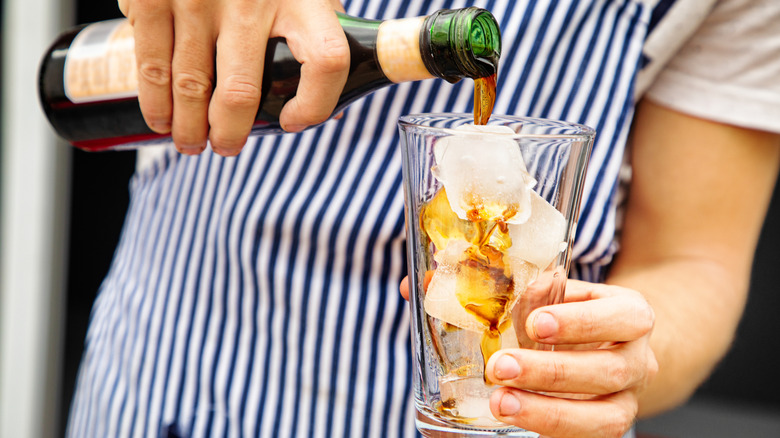
On the other side of the globe, in Argentina, Fernet spritzes are all the rage amongst locals. These spritzes have a base of Fernet-Branca, a highly aromatic Italian amaro made with a complex blend of herbs, plants, and spices originally sold as a medicinal elixir for digestion. Now a popular cocktail component in drinks around the world, its sharply herbaceous and bittersweet flavor profile will quickly make you realize why it's referred to as the "bartender's handshake" in the cocktail industry.
The spritz is made in the same 3-2-1 ratio with Prosecco and soda water, with some bartenders adding a splash of citrus juice or simple syrup for added sweetness. It's typically served in a stemmed wine glass or rocks glass and garnished with an orange or lemon slice. In Argentina's capital, Buenos Aires, you can find these spirits served at lively rooftop bars and bustling neighborhoods to locals and tourists alike. The amaro is also used to make "Fernet con Coca", a popular Argentine cocktail that mixes Coca-Cola with Fernet-Branca, resulting in a refreshing, bittersweet drink favored by locals.
9. Crodino spritz
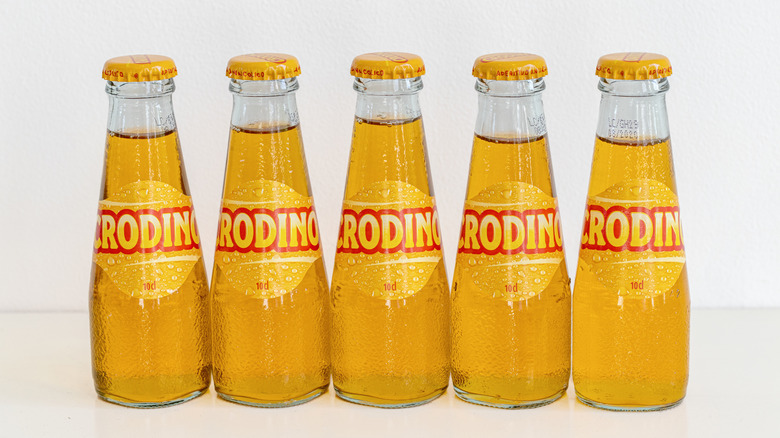
If you haven't mastered this simple formula for making mocktails yet, then you should be introduced to Italy's most beloved non-alcoholic aperitivo, Crodino. The Crodino is a sparkling, bittersweet aperitif that is well-known in Italy for its bold blend of herbs, spices, wood, and root vegetables. It has a complex, aromatic, bitter orange flavor with notes of cloves, cardamom, and oak, making it an excellent base for a spritz for those who want a bitter-tasting liquor without the ABV.
While commonly served on its own with ice, a Crodino spritz takes the aperitif to the next level. It's made by mixing Crodino with soda water and citrus juice to help cut through its bitter, botanical flavor. The spritz is typically served in a stemmed wine glass over crushed ice, garnished with an orange slice. It isn't commonly listed on bar menus in Italy — the Crodino spritz is very much an "if you know, you know" type of drink. It's great for anyone who's avoiding alcohol and wants to sip on something fun and exciting without missing out on the spritz experience.
10. Ricard spritz
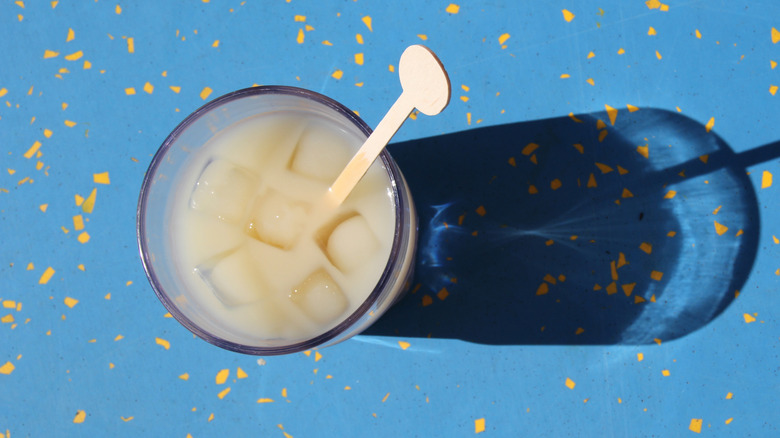
Beyond Lillet, there's another aperitif the French have been using to make spritzes for years: Ricard. This unique anise-flavored aperitif was created in 1932 by Paul Richard in the port city of Marseille. It's commonly used to make the Ricard spritz made by combining Ricard with cold water and ice, often enhanced with either grenadine or mauresque (almond syrup) for added sweetness. The spritz is often served in Collins glass filled with crushed ice. This unique spritz is made in a 5:1 ratio, with the majority of the cocktail being ice water. The addition of water, particularly ice water, helps to break down the intense anise and liquorice extracts, allowing Ricard to release its aroma and oils.
When the water is added to the Ricard, the spritz changes color to a cloudy, slightly yellow hue due to the phenomenon known as the "louche" effect (also known as the "ouzo effect"). This happens because the water causes the anise oil in the aperitif to become insoluble, which in effect creates microscopic oil droplets, creating its signature milky-white and cloudy appearance.
11. Montenegro spritz
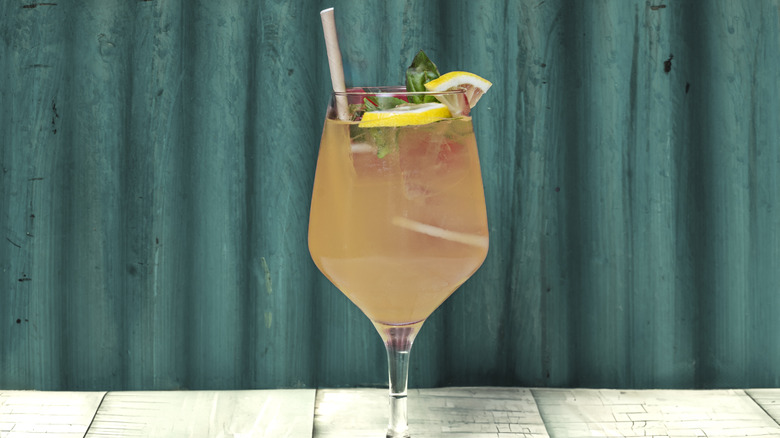
There are plenty of ways you can drink amaro — you can sip it after a big meal as a digestif, incorporate it into a cocktail, or follow what some locals in the Italian city of Bologna do and make it into a spritz for aperitivo hour. Amaro Montenegro is one of Italy's most beloved amaro and has been produced in Bologna since 1885. Made from a complex blend of over 40 different botanicals, the liqueur is admired for its sweet, floral, slightly bitter taste that lends itself perfectly to a spritz preparation.
Across Italy, you can find bartenders whipping up the Montenegro spritz, combining Amaro Montenegro with Prosecco and a splash of soda water. You'll fall in love with this drink if you prefer cocktails with a more savory edge and bittersweet undertones. The spritz is typically served over ice in a stemmed wine glass and is garnished with either an orange slice, a maraschino cherry, or a sprig of rosemary.
12. Ramazzotti spritz
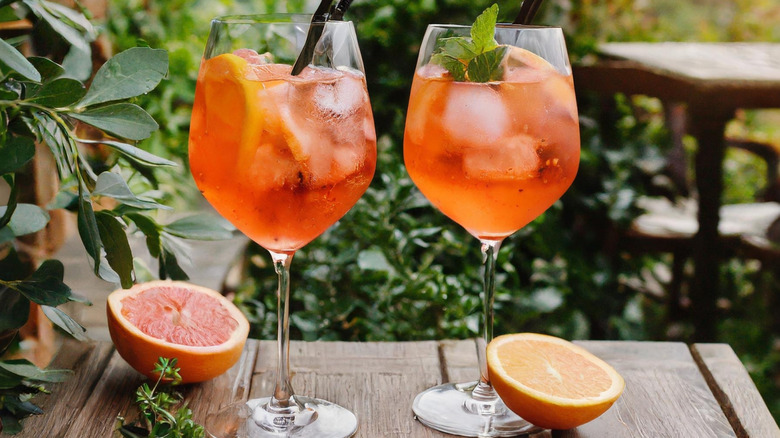
If you prefer a more blunter flavor than Amaro Montenego, then Amaro Ramazzotti is right up your alley. Created in Milan in 1815 by Ausano Ramazzotti, this amaro has a rich, complex bitterness coming from its combination of citrus peel, spices, and dozens of other botanicals. While Amaro Montenegro is known for its rich, floral, citrus notes, Ramazzotti goes down a darker, slightly more medicinal and herbal route.
Its unique bitter flavor makes a deeply savory spritz that's perfect for anyone looking to slow-sip a cocktail with a bittersweet, smooth, and complex flavor profile. It's typically made with Prosecco and soda water, served over ice in a stemmed wine glass, garnished with a sprig of basil or fresh fruit like berries or oranges. You can find it served at most bars in Italy, especially in Northern regions such as Lombardy and Piedmont, where it's long been the go-to amaro.
13. Lambrusco spritz
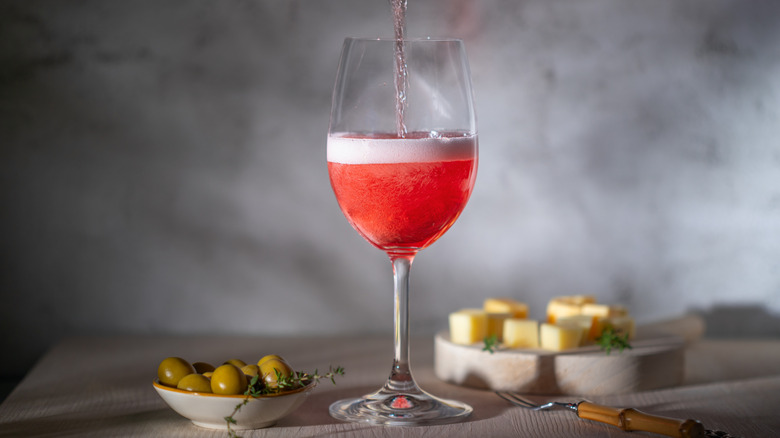
The Lambrusco spritz is a refreshing Italian cocktail that substitutes dry or semi-sweet Lambrusco (sparkling red wine) for the typical Prosecco. This spritz typically combines Lambrusco with a bitter liqueur (Aperol, amaro, or Campari) and a splash of soda water, and is served over ice in a rocks glass with an orange slice as garnish.
The Lambrusco provides the spritz with a lovely, fruity, effervescent base, while the bitter liqueur ties the whole cocktail together with a herbal, bittersweet hint. It's a great option for red wine lovers who still want something light and refreshing, but favor a bit more depth and complexity than the classic Campari or Aperol spritz. Whether you're hosting a backyard barbecue and need an easy-to-prepare cocktail or want a drink with a familiar flavor and an exciting twist, the Lambrusco spritz is right for you.
14. Capelletti spritz
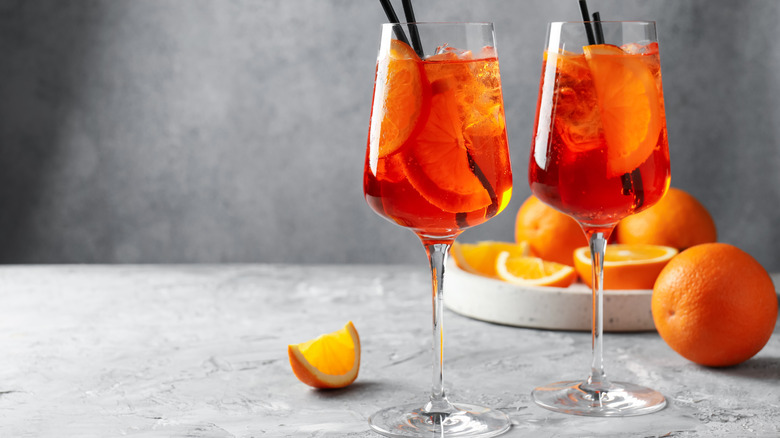
Getting tired of sipping on Aperol spritzes? Then you should meet its cooler older brother, the Capelletti spritz. Made with Aperitivo Capelletti — an herby wine-based aperitif — Prosecco and soda water, it's basically a less-sweet version of Aperol with a more pronounced herbaceous and bitter flavor. It has slight dryness, a thicker, syrupy texture, and notes of Alpine herbs, orange, and grapefruit. Just like Campari and Aperol, it has a distinct ruby red appearance, which comes from the natural carmine dye used to give it its iconic color.
While not as popular as its counterparts, you can find Cappelletti spritzes being served at bars and cafes in its birthplace, Trentino, a Northern Italian region close to the Austrian border. Often called "Specialino" by locals, it has a much higher ABV compared to Aperol's 11%, coming in at 17%. Some bartenders even add in a splash of gin or vodka to make the spritz a bit more boozy.
15. Zirbenz spritz
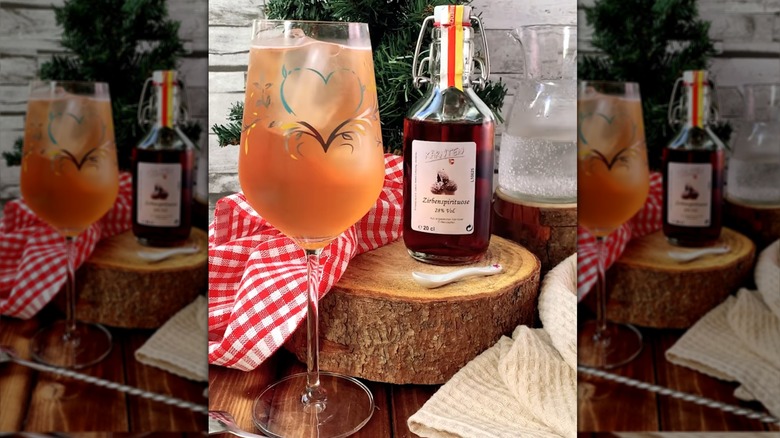
Moving away from the Italian peninsula and over the Austrian Alps, you'll find the legendary Zirbenz spritz, a refreshing, bubbly Alpine-style cocktail, featuring Zirbenz stone pine liqueur, a unique 70-proof Austrian spirit made from Arolla stone pine cones. The spritz follows the typical 3-2-1 pattern with Prosecco and soda water, served over ice in a stemmed wine glass with an orange slice or a sprig of rosemary as a garnish. It has a lovely herbaceous and woody flavor with slightly floral sweetness and a distinct fresh-pine finish.
The Zirbenz spritz is often categorized as a seasonal cocktail, thanks to its intense pine flavor, and is typically served as an après-ski beverage. In Austria and throughout parts of Germany and Switzerland, you'll find ski lodges serving up this tasty spritz to thirsty people coming down the slopes. Whether you make it over to Austria or not, this unique pine-flavored spritz should definitely be on your list of cocktails to try.