

Why Tomato Plants Need A Layer Of Mulch Right After Transplanting
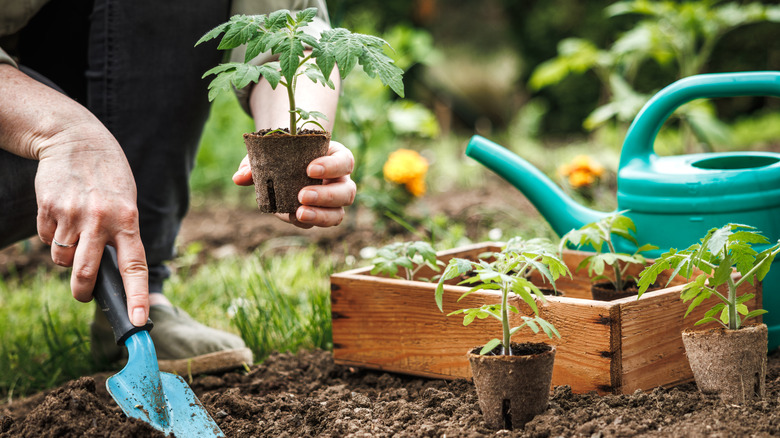
If you're adding some tomatoes to your garden, you're in good company. Tomatoes are one of the most popular vegetables (well, technically fruits) to grow yourself, even if you are a beginner growing an easy tomato plant variety. But despite their relative ease, there are a few ways to give them a head start — especially after transplanting your seedlings outside — and one of the best tips is simply adding a layer of mulch. Putting down mulch is like putting a blanket over the soil to act as a protective layer; it can be anything from compost and wood chips to straw and leaves. Any material on top of the soil helps the ground hold onto moisture longer because it can't evaporate as quickly.
This is important for tomato plants as their root systems are known to grow close to the surface of the soil, so they can easily dry out in warm weather if they aren't watered consistently. Conversely in most regions, the best time to plant tomatoes is late spring after the frost has passed and the soil is warmer, though temperatures can be a little unpredictable depending on where you live. But tomatoes don't do well in the cold. When you add a layer of mulch, it helps protect the plants from potential temperature drops, as well as surges. It is especially important right after transplanting when the seedlings are still establishing themselves in their new terrain and are a little more delicate.
Mulch helps tomatoes stay healthier
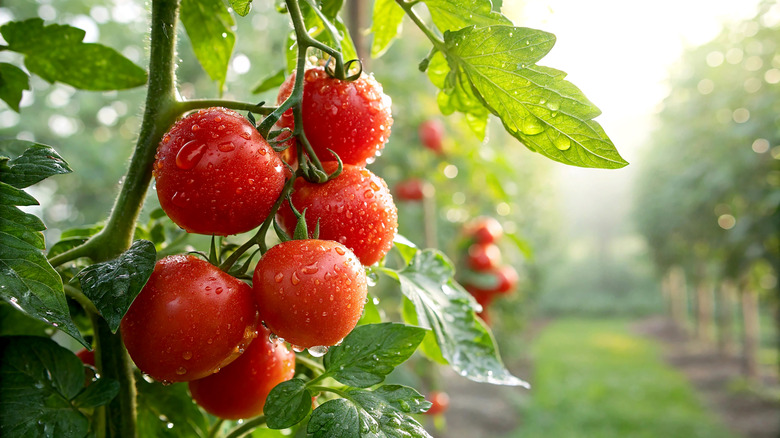
Beyond the initial transplanting period, mulch can actually work with your tomato plants throughout their whole growing season. Gardening advice claims mulch can help with disease prevention, as it can stop soil from splashing up onto the leaves when it rains, an action that can carry pathogens from the soil to the plants. Plus, any way you can help keep the soil at a consistent temperature and moisture level during hot periods will also reduce the chance of your plants growing cracked fruit or developing the dreaded blossom end rot. You can use decorative pebbles and stones as mulch but if you use organic matter like leaves or straw, it's even better because they break down slowly and provide the soil with the nutrients the plants need to grow.
So if you're growing tomato plants of your own this year, apply a 2- to 3-inch layer around each plant with a small gap around the stem so the moisture doesn't sit directly on the stem. With this one little step, you're much more likely to be looking at an abundant harvest later in the summer, with all the sweet and juiciest home-grown tomatoes you could ask for. Nothing tastes as good as a tomato you grew yourself.