

10 Cajun Foods You Need To Try At Least Once
Provincial ingredients, powerful seasonings, scorched aromas: these are the hallmarks of Louisiana eating. But if you travel further south — past the outskirts of New Orleans — an authentic, hyperlocal cuisine thrives: Cajun food. While Jambalaya gets the most shout outs, the cuisine's range is a diverse a pastiche of Spanish, French, and West African food cultures.
To better understand this cuisine, we spoke to three chefs: Yvette Bonanno of Louisiana Crave-A-Ball in Baton Rouge, Kate Rousset of High Road DelicaTexan in Austin, and chef Adam Lathan of the Nashville-based restaurant The Gumbo Bros. They not only share backgrounds in the rural fare, but hold powerful memories attesting to the region's humble, unpretentious recipes.
One thing to know right away is that no, Cajun and Creole cuisine are not the same thing. "While Creole cuisine is more European-influenced with cream and butter-based sauces, Cajun cooking relies on building deep flavors 'low and slow'," as seen in a traditional gumbo," Rousset explains. Lathan also chimes in on its cultural importance, too: "Cajun food is ultimately about community. It's honest cooking meant to be shared, not overcomplicated or precious. At its heart, it's about bringing people together around a table, and that's what makes it so special." But that's just the beginning to understanding Cajun food, read on to discover 10 Cajun dishes you should try at least once.
1. Jambalaya
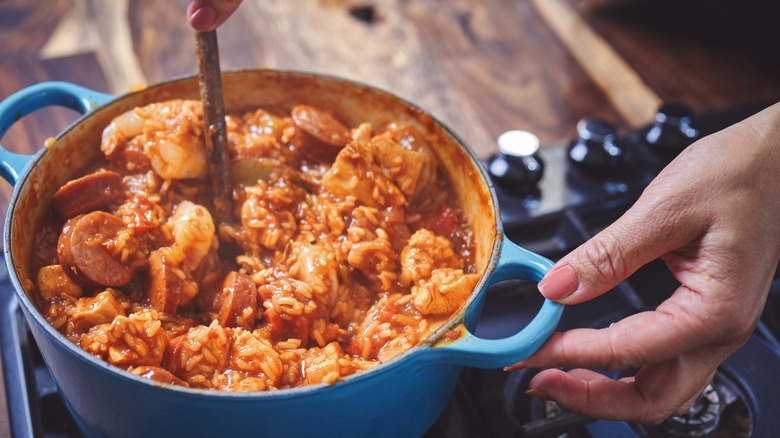
One of the most essential Cajun meals is jambalaya. Linguistically, the name simply breaks down to its cultural roots: "Jambon" translates to ham in French, while "yaya" is African for rice. If you've ever had Spanish paella, think of it as its smokier, heat-kissed relative. The flavor-packed rice dish is browned in one pot and features celery, onion, bell pepper, meats, and heavy seasonings.
One ingredient it doesn't include is tomatoes. These are not an ingredient Cajun renditions embrace — for one simple reason: "Because tomatoes weren't historically available in Cajun regions like Lafayette and New Roads, the dish lacks the red, tomato-based profile of its Creole counterpart," Kate Rousset explains. Creole's version, often called red jambalaya, is usually made with tomatoes.
Weaving multiple cultures together, jambalaya offers a vivid picture of Cajun cooking — all bound in a reliance on the unique landscape. As Yvette Bonnano states, the dish "combines indigenous ingredients and heritage together to create this delicious dish."
2. Gumbo
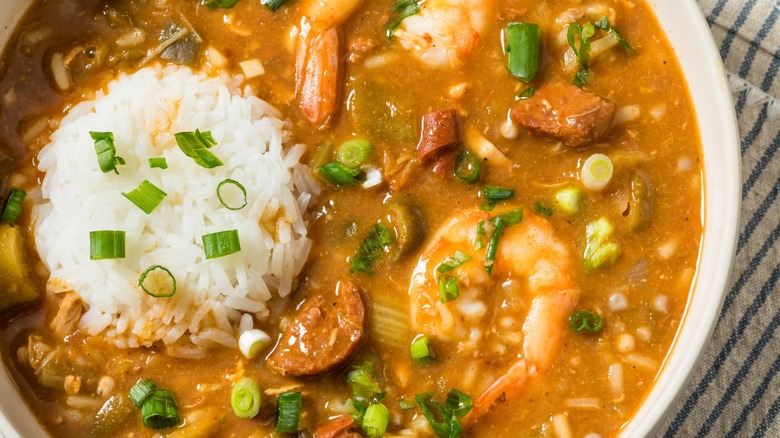
Gumbo is one of the region's crown jewels — like jambalaya. In fact, you might expect the two to be interchangeable, judging from the fact that they include many of the same ingredients. However, although they do overlap, gumbo is more like a soup with cooked rice submerged in the middle of the bowl. Jambalaya, on the other hand, is more of a saucey rice dish. While gumbo originated in New Orleans 200 years ago, the dish is prevalent across Cajun restaurants and homes alike, marrying complexity and soulfulness.
Communities in the region serve it year-round, yet it's customary to boil huge pots of it for celebrations. "In my family, every major holiday meant gumbo," says Adam Lathan, who adds how his grandmother commandeered the recipe for these special affairs. He added: "It's one of the best foods for bringing people around the table."
Cajun recipes like gumbo are carefully passed between generations. Kate Rousset reveals how the dish's roux immediately reminds her of home: "For gumbo, my family has always used a dark, almost burnt roux made with bacon grease, which provides a very deep, nostalgic flavor."
3. Étouffée
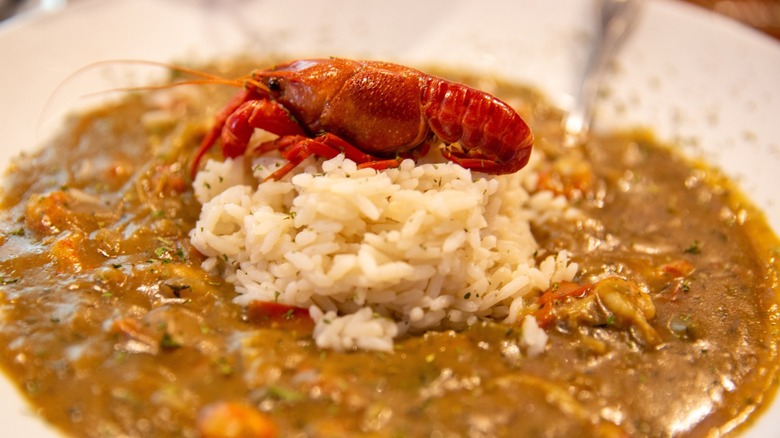
"Many people think Cajun food is supposed to be spicy, but it's really about being well-seasoned," Adam Lathan notes, regarding stereotypes applied to this misunderstood cuisine. And etouffée, frankly, is an excellent example of his point. "Etouffée" is derived from the French "to smother" and rewards diners with a sultry, veggie-filled broth filled with crawfish tails. To serve, some saucy goodness is dumped onto a bed of white rice.
Southern Louisiana is surrounded by freshwater, which is the crawfish's natural habitat. Therefore, locals tended to forage this crustacean for its myriad pot meals, including etouffée. Many will also tweak it with shrimp when crawfish is out of season.
Compared to the scorched layers of a gumbo, Kate Rousset says the roux for etouffée is whisked to a paler color, infusing the stew with a lighter flavor. But make no mistake: it's equally satisfying, and it takes just a spoonful to get hooked. Everyone needs to try a big ol' bowl at least once — preferably with hush puppies or Southern greens tying it together.
4. Blackened Alligator
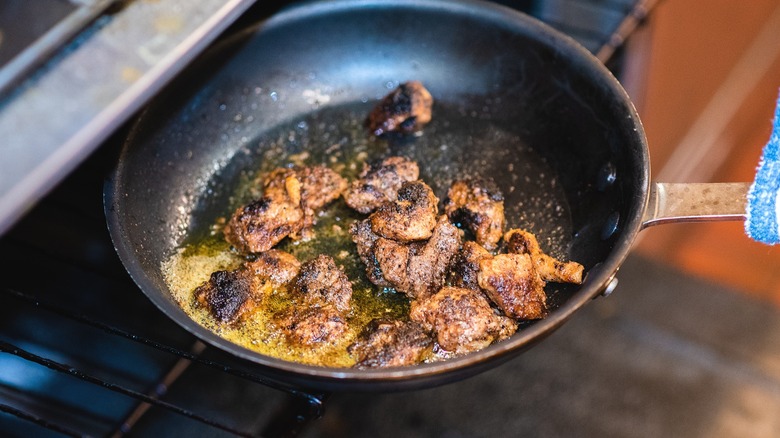
There's a Louisiana way to eat gator meat that tourists might neglect (if they dare to try alligator meat at all). Blackened alligator is a dish that's "sometimes overlooked," according to Yvette Bonanno. It consists of dicing, seasoning, and searing the alligator in a flaming-hot pan, with the heavy spices forming a scorched, smoke-kissed crust. Within minutes, the pieces are ready to eat.
In terms of an inventor, most folks will bring up the celebrity chef and NOLA icon Paul Prudhomme when discussing blackened alligator. Prudhomme created "blackened redfish" and pioneered a technique of spice-encrusting meats that restaurants couldn't get enough of throughout the 1980s. Perhaps Cajuns, in typical form, applied their thrifty nature to proteins they could source easily for a variety of dishes. And with, a million alligators in the state alone, they applied the blackening method to alligator meat.
To attain the burnt crust, chefs like to use a hefty skillet, preferably made of cast-iron, but a grill is also acceptable. A wide array of spices is implemented for color and heat. Cayenne, paprika, garlic, and chili powders are the usual suspects, but dry herbs are also sprinkled in for depth, including thyme and oregano. If you're brave enough, you should consider trying the classic Cajun dish of blackened alligator.
5. Crawfish Boil
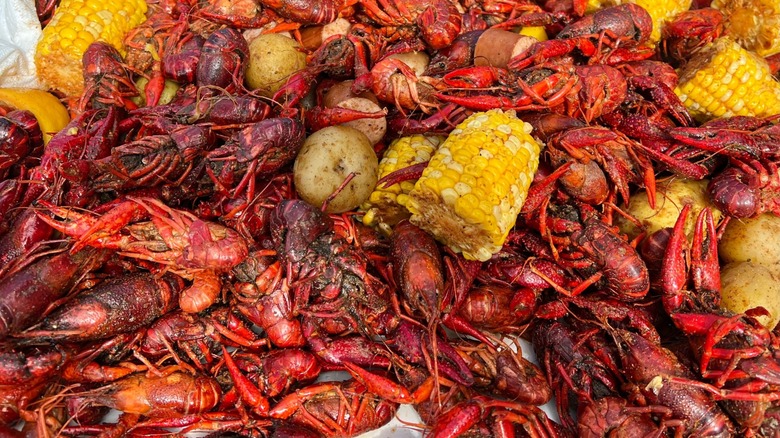
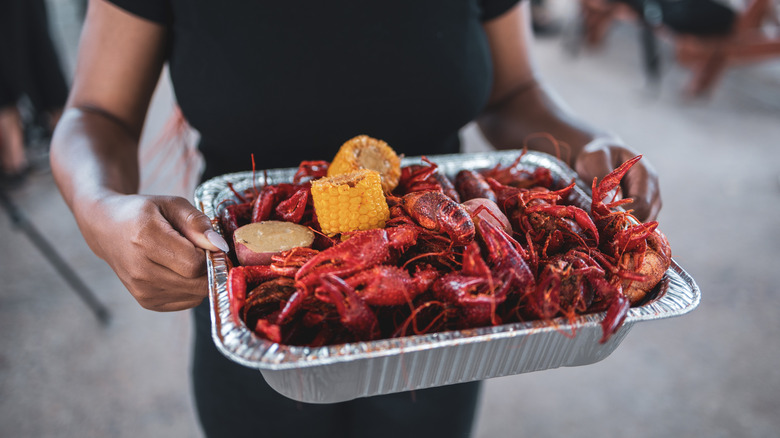
Many Americans, particularly those residing by the ocean, are fond of seafood boils. And while clams and lobster define the classic East Coast delicacy, Cajun equivalents in the low-country go all in on crawfish. The juicy freshwater taste is more palpable compared to canned crawfish (which some Louisianans won't touch). Other vegetables joining the steamer pot include corn, red potatoes, and mushrooms. Like always, boils are thoroughly spiced with cayenne and paprika, associated with that authentic peppery sting Louisianans can't get enough of.
Because these critters only emerge for a few months, locals take advantage, congregating with friends and family to steam the bounty. Late-winter to early summertime is the peak of crawfish season. "A good season means strong, well-sized crawfish that peel easily without being too soft," Adam Lathan explains.
This is a climate that's quite muggy, and crawfish (though mudbugs and crawdads are other terms) thrive in these swampier, sub-tropical conditions — at least, up to a certain point. "Once the temperature rises too high, the crawfish go underground and the season ends," Kate Rousset says.
6. Cochon de Lait
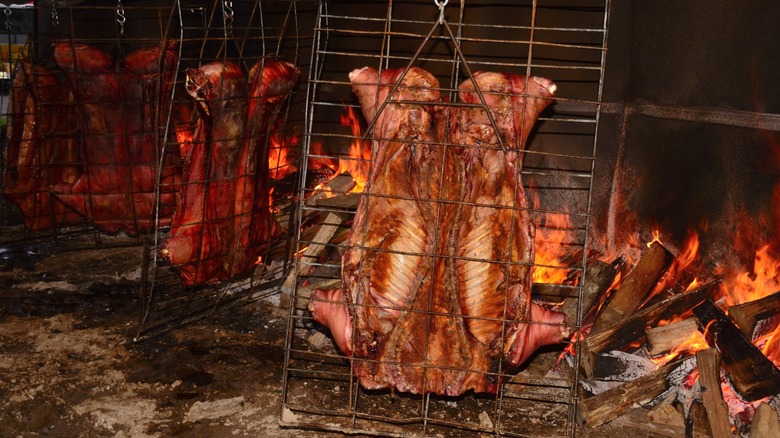
Cajun fare can't be boiled down to just one pot, which is evidenced by one of Yvette Bonanno's picks, Cochon de Lait. This dish is a staple at celebratory occasions, since it essentially consists of roasting a whole pig over an open flame. Labor-intensive as it is, the undertaking is often an excuse for folks to mingle with one another while anticipating the fruits of their labor.
Participants dress the skin in ample spices. They intensify the juiciness by infusing the meat with white wine, butter, and seasonings like garlic. Once the carcasses are carved in the proper fashion — split apart at the sides with ribs exposed — they're strapped to giant racks and grilled for a long period of time.
Cooking can take hours out of a day, but such a wait is justified since the pork earns a beautifully tender texture. The spoils might be stored away, or, as what's often the case, immediately devoured since it's extremely irresistible. For a true taste of Cajun goodness, many pile it onto bread for a hearty sandwich.
7. Cracklins
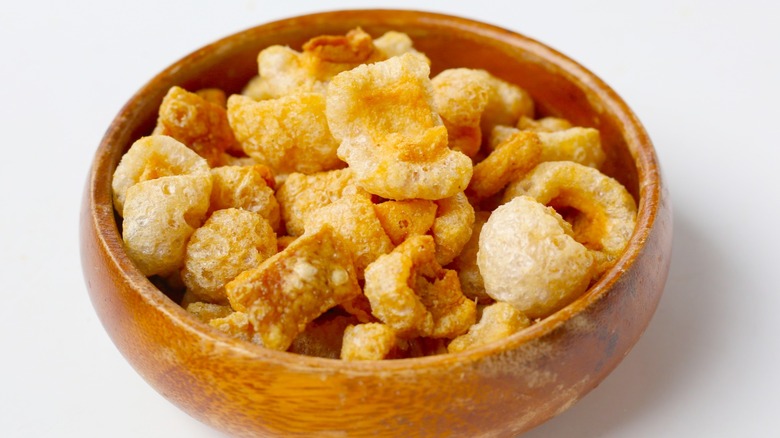
Regardless of culture, nobody's immune to the charms of salty, bite-sized snacks. Cracklins, or cracklings, puts that theory to the test. They consist of pork parts, like including gristle and skins, that are twice-fried for a golden, crunchy finish. Pork belly is the preferred cut, and every batch is seasoned with salt — though for a signature kick, people douse them with pepper and cayenne.
Pan-frying unwanted bits is a holdover from the region's waste-not, want-not mentality. Where this philosophy rears its head is the "boucherie," a significant effort entailing whole-roasting a pig. Since appealing cuts would get siphoned off into other meals, the extraneous morsels, having nowhere to go, would get doctored up into a unique delicacy.
Travelers will be hard-pressed to find a corner store not hawking these crunchy morsels. And if that isn't enough, establishments may churn out fresh batches on-site — which Adam Lathan tells us he loves most about the culture and cuisine. "Often, it's a simple gas station setup with a hot bar and someone bagging fresh cracklins behind the counter, but the food is incredible," Lathan says.
8. Hog's Head Cheese
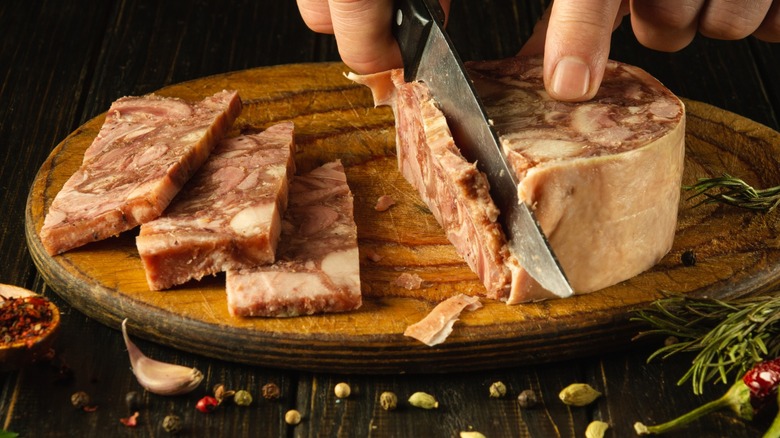
Compared to your Etouffees and Gumbos, a phrase like Hog's Head Cheese probably inspires some double-takes. However, jumping to conclusions may deprive you of an intriguing local delicacy. It's a pork loaf, constructed out of the excess remnants otherwise discarded by butchers. Often stocked at grocery stores, it takes the place of deli meat or cold cuts, lending a fitting filling to sandwiches or topping crackers.
Chefs incorporate herbs and spices with the pork bits, though minced onions or shallots can make an appearance. The mixture is put into a vessel to chill, fully solidifying into a block that can then be carved using a knife. Pig's feet are definitely not up for negotiation when it comes to achieving the jiggly texture. This is because boiling down these parts (hooves and all) creates gelatin, which makes the binder needed to help the pate congeal.
9. Boudin
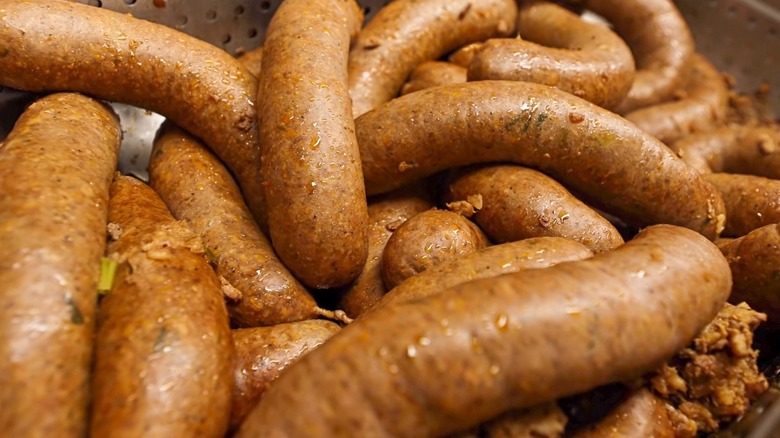
Resourcefulness often leads to ingenuity in the Bayou's foodways, and like many offerings, boudin (pronounced "boo-dan") is a great example. For those out of the loop, they're like sausages stuffed with a little extra. Filling-wise, it features pork (notably the meat and entrails, traditionally liver) joined by rice, spices, and the classic trinity, which are packed into casings. It's basically Cajun street food at its best.
Some cities are specifically celebrated for the delicacy, including Lafayette. But the savory links are inescapable wherever you go in Cajun territory, hawked at gas stations and corner stores like the perennial beef jerky. The handheld size, of course, makes them a great snack, but our experts also emphasized their popularity in the mornings, too. "Boudin is incredibly common, whether in an omelet or just eaten as a link on the way to work," says Adam Lathan.
In addition to the portable tube, deep-frying boudin into balls remains another format folks crave. Cooks batter them in breadcrumbs to achieve a golden, crisp finish. It's like a Southern approximation of Italian Arancini, and one heck of an appetizer.
10. Sauce Piquante
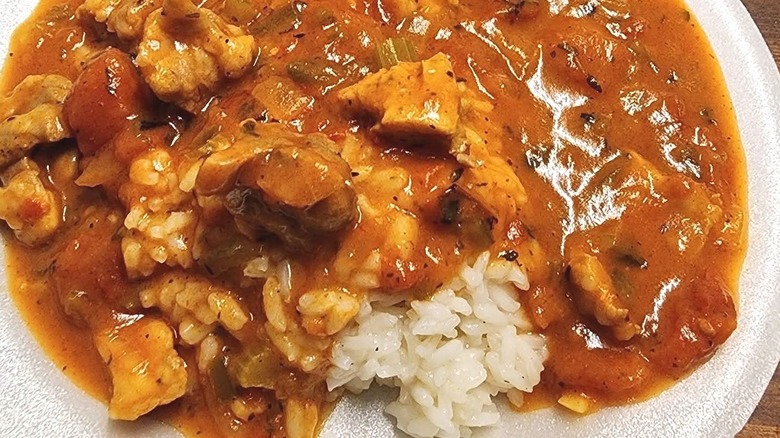
Foodies should definitely acquaint themselves with Sauce Piquante when given the chance. It epitomizes the cuisine, where every minute on the stove builds towards heavy, spice-inflected goodness. Adam Lathan says: "it's a slow-simmered dish typically made with chicken, seafood, or wild game in a tangy, peppery tomato-based sauce served over rice."
Preparing a pot in the traditional way never leaves out the roux (blackened, of course), with generous seasonings and herbs which are part and parcel to the region's bold culinary style. With "game" representing a broad category on its own, foragers have been known to simmer anything from alligator legs and turtles to rabbits and the almighty crawfish. Utilizing humble ingredients — and churning out large quantities of it — offers a meal that always hits the spot.