

This Underrated Brazilian Steakhouse Cut Is Hiding In Plain Sight At The Butcher Counter
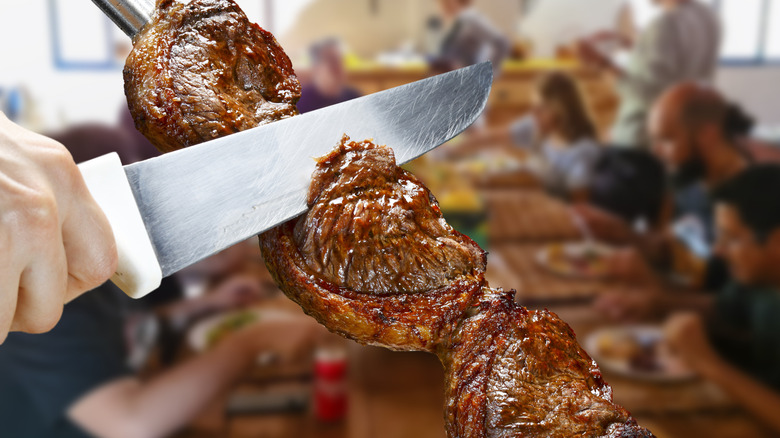
Some cuts of beef just seem to always be in supply at the butcher's counter. On the expensive end, you might have your filet mignon or chateaubriand. The more affordable side is likely awash in skirt or hanger steak. But there are plenty of less ubiquitous selections from all points on the spectrum that you can ask your neighborhood protein professional for, and picanha is primary among them.
Picanha, also known as top sirloin cap or coulotte, might be more common at a Brazilian steakhouse than it is at a local meat market. Although picanha is plenty popular in Brazil (and at the international chains that aim to recreate some of the country's cuisine), it isn't an everyday foodstuff for as many home cooks stateside. But that doesn't mean that picanha isn't available.
It might not be packaged in piles at the grocery store, but the selection from the cow's upper rump is one of many relatively underrated cuts you can ask your butcher for. They'll likely have it in stock under one of its three typical titles, or at least be able to get it in before your next visit. The bit of extra effort to source your picanha will be rewarded with a big, beefy flavor and a wonderfully yielding texture.
Why you should add picanha to your cart and how to prepare it at home
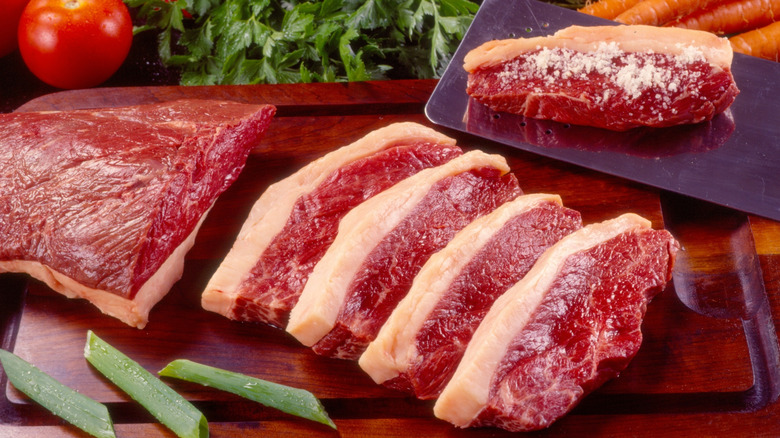
The expanse of a standard picanha's muscle tissue is fairly lean, meaning that it's a somewhat uninterrupted red, lacking the marbling you might find in a ribeye or a New York strip. But it does have a hefty fat cap that renders fat and flavor into the meat provided you leave it intact during cooking. And you can look to those Brazilian steakhouses for a few hints on how to manage this cut.
To recreate the big, impressive skewers you might have seen marching around dining rooms, you'll just need said skewers, some seasoning, and, of course, the heat. A grill is ideal in this application. Pat the steaks dry, give them a few good shakes of salt and pepper all over, and pierce into a kind of crescent shape on the skewers, with the fat cap on the outside. You can start checking for doneness with a digital meat thermometer after about 15 minutes, with plenty of flips in between. Rare, medium, and well done temperatures should read around 115, 135, and 155 degrees Fahrenheit, respectively. You can also roast your picanha in the oven and pop it under the broiler to approximate the sear of an open flame.