

How Royal Red Shrimp Earned Its 'Lobster Of The Gulf' Reputation
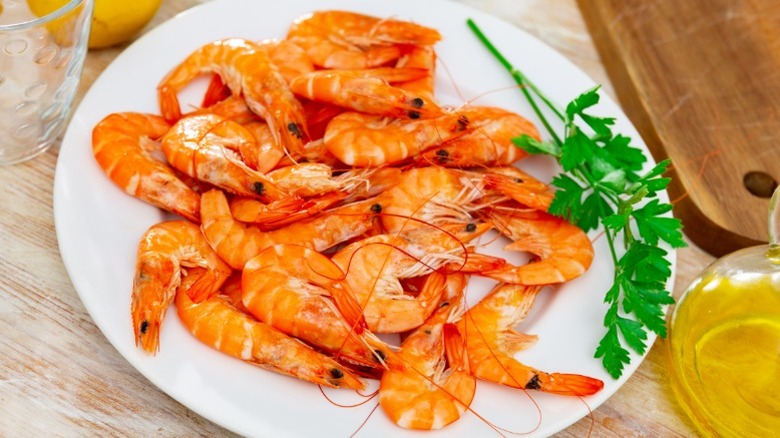
If you've traveled around the Gulf Coast states recently, there's a good chance you've tasted, or at least heard of, royal red shrimp. Perhaps you've heard this popular seafood referred to as "lobster of the Gulf," "lobster of shrimp," or by its scientific name, Pleoticus robustus. The species is beloved on the Gulf Coast for its soft meat and rich, buttery taste, which is due to the crustacean's preference for deeper, colder water compared to other shrimp varieties. It's this luxurious flavor and texture that have eaters comparing royal reds to lobster, considering it a true delicacy of the region's cuisine.
Comparisons to lobster also come from this shrimp's natural red hue, which tends to turn an even deeper, more opaque red when cooked properly. Since other shrimp varieties turn pink when cooked, and how long you boil shrimp plays a big role in flavor and texture in general, royal reds can be a bit tricky to prepare. They require short cook times to prevent their fragile meat from getting mushy or rubbery — also similar to lobster. Some Gulf area restaurants host combined royal red shrimp and lobster boils where you can see the cooking process first-hand. These days, these shrimp are a common sight on seafood menus in the area, but their status as a regional delicacy is surprisingly recent.
Royal red shrimp are a newer delicacy in coastal cuisine
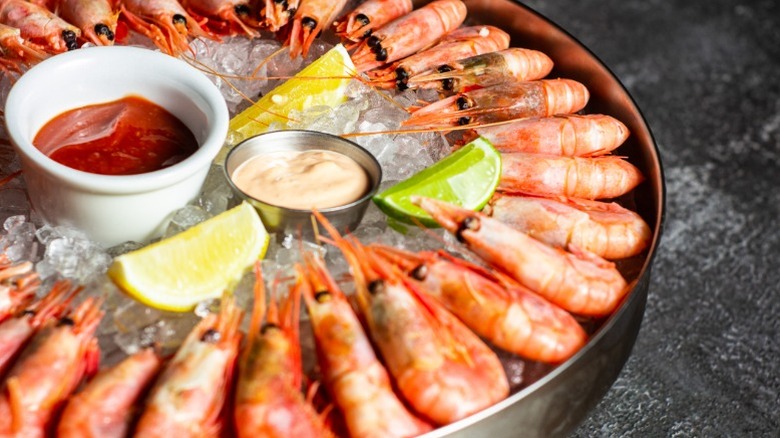
Despite shrimp, in general, being a longtime staple of Creole cuisine (like at this New Orleans restaurant that's been serving seafood since 1946), royal reds took a while to catch on. According to the blog Sweet Grown Alabama, fishermen in the Gulf only started catching the shrimp variety in the 1970s. And it wasn't until two decades later, in the mid-1990s, that royal reds grew in popularity among chefs despite being sourced by only a small handful of fishing boats, according to The New York Times. This is likely because they're a challenging catch. Residing between 800 and 1,500 feet deep in the ocean, royal reds require shrimping boats to travel as far as 60 miles offshore and have specialized harvesting equipment.
Similar to how lobster went from prison food to luxury dining, perceptions of royal red shrimp, and who they're for, have changed drastically over time. Word has it that even as the shrimp were starting to catch on, fisheries were pricing them lower than other shrimp varieties because customers were unfamiliar with them. Modern retail and menu pricing from 2026 across the Gulf Coast region show royal reds tend to be in the middle-to-high price range, ranking behind jumbo-size shrimp but above more commonplace varieties like white and pink shrimp.