

Do Electric Stoves Really Cook More Evenly Than Gas? An Expert Weighs In
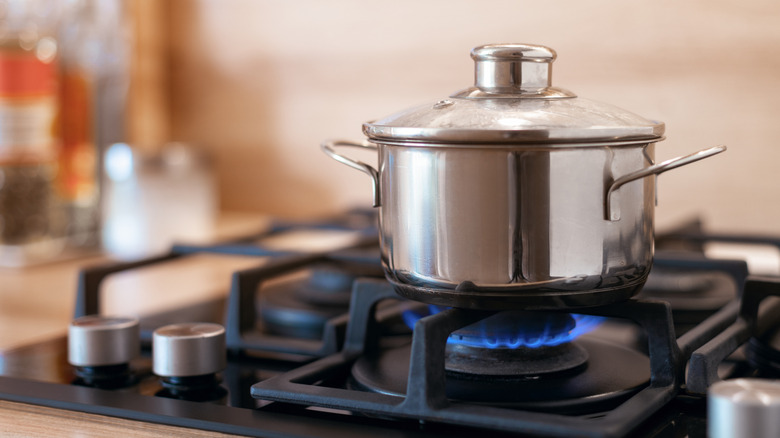
For a number of reasons, electric stoves are enjoying an unprecedented surge in popularity in U.S. households. These reasons include ease of cleaning, safety considerations, and electric stoves just last longer than gas stoves. However, recently it's been said electric stovetops also cook more evenly — despite the fact that gas stoves are still largely preferred by professionals. Chowhound asked Lynne Just, chef and consumer test kitchen manager at Hamilton Beach Brands, Inc., to either affirm this rumor or put it to rest.
"Most chefs prefer gas stoves because gas provides instant heat and precise temperature control," Just says. "Electric stoves also heat evenly, but without the ability to instantly adjust the heat," she explains. But even more important and impactful than the gas vs. electric debate is the quality of your cookware. "Poor quality cookware can lead to hot spots and uneven cooking, regardless of gas or electric," says Just. When it comes to selecting the best cookware that will heat evenly, look for something made largely out of a good conductive material (like aluminum or copper), and is sufficiently thick.
How to ensure even cooking
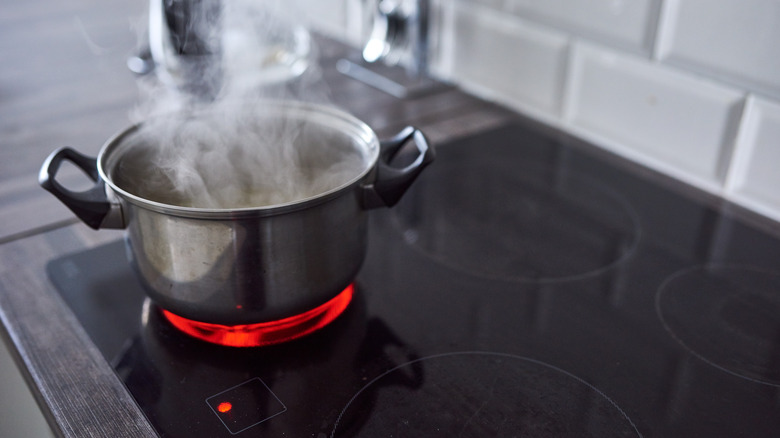
You've no doubt experienced the frustration of uneven stovetop cooking; for example, a pan of bacon where the middle pieces get overly crispy while those on the edge remain limp (although if you have people in your household with differing bacon preferences, this may not be such a bad thing). Hot spots are just what they sound like — areas of the pan where your food is cooking or browning at a faster rate than other spots.
We asked Lynne Just to name the biggest hot spot culprit: Does the gas vs. electric issue come into play or is it a pan quality or size issue? Overall, once again, the issue arises from a poor choice in cookware. Yes, you need good quality cookware, but you also need to select the right size pan for the burner. "If the pan is too large for the burner, the food in the center of the pan usually overcooks and the food toward the outside is undercooked," she explains. "The opposite occurs if the pan is too small for the burner." Furthermore, the exterior of a too-small pan may become damaged during the cooking process, she warns.
When it comes to gas vs. electric, Just favors a third option: induction cooking, which provides heat through electromagnetic energy as opposed to a direct flame or infrared energy. "Induction provides the best of gas and electric," Just claims, allowing for precise temperature control. Induction is energy-efficient, the top is easy to clean, and the surface doesn't heat up — a major safety win.