

The Simple Trick For Canned Beans That Taste Like They Came From Your Favorite Mexican Restaurant
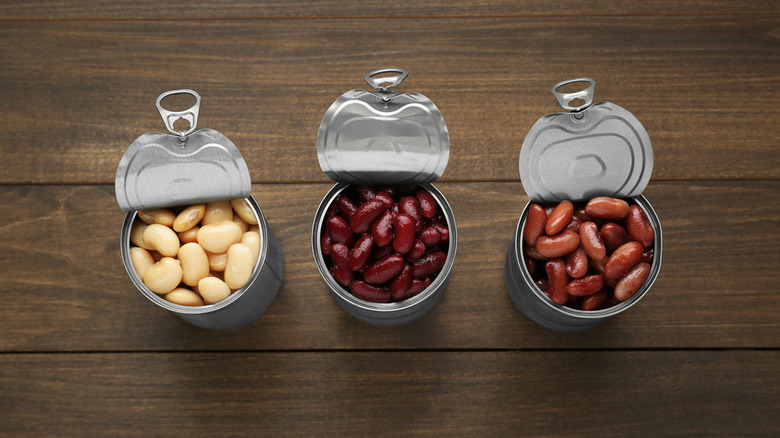
No, you're not imagining it; the beans you get at a Mexican restaurant do taste better than the ones you make from a can at home — they're richer, more flavorsome, and much more balanced. Luckily, you don't need to start with dried beans to recreate them at home — at least not according to chef Christian Hernandez, owner and head chef of Barbacana in Houston, Texas. He spoke exclusively with Chowhound, sharing some of the easiest game-changing tricks for better canned beans. And step one involves heating them in an aromatic stock instead of just draining the can. As Hernandez said, "Adding stock as your cooking liquid is a great hack to really bump up the umami richness."
Hernandez explained that when it comes to cooking beans the way they do in Mexican kitchens, there's one component you can't skip: aromatics. "After soaking, cooking beans with plenty of aromatics is the key to a great product," he said, listing garlic, onion, and bay leaf as some of the go-to ingredients that can really take canned beans up a notch. So instead of simply draining and heating the beans before you serve them, let them simmer for some time in a little aromatic stock and don't forget the salt, too. "Restaurant kitchens are diligent about adding salt, specifically when the beans are still in liquid to allow even distribution," explained Hernandez.
The finishing touches for canned beans with bigger flavor
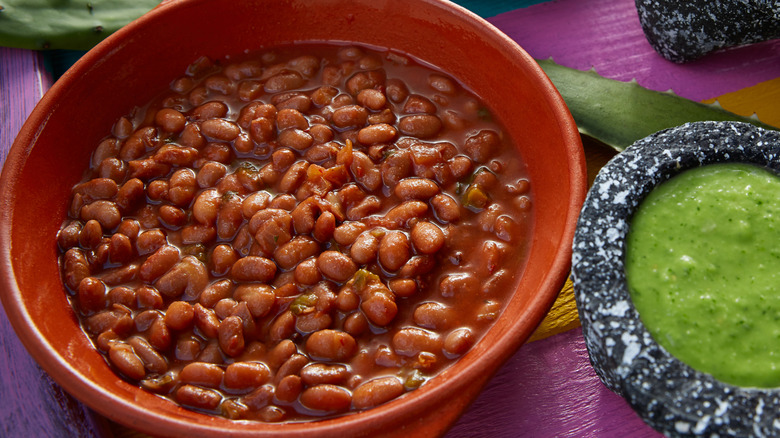
A brief simmer in aromatics can do wonders to dramatically improve the flavor of your canned beans, but there's another step that restaurants take to improve the texture and bring it all home. The final move that can make or break black beans, pinto beans, or refried beans is finishing them off with a little bit of fat. Chef Christian Hernandez's secret ingredient? Butter. "Infusing the beans with a stock and a big knob of butter at the end should erase the memory that they're actually canned beans," he said.
This move makes sense, as adding some fat is a common practice in Mexican cuisine, although it's not always butter. It's often lard or vegetable oil that gets added to bring out some extra richness. The fat carries the flavor of the aromatics whilst giving the beans an overall silkier and smoother texture. And butter works particularly well here — in addition to being a common ingredient at home, the creamy dairy balances out the other salty flavors which results in a dish that feels more cohesive in general. These simple moves are enough to transform a humble can of beans from something forgettable into something you'd pay good money for if you were served it at a restaurant. And we can't wait to put it to the test at our next taco night.