

The Simple Trick That Makes Skimming Fat Almost Effortless
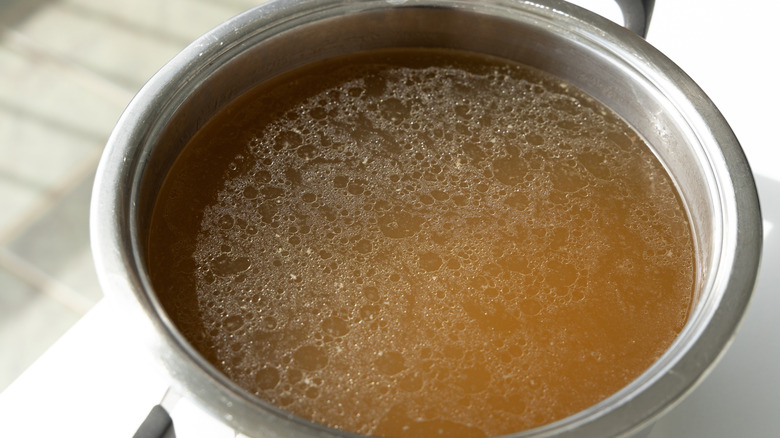
In the culinary world, fat isn't always a bad thing. It comes in many forms, from sour cream to the fat on meat that gives it extra flavor, and a whole range of cooking fats that help give your food extra moisture and flavor. And when you cook with monounsaturated fats (oils from avocados, nuts, and olives) and polyunsaturated fats (like fish-sourced omega-3s and plant-sourced fats from soybeans, leafy greens, and flaxseed) you get health benefits to boot.
But cooking with oils (or fatty foods that create liquid as the fat renders) can create an unpleasant result. The fat provides plenty of flavor to dishes like soups, but it doesn't necessarily absorb into the food, and in the case of soups and stews, it tends to rise to the top. That layer of fat sits there, looking unsightly and unappetizing, so you'll want to skim the extra off the top. After all, by this point it's done its job and can be discarded without affecting the taste or texture of the dish.
But skimming all that fat isn't always the easiest trick to pull off. Thankfully, there is an easy fix, and you don't need any fancy tools to do it. All you'll need is something you've already got in your kitchen — your refrigerator. Simply stick your dish in the fridge and give it some time to cool off. As it does, the fat will rise to the top and solidify, making it quick and easy to remove with just a spoon. After that, just reheat your dish and you've got all the flavor that comes from cooking with that fat without having to eat spoonfuls of it.
The skinny on scooping out the fat
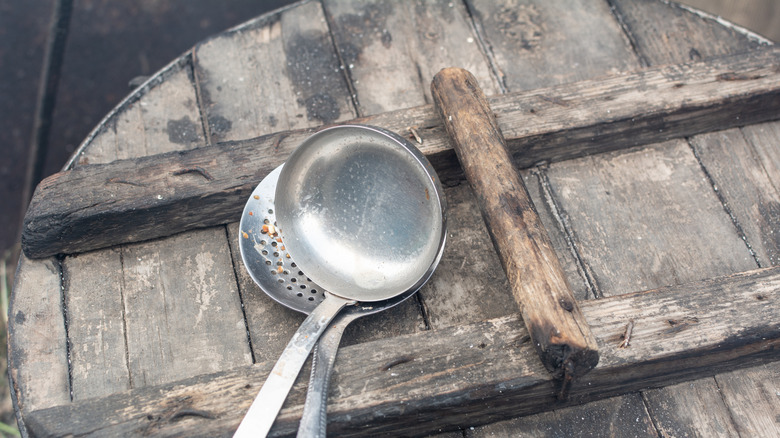
If you are sauteing meat before adding it to a soup or stew, it would ruin the soup if you don't drain the fat, and the same goes for any cooking oils that rises to the top of your broth- and sauce-based dishes. Chilling your dish to solidify the fat is the simplest way to remove it (and make sure you get it all in the process), but it takes a bit of time so there are a few other techniques you can use if you can't wait. A skimmer, which is a wide slotted spoon, can work while the fat is still liquid, as well as a ladle or even a large soup spoon, although they will be a bit messier and less effective. There are even some less conventional options, like using a paper towel to soak up the excess fat or even a piece of bread. You can even add beaten egg whites that will bind with the fat and rise to the top so you can scoop it out with the cooked egg whites.
But whether you work smart and refrigerate the food to congeal the fat for easy removal or go the more messy but quick route and use a skimmer, bread, or paper towels, removing the fat will improve your meal. And not just by making it look better and eliminating the unpleasant mouthfeel of a spoon full of greasy oil. If you leave the fat sitting there, it can overpower the flavors you've worked so hard to develop in your dish. Plus, removing the extra fat can help improve the nutritional value of your food, especially if you are using one of the less-healthy cooking fat options.