

Wendy's Used To Own This Beloved Coffee Chain. Do You Know Which One?
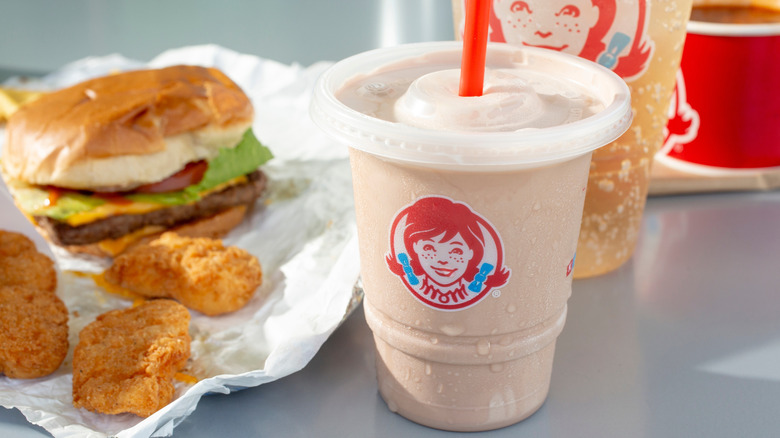
Burger giant Wendy's has had quite a history of being mixed into other chains' business, having owned Baja Fresh in the 2000s, while also itself being owned by Arby's for a few years. But perhaps one of Wendy's biggest exploits was owning the enormous Canadian coffee chain Tim Hortons for just over a decade, from 1995 to 2006.
In the years leading up to being purchased by Wendy's, Tim Hortons had expanded and evolved a lot as a company. From its start as mostly a donut-and-coffee chain, it added menu items from other baked goods to sandwiches, while also rolling out its enormously popular "Roll Up The Rim" promo-competition.
The reason Wendy's bought Tim Hortons seems to be that it complemented Wendy's offerings: In the '80s, Wendy's tried (and failed) to get into the breakfast market, leaving it with more of a burger focus at the end of the day. In contrast, Tim Hortons made the majority of its sales before 10 a.m. So, Wendy's set about creating combo stores that featured a Tim Hortons and Wendy's at one address, selling coffee and donuts for the morning crowd and burgers and fries later on. Wendy's also set about beefing up Tim Hortons' U.S. presence: While Tim Hortons first opened a U.S. location in the '80s, Wendy's added over 250 more stores, yet it was a rocky path with mass closures of dozens of stores in the late '90s. Tim Hortons has since grown to around 700 locations, mostly in areas closer to Canada like New York and Michigan.
Why Wendy's ditched Tim Hortons
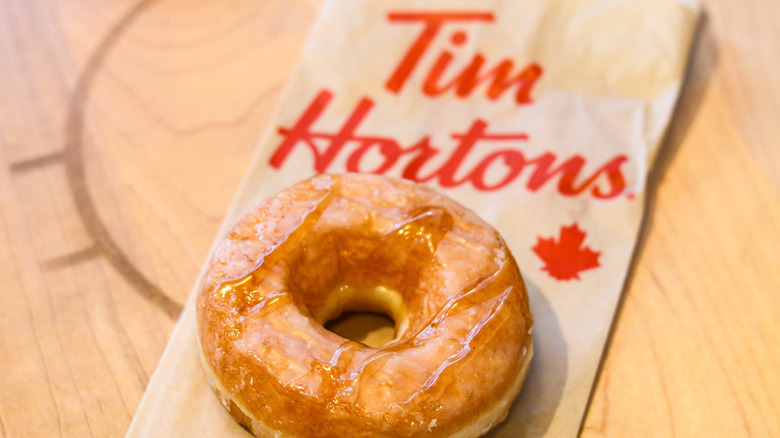
By the early 2000s, Wendy's was looking to broaden the kinds of restaurants under its corporate umbrella — for example, by buying a stake in fast casual chains like Texas now almost entirely defunct Café Express. On top of that, Tim Hortons was outperforming Wendy's. So, why would Wendy's get rid of a star performer that helped broaden its base?
Part of the answer is that the two chains were starting to become competitors, with Tim Hortons introducing more lunch-friendly items while Wendy's added items like sandwiches that overlapped with Tim Hortons' menu. However, another big reason for the split came more from the financial side of things: A number of hedge funds that owned stakes in Wendy's started pushing the chain to sell off the rather valuable Tim Hortons as a ploy to boost Wendy's stock price. Those funds weren't wrong: Tim Hortons went public in early 2006, with Wendy's offloading its shares that year. Considering Tim Hortons' identity as a thoroughly Canadian brand, Canadians were eager to own a piece of it, and apparently snapped up the shares.
However, Tim Hortons didn't exactly stay Canadian-owned for long: Despite the mythology that it is a quintessentially Canadian brand, it merged with Burger King in 2014 as part of a conglomerate called Restaurant Brands International. While the corporate headquarters remained in Canada for tax reasons, the majority of shares were held by a Brazilian company. That Brazilian investor has since sold a chunk of its ownership, with a range of investors, including Canadian banks, stepping in, making Tim Hortons' current ownership a mixed bag.