

Who Owns Burger King? The Answer Isn't As Straightforward As You'd Think
Outlets of most ubiquitous fast food brands look the same no matter where you are. This consistent appearance and experience you get makes every outlet feel like it's a part of a monolithic whole — owned and managed by the same entity. So, whether you walk into a Burger King in the United States, Europe, or Japan, you probably think it's owned by the same company. However, this isn't the case. In fact, over 90% of Burger King's 19,000-odd locations are actually owned by small companies and individuals, and not by the brand's actual parent company, Restaurant Brands International Inc. (RBI). This difference in ownership is what makes Burger King a franchise and not a chain restaurant. In 2024, the ownership of a large number of Burger King locations — over 1,000 — changed hands as part of a major upgrade and remodeling drive by RBI. The company acquired Carrols Restaurant Group Inc. — the largest Burger King franchisee — for approximately $1 billion. With this, the control of over 1,000 Burger King outlets essentially shifted to RBI.
Over the years, the Burger King brand has also changed hands multiple times. It can often be quite interesting to trace the ownership of certain popular brands, like the surprising savory food company that's owned by Mars, one of the world's largest candy companies. As it turns out, RBI owns the Burger King brand as well as Popeyes, Tim Horton's, and Firehouse Subs — which cover over 30,000 restaurants across more than a hundred countries. The parent company's headquarters are actually in their popular brands' home turf. RBI's two largest offices are in Miami, Florida (where Burger King was founded) and Toronto, Canada (the first Tim Hortons location opened in nearby Hamilton).
Burger King's brand ownership and individual restaurant ownership are very different
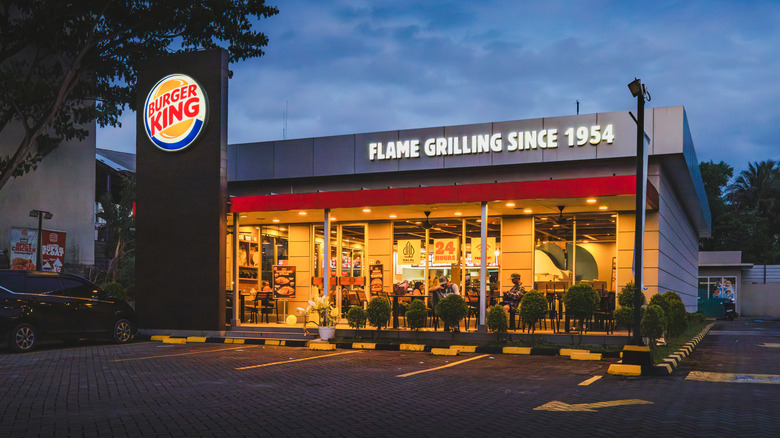
Burger King was first founded as a corporation in the 1950s in Miami, Florida. In the 1960s, it changed hands after being bought by the Pillsbury Company. By this time, with almost 300 locations, it was already the largest hamburger chain after McDonald's. Next, between 1988 and 1989, the British company Grand Metropolitan PLC bought Pillsbury, and with it became Burger King's new owner. Fast forward to 2010, and Burger King was bought by the Brazilian company 3G Capital, which subsequently merged it with Tim Horton's and formed the current parent company Restaurant Brands International Inc., in which 3G owns a stake. At each stage, the Burger King brand sold at higher and higher valuations.
While the brand appears to have its ownership firmly fixed at the moment, there's a lot of movement in the ownership of actual Burger King restaurants. In fact, franchising is deeply ingrained in Burger King, going back to its founders, James McLamore and David Edgerton. With RBI taking control of over 1,000 locations after its purchase of Carrols Restaurant Group Inc., the company now plans to sell back (refranchise) the outlets to small franchisees over the next few years. In the meantime, a widespread upgradation plan for Burger King outlets, part of the brand's "Reclaim the Flame" initiative, is underway.
In the past, Burger King has preferred small, local franchisees over large ones that own hundreds of outlets. Thus, while most Burger King outlets you visit may appear the same, they are owned by different entities. One way this is noticeable is how some outlets will allow you to customize your Burger King Whopper differently from others.