

Need An Affordable Alternative To Prime Rib? We've Got You
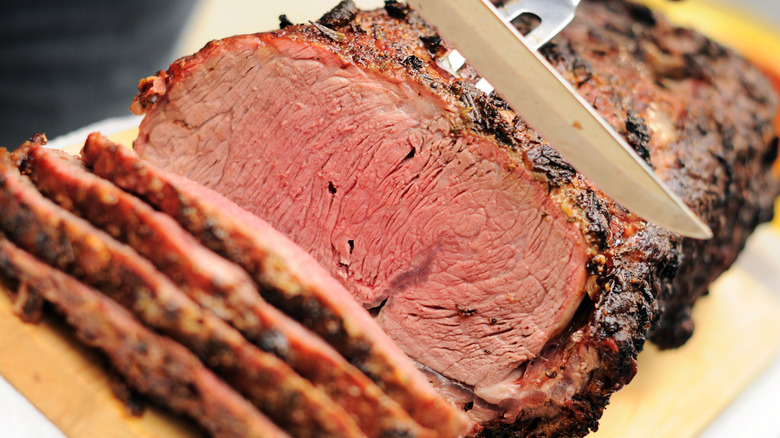
Prime rib signals absolute decadence, doesn't it? Cutting through the perfectly browned exterior and into the juicy, gorgeously marbled, pink deliciousness is enough to make your mouth water — but it can also make your wallet cry. There's no way around the price of prime rib, unfortunately, but there are some cuts that bring a similar flavor without such a hefty price tag.
If you'd like to serve up a show-stopping meal that has all the tender, savory goodness of prime rib without taking out a second mortgage, you've got plenty of options. Our top picks to take the place of a prime rib roast? Top sirloin roast and round roast. While prices may vary by location, at Costco, prime rib runs around $33 per pound. You can typically score top sirloin for about $11 per pound, while you can get round roast for around $7 per pound. While both of these cuts are easier on your wallet, they require a bit of extra time and care to turn into tender, flavorful dinners. Let's take a look at what you need to know to create prime-rib-level goodness with the less expensive cut of your choice.
How to create prime-rib-level decadence with a cheaper cut of beef
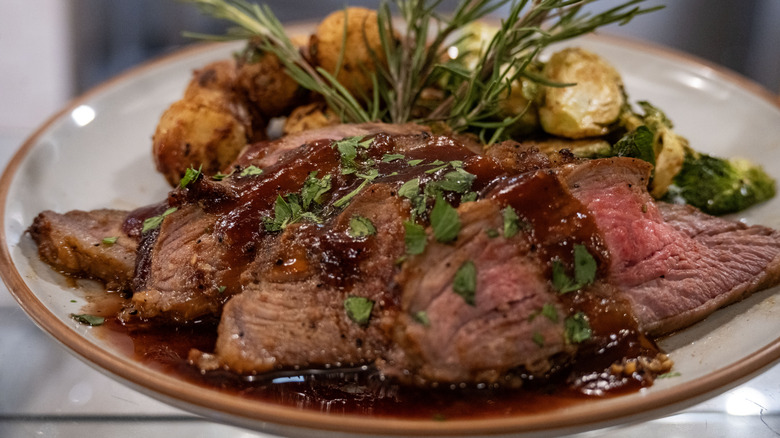
There are a few steps you'll need to take if you want to use a cheaper cut of meat but still get that juicy, tender prime rib taste. First, you'll need to prep your roast by cutting off some of the excess fat (don't go too crazy — some fat will help stop your roast from drying out as it cooks). Next, add your seasonings. Oil, salt, and pepper work well, or use your favorite spice blend. Just be sure to include a binder, like oil or mustard, so the rub sticks.
When using a less expensive cut, it's important to cook low and slow, as the roast may be more prone to toughness or dryness. Searing meat prior to cooking doesn't actually help the interior stay juicy, so you'll want to go with a reverse sear. After your roast is done in the oven, give it a bit of time to cool before you slice it. Slicing on a bias, against the grain, will be key to creating tender pieces. While this may look a little different than the standard, straight slice you'd usually use for prime rib, it'll give you a more similar taste and the tender, melt-in-your-mouth texture you're looking for.