

Do You Know What Type Of Stock Makes The Best Soup? Look Out For This On The Label

When you're starting a soup from store-bought stock or broth, rather than simmering the liquid all day, it might seem like you can reach for virtually any old can or box and still get a satisfying result. But, whether you need beef stock for a rich crock of French onion or the chicken variety for its famously soothing titular recipe, there is one crucial element you must keep in mind for optimal results: salt content. Unsalted or low-sodium stock is your best bet for a worry-free soup, so make sure to check those labels when shopping.
Anyone who's frantically searched for ways to make food less salty after an obvious shaker accident or unfortunate miscalculation knows that it just isn't worth the headache. Simply diluting the preparation or adding more acid might do in a pinch, but those are imperfect fixes. And unfortunately, even the most advanced AI kitchen appliances have yet to figure out how to extract the salt from an overly salinated stock. Given that standard store-bought versions can contain more than 500 milligrams per serving, choosing an unsalted or low-sodium variety gives you a distinct advantage, allowing you to build flavor seamlessly. (Besides beef and poultry, the same goes for your vegetable and seafood varieties.)
Tips for properly seasoning your soups when using unsalted stock
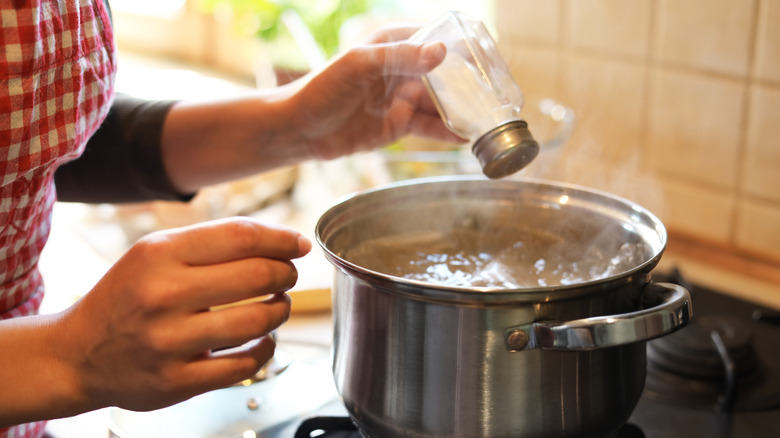
Depending on the kind of soup you're making, you're probably already salting its individual components enough to go a long way. Seasoning the onions that you use to make French onion soup, or the holy trinity of mirepoix in a lentil soup, for example, will help bring out their flavor. Ideally, you're also seasoning the poultry parts for your chicken soup before adding them to the rest of the ingredients. And the same goes for any other soups in which the ingredients are separately sauteed, roasted, or otherwise cooked before they are added to the main stockpot. All of that flavor and seasoning adds up, with the various elements melding into one tasty whole.
This is not to say that you shouldn't salt your soup once it's simmering, of course. It's just always a good idea to taste it first and add any extra seasoning at the end. You might find that it only needs a few shakes once everything is incorporated. Or, you might find that it needs a bit more. Starting out with a salt-free stock gives you maximum flexibility in either case.