

8 Types Of Fried Chicken Around The World, Explained
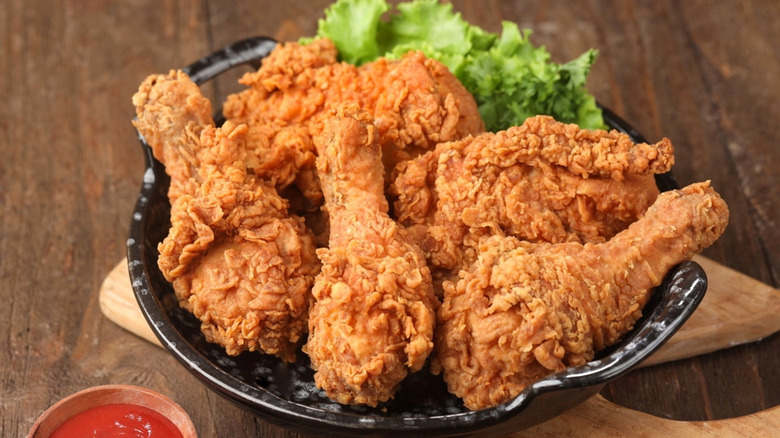
American fried chicken, such as Southern chicken (including buttermilk and pickle-juice-brined) or Nashville hot chicken, is the iconic recipe for the fried bird. But fried chicken is diverse, with varieties from all over the world. If you pick out a country on a world map, chances are that the country's cuisine has at least one form of fried chicken.
While the American South often gets the credit as fried chicken's birthplace, that might not be completely accurate. Apparently, the earliest recorded recipes (and we have to stress "apparently" because the true origins are lost in history) come from 18th-century British cookbooks and records of fried chicken meals served at a home on the Isle of Skye in Scotland. Yes, one of the world's favorite dishes may have started as a Scottish recipe, although African American seasoning and frying techniques made the dish what it is today. We can't cover every type of fried chicken, but here are nine types of fried chicken from around the world, explained.
1. Popcorn chicken (Taiwan)
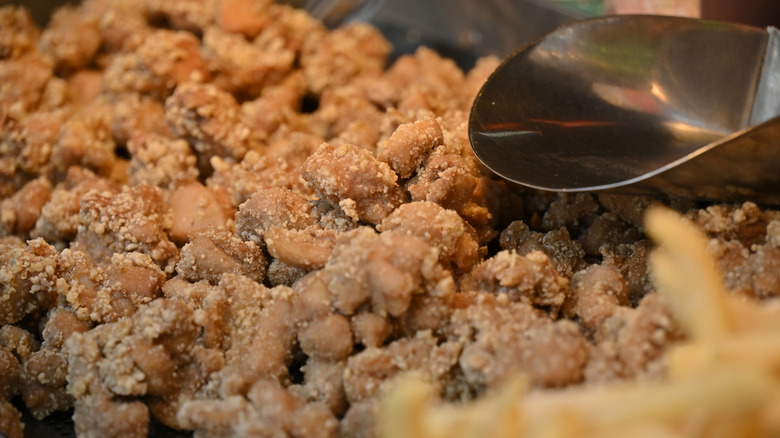
You may think of popcorn chicken as something that U.S. fast food companies invented, and that's understandable. Popcorn chicken consists of chunks of chicken thigh meat that are battered, fried, and seasoned, and it's been a popular snack in much of the U.S. since Eugene Gagliardi Jr. pitched it to KFC in the early 1990s. But the dish has its origins in a Taiwanese street snack called yan su ji, in which chunks of chicken thigh meat are seasoned with soy sauce, five-spice powder and other flavorings, coated in tapioca or sweet potato starch, fried, and seasoned again using white pepper and basil.
The dish first appeared in the 1970s in Taipei's night markets, possibly taking some inspiration from Taiwanese versions of U.S. southern-style fried chicken, which were starting to become popular at the time. While it sounds similar to Japanese karaage, the dish is based off these Taiwanese fried chicken recipes instead. You'll find restaurants in the U.S. selling yan su ji with versions that combine it with southern-style fixings, such as placing the chunks on buns with pickles, or other seasonings that reflect the heritage of the person running the restaurant.
2. Nigerian fried chicken (Nigeria)
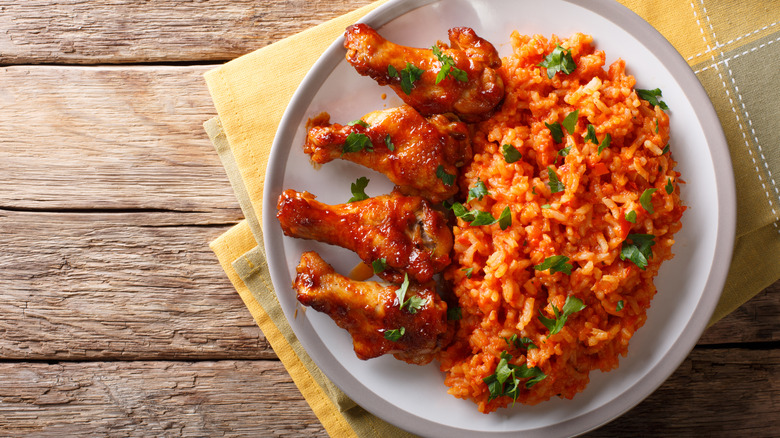
Most fried chicken dishes are relatively quick affairs: season, dredge, fry, and eat. Nigerian fried chicken goes a step further. Rather than finding a tender bird and quickly frying it up, instead, this dish requires using older birds with tougher meat and boiling them for a substantial amount of time. This toughness allows the chicken to withstand the longer cooking times that Nigerian recipes often call for.
It's not that unusual to have a fried chicken recipe that requires a long marination time; one of the oldest fried chicken recipes from a 1747 cookbook called for soaking the chicken in vinegar and spices for up to four hours. But Nigerian fried chicken starts with boiling, not marinating, the meat for as long as an hour; the time depends on how old and tough the chicken is. The meat isn't boiled in plain water but is instead boiled in curry and other spices, including garlic, thyme, and red pepper. It's only after the chicken soaks up all that flavor that it's fried and then served with a pepper sauce and other dishes such as jollof rice.
3. Chicken katsu (Japan)
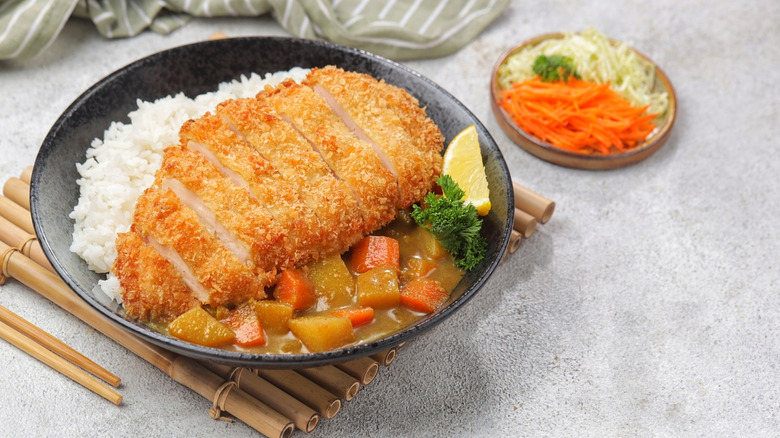
The late 1800s saw great changes in Japanese society, many of these influences coming from Europe. Food was no exception. The now beloved chicken katsu, a chicken variation of tonkatsu, or fried pork cutlets, is one such dish. The Japanese tonkatsu was inspired by the French côtelette de veau, which was transliterated as katsuretsu. This was a breaded, bone-in veal cutlet, pan-fried in butter and served with baked vegetables and sauce. While it was popular with Westerners, it didn't suit the Japanese tastes.
In 1895, a Tokyo restaurant owner decided to switch the meat to boneless pork and coat it in panko, frying it in vegetable oil as if it were tempura, and serving it with cabbage. That version became very popular with the Japanese as it was less greasy, and along with a few adjustments (like cutting the cutlet into strips), the rest is history. Chicken katsu and other meat-katsus followed quickly, and chicken katsu even became a favorite part of Hawaii's "local food" due to its influence from Asia.
4. Karaage (Japan)
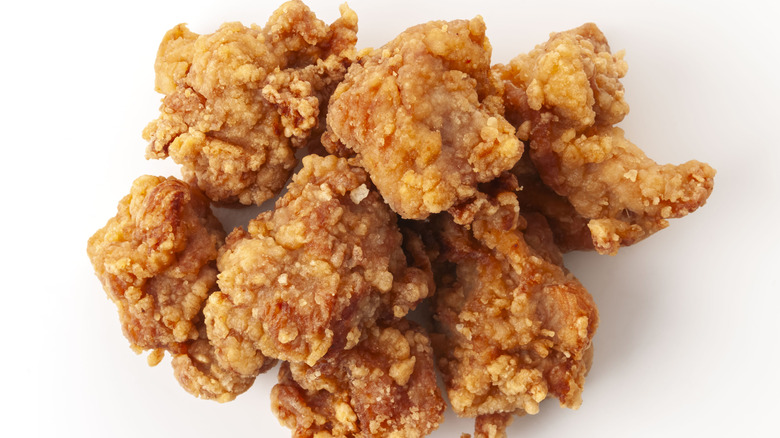
Karaage is a technique in which marinated food is coated in starch and deep-fried. You can use the technique with anything, but nowadays, the name generally refers to chicken. The exact origin of karaage chicken is hazy, but it does appears to have Chinese culinary influences.
Karaage chicken began to appear on menus sometime between the 1930s, with the recipe spreading like wildfire after that. The key event that led to karaage becoming so popular was when the owner of an izakaya in Usa City in southwestern Japan opened a take-out karaage stand. Technically anyone can make a form of karaage, but the dish is so well-loved in Japan that there's actually a Japanese Karaage Association that offers training, certification, and the yearly opportunity to find the best karaage at the Karaage Grand Prix.
So what does it taste like? Karaage is generally boneless, often flavored with soy sauce and ginger, and coated with a mixture of flour and starch. The result is a crispy and light batter, made even brighter by a squeeze of lemon.
5. Korean fried chicken (South Korea)
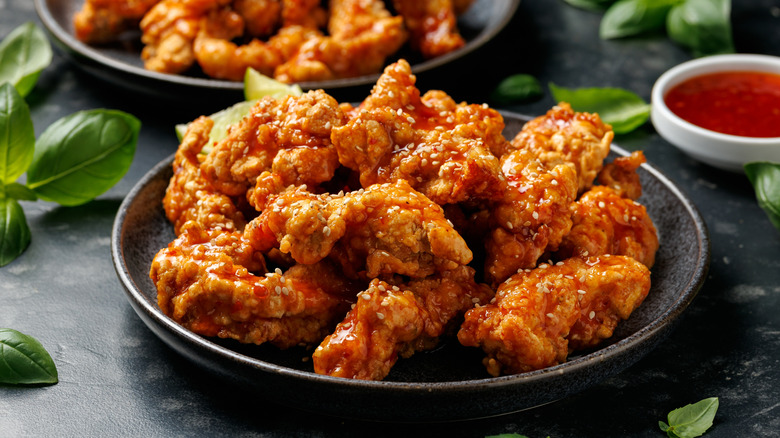
Korean fried chicken is a direct descendant of American fried chicken; African American soldiers brought the food over to Korea during the Korean War and shared the recipe with locals. Koreans loved the food, but it wasn't until the 1970s when cooking oil came down in price that frying chicken really became mainstream. Korean fried chicken made it to the U.S. and is now so popular that even areas with almost no Korean community may have at least one place serving the dish.
Korean fried chicken recipes are unique in that they usually require double-frying. The first round of frying gets everything cooked and relatively crispy, and the second round gives the coating even more of a crunch. The flavors used in the coating and sauces can vary, and asking different people for their favorite Korean fried chicken recipe will likely get you a range of different seasoning combinations. A typical flavor combo is soy garlic, and many recipes include a sweet, spicy gochujang sauce, known as yangnyeom.
6. Gai tod (Thailand)
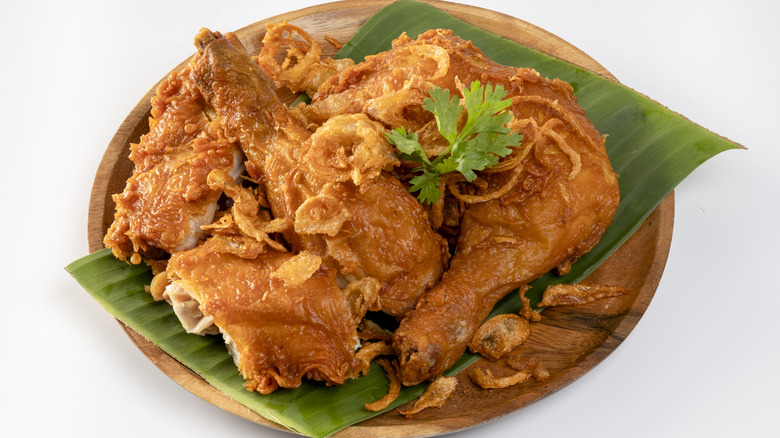
Gai tod is Thailand's take on fried chicken, and like many dishes, this one's origins are sort of lost to time. Techniques for frying chicken have been a part of Thailand's food scene for decades, and they possibly first arrived through trading with different countries that all had their own fried chicken recipes. Nowadays, you'll find fried chicken in both restaurants and street carts across Thailand, popular at all times, even breakfast. Flavors tend to include white pepper, coriander seed, and garlic, along with rice flour and sometimes fish sauce.
The most well-known version of Thai fried chicken hails from Hat Yai city in Southern Thailand. The story goes that a couple trying to sell chickens started frying the older ones to avoid food waste. When someone gave them some old shallots, the couple chopped up the shallots, fried them, and added the pieces to their fried chicken. The combination of fried chicken topped with crispy shallots was a hit and now an iconic component of gai tod Hat Yai.
7. Chicken 65 (India)
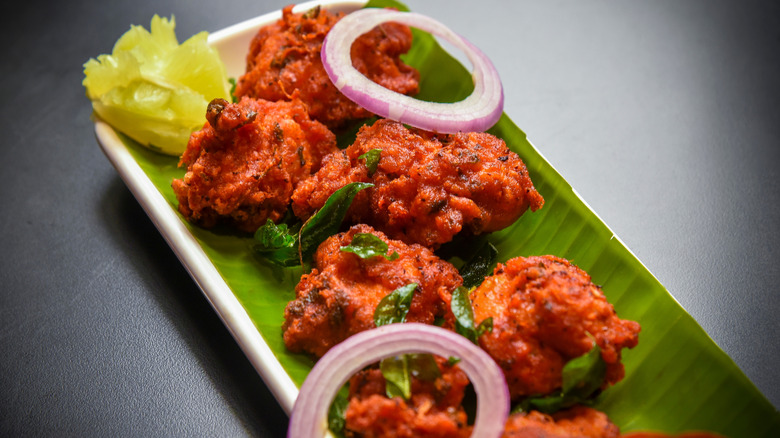
Chicken 65 is one of those dishes with contested name origin. Depending on who you ask, that "65" could refer to the chicken's age in days, the number the dish was at on the menu, the number of pieces of chicken in the recipe, the number of hours the chicken needs to sit in the marinade, the number of ingredients in the recipe, or the year it was created. According to food writer Soity Banerjee in an interview with BBC News India, the dish was created at a New Year's party in 1965 at the Buhari Hotel in Chennai. Banerjee said the hotel claimed that the dish was named after the year since the clock was about to tick over into 1965.
Chicken 65 recipes can vary to an extent, but a few things tend to be the same, mainly that there's a yogurt coating, and chili powder or peppers make their way into the recipe at some point. Some recipes marinate the chicken in lemon juice or vinegar plus spices, reserving the yogurt coating for a second round of cooking once the chicken is fried. Others use the yogurt in the initial marinade and not in the final seasoning, and so on.
8. Filipino fried chicken (Philippines)
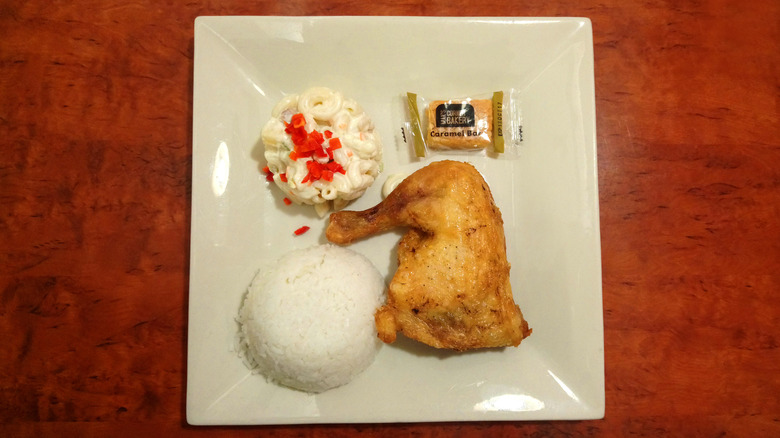
Filipino fried chicken has a couple of distinct differences that set it apart from fried chicken recipes in other cuisines. One is the use of calamansi juice in the marinade. You'll find calamansi or lemon juice in general Filipino fried chicken recipes, as well as in copycat recipes for fried chicken from Max's, an infamous Filipino fried chicken chain. The other chain, Jollibee, doesn't really talk about its recipes, but reviews mention tasting a hint of citrus, and some copycats include calamansi juice as well.
Another difference is that the recipe may or may not include batter or a starch to coat the chicken. This is another hallmark of Max's chicken, in which the chicken is soaked in a marinade but not coated with starch, batter, or breading. Maximo Gimenez and Ruby Trota invented the recipe after World War II, when they would cook for American troops in the Philippines. However, some generic recipes will include breading or a starch, such as Jollibee's chicken with its Southern American-inspired coating.
If you make a copycat Max's recipe, you'll notice that the cooking technique is different, too. Some recipes call for steaming or boiling, and then double-frying; others steam and then fry once or skip straight to double-frying.