

The Restaurant Menu Wording That Often Leads Customers Astray
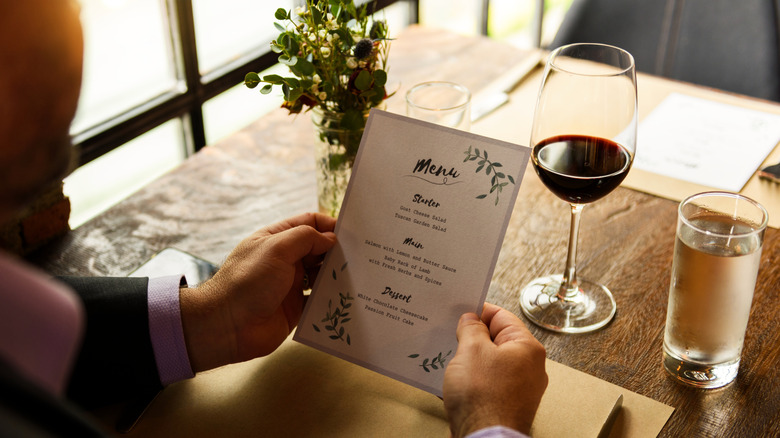
Discerning diners rely on the fine print of restaurant menus to follow their food choices, so something as seemingly harmless as the wrong wording could lead them astray. Terms like gluten-free and gluten-friendly are commonly misrepresented on menus, and some people might treat them as if they are interchangeable — but they're not. If you're at a restaurant for gluten-free dining, you should take a closer look at the menu.
Gluten-free is the only legally approved term, and others, such as gluten-friendly, celiac-friendly, and gluten-sensitive, have no legal bearing. The gluten-free label means the product upholds the requirements mandated by the FDA, so folks with celiac disease can consume it without worry. Terms like free of gluten, no gluten, or without gluten — which are under the umbrella of the certified gluten-free term, as per the FDA — are also safe.
Classifications like gluten-friendly are still being used by some restaurants to indicate the dishes have been made with gluten-free ingredients, but it's possible they were processed in an environment that allows potential cross-contamination. This is why restaurants like the Olive Garden will always be a risk to gluten-sensitive diners. The term gluten-friendly is not to be trusted completely, as gluten-free is the only term you're ensured follows the FDA's guidelines. To guarantee you're getting a truly gluten-free meal, even if the fine print is tricky, ask more about the ingredients and vet them according to regulations.
What constitutes as gluten-free
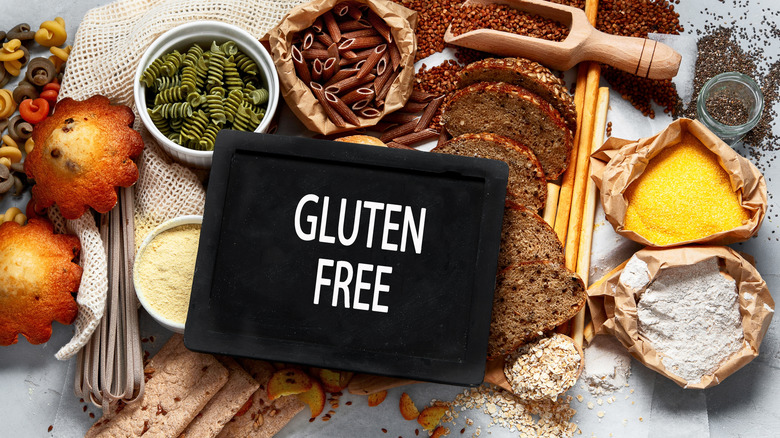
According to the legal definition by the FDA, a food product should have less than 20 parts per million (ppm) of gluten to be considered free of the ingredient, thus earning the label gluten-free. This is also considered the smallest amount that tests can ascertain. Elimination of certain ingredients, including wheat and barley, are crucial to label a product gluten-free, too. That said, processed products containing rye, for instance, can be gluten-free if it's omitted along the way, but it's important that even after processing, the food product tests lower than 20 parts per million of gluten.
Since the term is not always present on food labels, nor is it required to be, those who are averse to gluten should be on the lookout for hidden gluten, even in something like store-bought seasoning. However, thanks to these clear definitions, it can be easier to categorize what foods are gluten-free and which are not. Additionally, this allows restaurants to follow a distinct guideline, allowing them to label a dish gluten-free. Restaurants are also continuously and carefully monitored by the FDA, with the help of the state, ensuring labels are accurate and people with celiac disease can dine in with reduced risk.