

The Old-School Candy Company That Originally Made Baking Powder In The 1800s
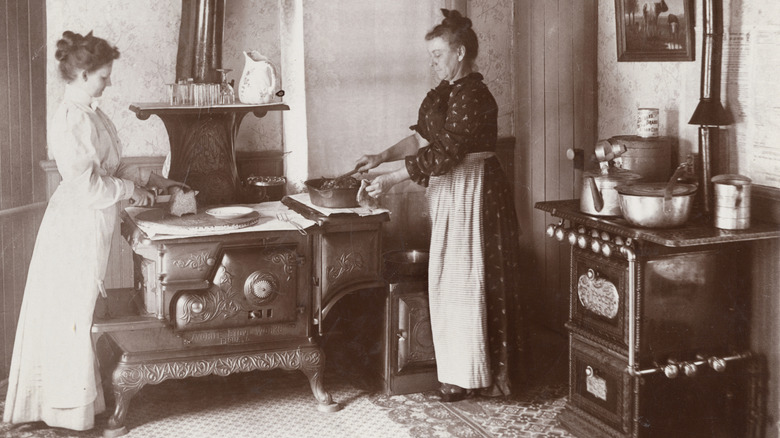
In the business world, there have been a few companies that have pivoted from their original business models to find huge success with a very different product. For instance, Play-Doh started out making wall cleaner before it began selling its iconic kid's modeling clay. One of the more unusual of these moves was made by a Chicago-based company you may have heard of: Wrigley's. When William Wrigley Jr., came to Chicago, Illinois in 1891, it was as a representative of his father's Philadelphia-based Wrigley Manufacturing Company selling something called mineral scouring soap. In order to do that, he began offering customers free baking powder when they purchased the soap.
In what would become the first in a series of pivots, Wrigley dropped the middling soap and began selling his much more popular baking powder. In order to push sales, Wrigley started offering free gum with the purchase of his baking product. Again, customers preferred the freebie over what he was selling. And so, in 1893, he made an even more legendary move. He dropped baking powder and began selling gum. He introduced Juicy Fruit and Spearmint gum that year. That's right, Juicy Fruit has been around since the Gilded Age.
Wrigley understood the power of advertising
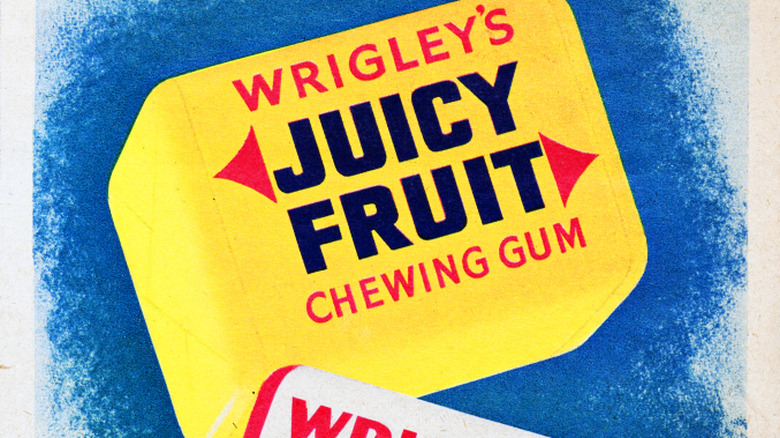
At the beginning, William Wrigley Jr. used a Chicago-based manufacturer, the Zeno Gum Company, to make his gum. Wrigley's gum was quickly becoming popular, in part due to his belief in the power of advertising and name recognition. He advertised heavily, including on highway billboards, and introduced the concept of direct marketing. One 1894 newspaper ad proclaimed Juicy Fruit to be "the finest flavored gum on earth" and offered colored lithographs with the purchase of a pack. By 1908, his company was clearing more than a million dollars a year and continued to grow.
In 1911, he bought Zeno and changed the name to the Wm. Wrigley Jr. Company, and began manufacturing the gum himself. At the time, Wrigley's gum was made using chicle, a natural tree sap. (Today, it's made from plastic polymer.) By 1921, the company was pumping out almost 10 billion sticks of gum a year. Wrigley soon built a skyscraper in downtown Chicago, and his company only got bigger. Between 1921 and 1930, Wrigley's profits jumped from $8.5 million to $12.2 million, while maintaining low prices and high quality. When Mars, Inc. bought the company in 2008, it paid $23 billion. And it was all because Wrigley had the foresight to switch from baking powder to chewing gum.