

What Exactly Defines A Deli?
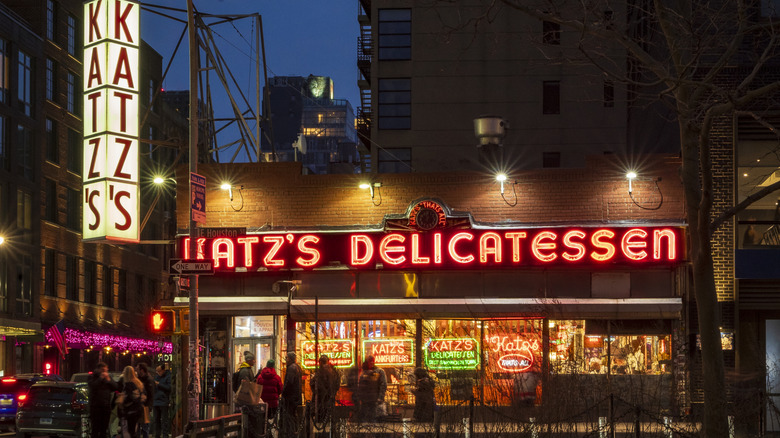
Delis are somewhat synonymous with American culture, and as a non-American, they're often the first place tourists want to eat at. But what actually defines a deli is a little complicated. The word deli is short for delicatessen, which comes from the German word, "delikatessen," meaning delicacies or fine foods. It was the name for stores that sold high-quality preserved foods, such as meat, cheese, and imports. As delis became more spread across Europe in the 19th century, they were more like grocers than restaurants. So as the concept of the deli travelled over to the States, it was shaped by German and Eastern European Jewish immigrants who brought it with them.
It's hard to pinpoint the very first deli that opened in the United States, but it's often traced to late-19th-century New York City. Around this time establishments like Katz's Delicatessen (founded in 1888 and often cited as the city's first Jewish deli) helped cement the deli as the cultural institution it is today. And slowly, the cultural ownership began to expand as Italian, Middle Eastern, and other immigrant food businesses contributed their own subtle influence.
The modern deli has less of a strict country of origin — although its origins are certainly Jewish – and more of a concept centered around counter service and ready-to-grab offerings. So what makes a good deli (here's what to look for and what to avoid) today isn't so much about geographical origins or any strict definition; it's more about abundance, freshness, and convenience.
The origins of the deli are about as American as it gets
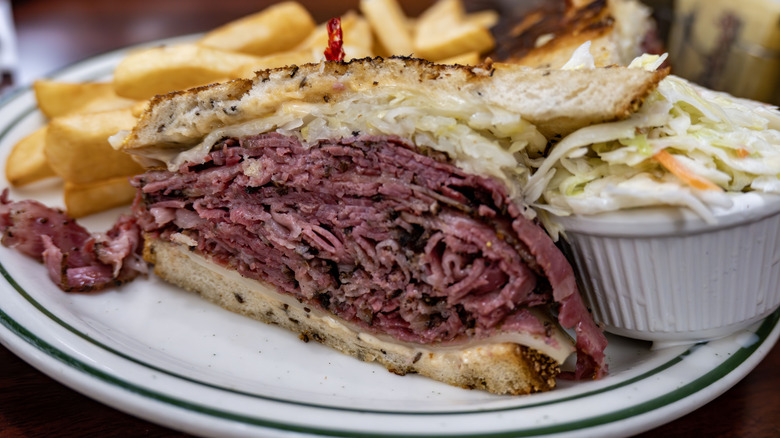
In the U.S., it's hard to ignore that the definition of a deli has sort of evolved into a sandwich institution. They're now largely known for serving up massive sandwiches bursting with house meats like pastrami, slices of cheese, and salads made fresh on premise. And even the presentation is iconic – sandwiches wrapped deli-style are just so quintessentially New York. Beyond the sandwich, other foods have also become inseparable from deli culture — potato salad, coleslaw, macaroni salad, and even tuna salad just tastes better from a deli.
The history of the deli is about as layered as the sandwiches you can buy there. German delicatessens, Jewish delis, Italian markets, and modern sandwich shops all exist on the same spectrum, connected by their often family-run models and a focus on quick counter service and everyday type of food. In other words, the deli isn't really summarized by one strict definition, it is a concept that's been shaped by every community that slowly built it. And what is more American than that?