

The Iconic Frozen Treat That Became Popular During Prohibition
Dates are having a moment these days as an add-in to trendy smoothies and a healthy sweet snack. But a century ago, date-forward drinks were all the rage in the Palm Springs, California, area, where a cool, caramelly milkshake became a treat that's synonymous with the region today.
The SoCal Coachella Valley, with its hot, dry growing conditions, has long been the capital of the United States' date industry — now producing 90% of the country's crop. Thanks to this local abundance, restaurants serve up everything from date burgers to date jam, and pancakes and omelets studded with the sweet, chewy fruit. But nothing's more iconic to the region than the date shake — a classic California treat combining ice cream, milk, and the popular stone fruit.
It's hard to imagine these days — we're so used to being able to duck into a brewery or order a glass of wine with dinner, but a century ago, when Prohibition was in full swing, folks were thirsty for all manner of non-alcoholic beverages. The now-iconic date shake was born around 1930 — first blended up by Russell Nicoll, the owner of an unassuming roadside stand, The Valerie Jean Date Shop. As the Palm Springs region entered its mid-century golden era — becoming the luxury destination for Hollywood elites and Frank Sinatra's rat pack — the refreshing, ice-cold shake quickly became a must-have treat for star-studded vacationers and regular folks alike — one that hits particularly hard in the scorching temps.
The treat's starring ingredient has Middle Eastern roots
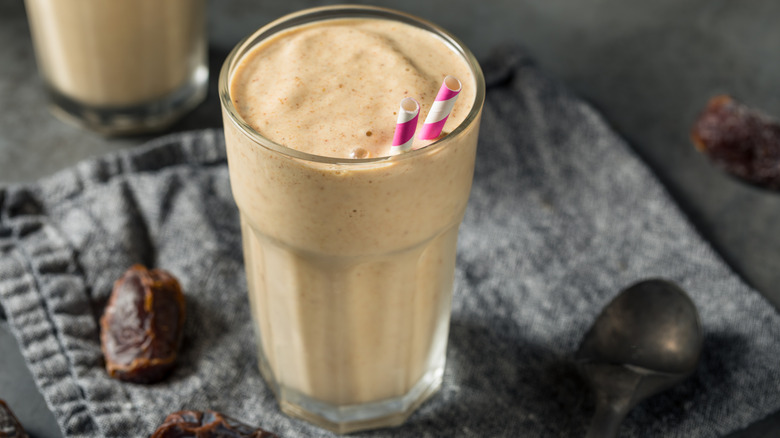
While the Palm Springs region may lay claim to the date shake, like so many beloved dishes we think of as uniquely American, we have outside influences to thank. The shake became a regional mainstay because of the local abundance of the starring ingredient, but the date itself originates in the Middle East and Northern Africa, where date palms have been cultivated for thousands of years.
Despite being so synonymous with the California landscape, palm trees are not native to the state (save for one specific species). Recognizing the ideal growing conditions of the So Cal climate, the U.S. Department of Agriculture led an organized effort to import trees from North Africa and the Middle East into Southern California. And by the 1920s, the region's date industry was thriving — today producing 35,000 tons annually.
If you're hankering for the cool, thick, refreshing shake, you can certainly blend your own vanilla ice cream, milk, and a few pitted dates. But for the real deal, nothing touches the regionally made treats. The Valerie Jean Date Shop has long been closed (though it still stands, as a historic landmark.) But other classic spots still offer roadside dates and shakes, such as 100-plus-year-old Shields Date Garden — a still-thriving tourist attraction. Less than an hour away is Hadley Fruit Orchards, another time capsule spot serving up shakes since 1931, where you can pay homage to the region's history, one sweet sip at a time.