

Fast Food Fisherman? The Man Behind The Famous Filet-O-Fish Catch
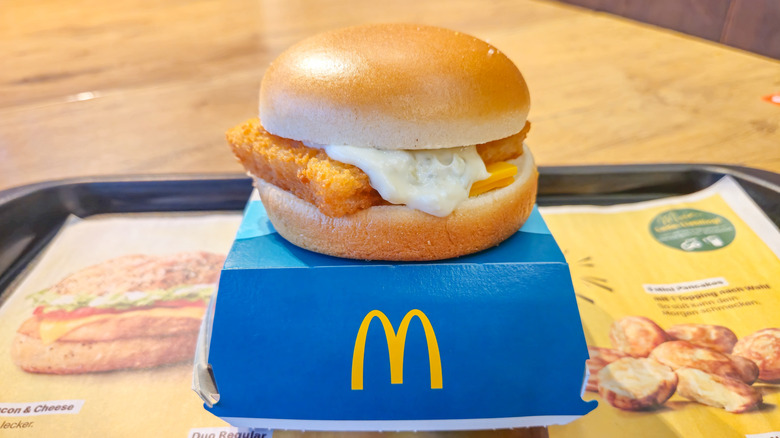
The Filet-O-Fish sandwich at McDonald's often finds itself in the spotlight. From President Donald Trump professing his long-standing love for the sandwich (he'd like them to add a little bit more tartar sauce, however) to social media hacks explaining how to elevate the humble item (pro tip: add bacon, lettuce, and tomato to give your Filet-O-Fish the BLT treatment), it's pretty popular as far as fish sandwiches go. If you've ever wondered about the source of the star seafood, McDonald's has shared exactly where the fish used in the crispy, iconic sandwich comes from. The chain disclosed that Kenny Longaker, an Alaska-based fisherman, and his crew aboard his boat, the Defender, are responsible for many of the wild-caught pollock fillets that McDonald's uses to feed people around the world.
The McDonald's website shares the story of how its fish makes it from the Bering Sea to your Extra Value Meal. "The pollock we catch are filleted and frozen within about 24 to 72 hours after being caught, and it's the quality McDonald's expects," says Longaker. In addition to supplying the wild-caught pollock for the Filet-O-Fish sandwich (which has a pretty wild history, by the way), Longaker also reportedly supplied some of the fish used for the chain's Fish McBites, a short-lived item that graced McDonald's menus for a three-month period in 2013.
Why using sustainable, wild-caught pollock matters
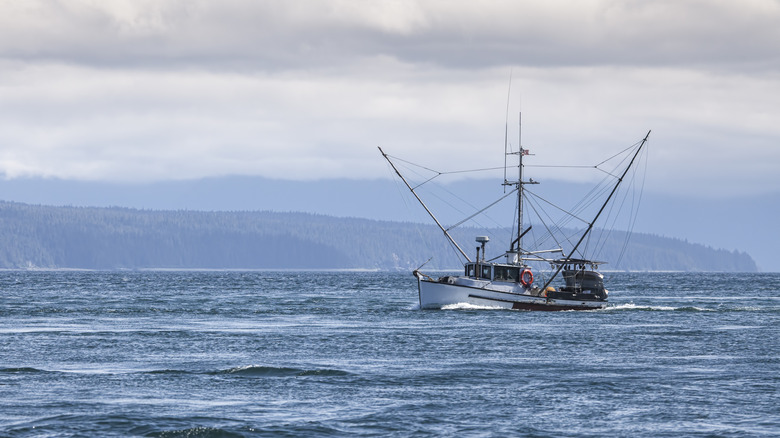
McDonald's makes a point to let customers know that the pollock used in its Filet-O-Fish sandwiches is almost always wild-caught fish from sustainably managed sources. While farm-raised fish are usually less expensive than wild-caught, they can be worth the money. In some cases, wild-caught fish offer a higher nutrient concentration, such as in the case of omega-3 fatty acids. This means that when McDonald's chooses to work with fishermen like Kenny Longaker, it's providing you with a healthier option. Wild-caught fish also often has a lower mercury content than farmed fish, which is important if you tend to eat a lot of seafood.
When it comes to seafood, sustainability matters. In some cases, wild-caught fish are caught until populations become depleted — a problem known as overfishing. When an area or a specific type of fish is overfished, the effects on both underwater and local human communities can be devastating. A commitment to sustainable seafood is key for the long-term health of both fish and the communities that depend on them. McDonald's has stated its commitment to using fish for the Filet-O-Fish sandwich from sustainable sources, such as Kenny Longaker's team aboard the Defender, which operates according to Marine Stewardship Council standards. Next time you sit down to enjoy a Filet-O-Fish, take a second to send a bit of mental gratitude their way. It's thanks to Longaker and others like him that the Filet-O-Fish made it to your plate.