

The Plastic Wrap Mistake That's Turning Your Guacamole Brown
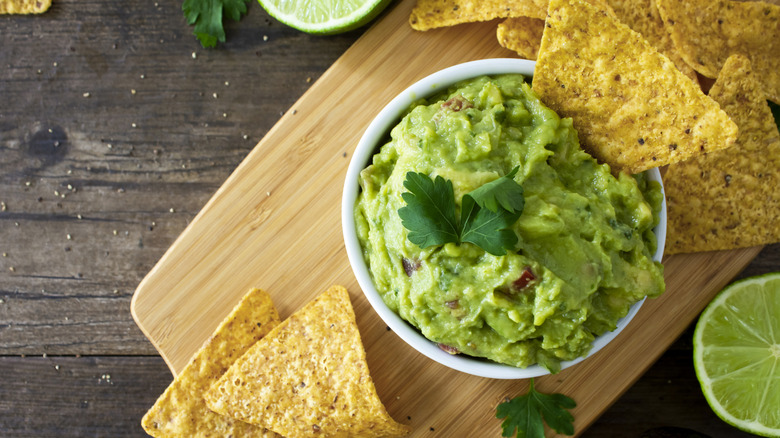
Guacamole has the uncanny ability to please just about any crowd. It's creamy, refreshing, and never met a chip it didn't like. But what can quickly ruin the party vibe is guacamole that has turned brown. While you may jump to cover your guac with plastic wrap to keep it verdant and tempting, how you cover it truly matters. Casually draping the wrap, even if you firmly press it around the edges of your container, is not going to cut it.
When it comes to guacamole, air is the enemy. As you have surely noticed a few hours into a gathering, avocado quickly oxidizes and turns brown. In science class terms, the enzymes in the avocado react with oxygen and turn into melanin. To ensure the freshest looking guacamole, you need to tear a piece of plastic wrap, start in the center of your dish, and smooth it towards the edges. Make sure the film rests gently, but directly, against the guacamole, then up the inside edges of the dish, before smoothing firmly around the top.
Less air means greener guac
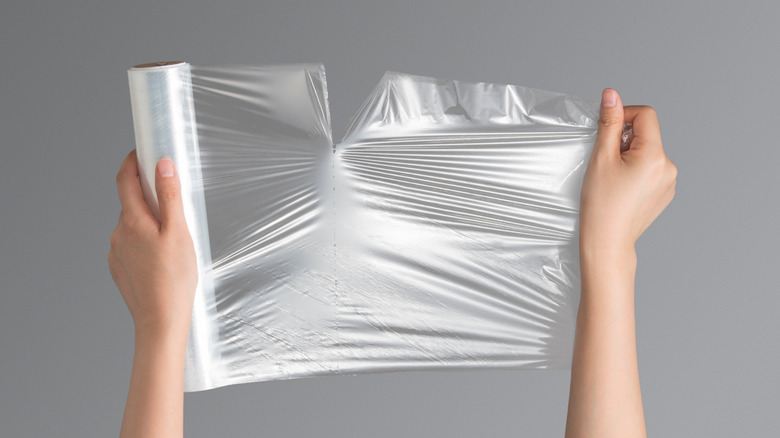
While you may have seen people putting the avocado pit back into a finished batch of guacamole to keep it fresh, this is just an old wives' tale. Some people swear by other hacks, such as finishing with lime juice or adding a layer of water or oil to the surface. Scientifically, you really just need to limit air exposure. Properly applied plastic wrap has you literally covered — either before company arrives or if there is any guac leftover.
While brighter green guac certainly looks more appealing, it's safe to eat this addictive dip if it has started to turn brown as long as it doesn't smell off and it has been refrigerated. To make top-shelf guac you can enjoy as long as possible, start with prime avocados, make sure to season, and don't overmash. In fact, Ina Garten's pro tip for making guac involves adding her pre-cut ingredients and avocado flesh to a wooden bowl and only using a knife to combine to create that perfect chunky texture.