

Fish And Chips Wars: The Difference Between American And British
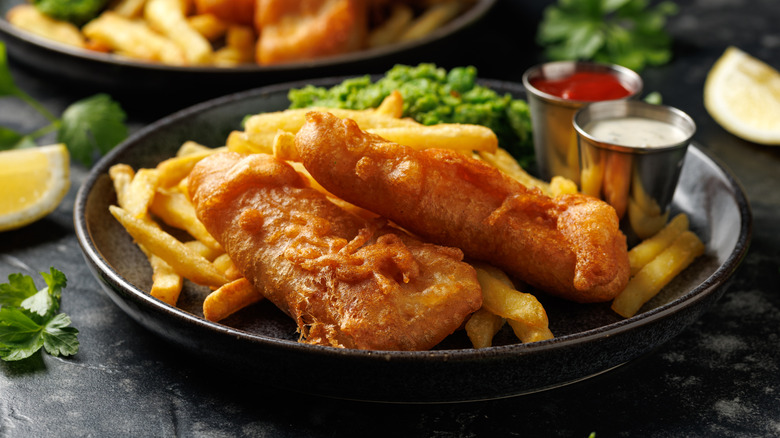
Fish and chips is one of the most popular dishes in the United Kingdom. It's a combination of fried fish and "chips" (the U.K.'s term for fries), and it's become an iconic British street food. The meal is such a well-known British delicacy that, when it made its way over to the United States, the name didn't change to match the U.S.' verbiage. But the meals do have some distinct variations.
It's important to note that fish and chips is, in some ways, in the eye of the beholder. The differences in preparing and serving it aren't clean-cut, meaning that, while mushy peas might be a far more popular side in the U.K., it doesn't mean you never find it paired with fish and chips in the U.S. The same goes for the sauces, the fish types, and the portion sizes. They're all generally different between the two countries, but some U.S. places might serve more traditional, British-style fish and chips than others.
Different fish are more common in each country
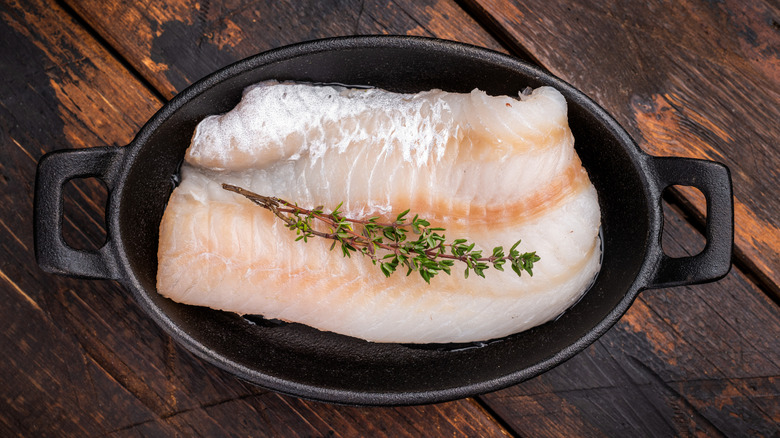
The most traditional form of fish and chips is made with cod, a mild-tasting, flaky whitefish. Around 60% of U.K. fish and chips dishes are prepared with cod, though in northern England, haddock — another type of mild whitefish worth buying — accounts for around 25% of the country's fish and chips meals.
In the U.S., you can likely find cod-based fish and chips at any upscale pub or restaurant. But, if you stop into a fast food joint, such as Long John Silver's, the dish is likely made with Alaskan pollock instead. Pollock is also a whitefish, but it's available in greater abundance in the U.S., making it less expensive to harvest than cod and, therefore, a common alternative to cod in lower-priced fish and chips meals. You can also find haddock-based fish and chips in the U.S. If you're dining out, you can always ask your server about the type of fish being prepared.
The fish can be fried in different oils
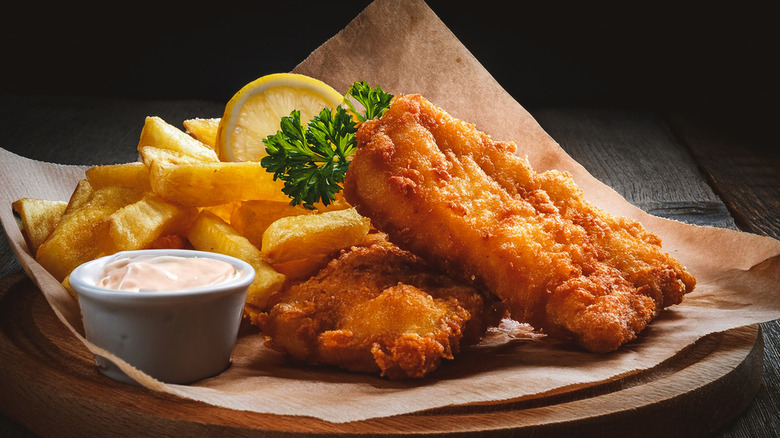
Another major difference between these two dishes is the oil used to fry the fish. Based on a KFE fish and chips survey for the National Federation of Fish Friers, the majority of U.K. fish is fried in palm oil. Palm oil comes from the oil palm tree; it's a type of vegetable oil with a smoke point around 450 degrees Fahrenheit, making it popular for frying foods. This oil also exists in many processed foods. Other popular fish and chips oils in the U.K. include beef tallow and rapeseed oil.
In the U.S., you don't see palm oil commonly used for frying. Instead, the majority of U.S. restaurants fry food in either vegetable or canola oil. While palm oil is a type of vegetable oil, most vegetable oil in the U.S. comes from soybeans. Soybean oil and canola oil both have high smoke points and low price tags, making them good for buying in bulk and frying a wide variety of foods. Other oils, such as peanut or sunflower oil, are common in the U.S. restaurant industry, too.
The UK tends to serve more fries
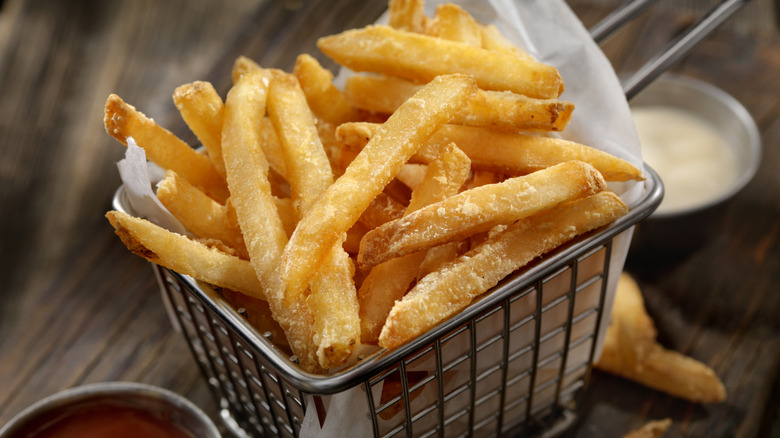
They say portion sizes are bigger in the U.S., but it might depend on what you're serving. Insider Food weighed individual portions of fish and chips between the U.S. and U.K. and found that, based on its own experiment comparing Long John Silver's with British pub Chippy's, the British version of fish and chips came with nearly triple the amount of fries compared to the United States.
Of course, the true measurements might vary depending on where you purchase your fish and chips. Plus, the types of restaurants you're comparing could make a difference. It's possible that a U.S. fast food restaurant serves fewer fries than a more sophisticated pub or restaurant. Finally, the style of fry might impact the weight. Those who have eaten the dish in both countries say the U.K. commonly serves thick-cut steak fries with its fish and chips, while U.S. fries vary from steak-cut all the way to thin-and-crispy, depending on where you are.
The sides and sauces are different
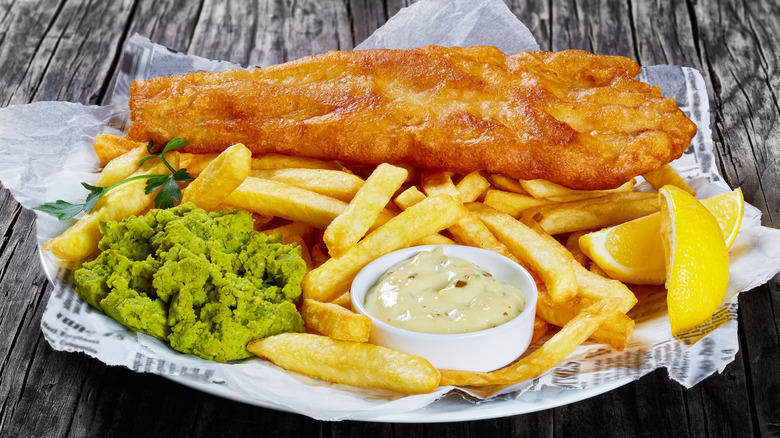
Perhaps the most notable difference between the U.S. and U.K.'s fish and chips isn't the type of fish or the style of fry. Rather, it's what else the dish is served with. In the U.K., curry sauce and mushy peas (marrowfat peas simmered into a thick, sauce-like side dish) are the two most popular sides served with fish and chips, according to the KFE fish and chips survey for the National Federation of Fish Friers. In the U.S., you'd be hard-pressed to find either of these unless you're at an absolutely authentic British-style pub.
As far as additional sides go, the U.S. typically doesn't serve anything alongside the fish and fries. Tartar sauce is a commonly served dipping sauce, but you might be asked if you want cocktail sauce as well. Malt vinegar is a popular side condiment for fried fish in the U.K., and while it's not quite as common in the U.S., it's worth asking for since many seafood spots do carry it.