

Why You Should Never Put Wooden Spoons In The Dishwasher
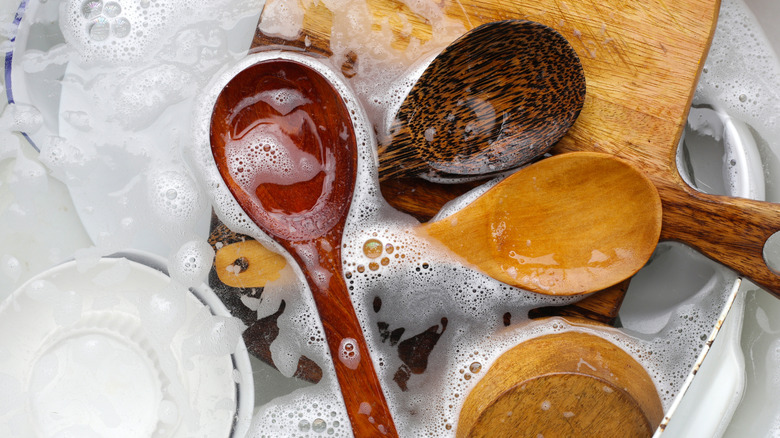
What's a home cook's best friend, if not a good old classic wooden spoon? A wooden spoon is essential for making sauces, and every baker needs one in their kitchen too – and that's only the start. Whether you're stirring a rich mushroom risotto loaded with Parmesan, whisking a smooth, creamy polenta for breakfast, or even tossing vegetables in a hot pan, chances are you're holding a wooden spoon in your hand. But if you want it to last, there's one rule you should always follow: keep it out of the dishwasher.
This is because the machine's intense heat and water pressure will cause the spoons to warp and crack. Once they dry out, cracked wooden spoons can easily become a breeding ground for bacteria. And to make matters worse, dishwasher cleaning can cause the wood to lose all the natural oils and fibers and become even more vulnerable to damage. Plus, the use of harsh detergents can additionally shorten their lifespan.
That doesn't mean you should ditch them entirely though. Wooden spoons are essential in the kitchen for many reasons. First of all, they're extremely reliable. Not only are they heat-resistant, but they're also non-reactive with acidic foods, which makes them perfectly safe to use. They're environmentally friendly, durable, cheap, lightweight, and depending on the type of wood used for their production, they can even have natural antimicrobial properties and prevent bacterial growth. But they do require proper care, and it's paramount that you never put this kitchen item in the dishwasher. Instead, you should always wash your wooden spoons by hand.
Keeping your wooden spoons in good shape is easier than you think
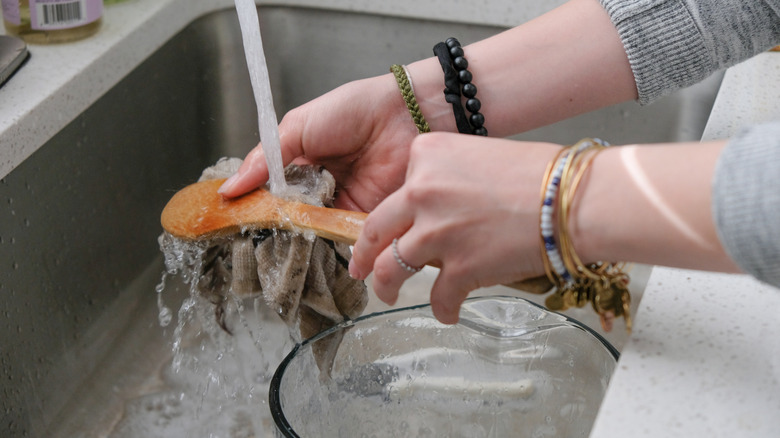
The best way to extend the life of your wooden spoons is to clean them properly from the beginning. You can do this by simply washing them by hand with a sponge, a drop of dish soap, and water as soon as you're done cooking. Once finished, quickly wipe the spoons dry with a clean kitchen or paper towel. All that's left to do then is to leave them to dry thoroughly in an open, well-aerated place.
At the same time, make sure to rub them with mineral oils (like coconut, linseed, or walnut oil) monthly, or whenever they appear dry. This will prevent splitting and protect them from moisture. However, because wooden spoons (and any wooden utensils for that matter) are porous and can absorb food particles and oils, they can often trap odors. But you still shouldn't pop them in the dishwasher. Instead, in such cases scrubbing them with baking soda and lemon juice can help get rid of those stubborn smells for good. Additionally, soaking them in a cold water and distilled vinegar solution is also an effective method.
Yet, keep in mind that no matter how carefully you try to maintain them, or how durable they seem, wooden spoons won't last forever. Like any other kitchen tool, they are susceptible to wear and tear. And while proper care, such as not washing them in the dishwasher, can make them last for a few decades, most wooden spoons need replacing after a few years of daily use. So, if you really think they've gone past their prime, here are some telltale signs it's time to replace your wooden spoons.