

Here's (Roughly) How Much You Should Spend On A Kitchen Remodel
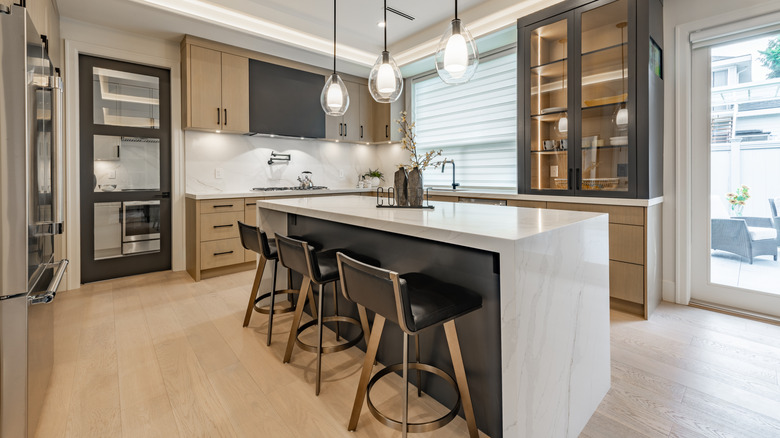
Remodeling your kitchen can be a major undertaking. Some kitchens only require minimal fixes, such as a DIY, money-saving refresh of painting cabinets and swapping out hardware. Others require a full restructure with new cabinets, countertops, and appliances. You could spend thousands upon thousands on a custom kitchen, but having the best kitchen on the block only matters if it's properly impacting your home value. In short, you should not spend more than 15% of your home's value on a kitchen remodel, but even as little as 5% is good.
If you have a $500,000 home that's in desperate need of a new kitchen, you should invest at least $25,000 into the new kitchen to ensure it keeps your home value where you want it to be. But do not exceed $75,000, or you likely won't see that return on investment. If you're remodeling with resale in mind, don't make the kitchen too specific to your own tastes. Keep it fairly neutral, and stick with timeless kitchen trends, which appeal more to a buyer because of the implication that it's a blank slate. Highly specific cabinet colors or backsplash selections can be unappealing to potential buyers, who are looking for a move-in-ready home that doesn't require changes.
There are downsides to spending too much or too little on your remodel

The biggest downside to overspending on a kitchen remodel is not seeing that money when you sell your home. If you spend more than 15% of your home's value, and you go all-out on the remodel, you might only see around a 50% return on investment when you sell. In contrast, spending within that appropriate remodel range for your home's value could yield a return of up to 96%. If you plan to sell after the remodel, keep an eye on the housing market's trends, which help determine how much money you get for your home.
Spending too little money on the remodel is less about snagging countertops on sale and more about using cheaper materials or shortcuts that could be bad for your kitchen in the long run. The remodel should be a good-quality project that doesn't cut corners. For example, while a large kitchen renovation is pricey, it's worth splurging on solid wood cabinets, which can be repainted or refinished down the road, as opposed to cheaper particle board cabinets, which eventually require replacement and are ultimately a higher lifetime expense.
For safety reasons, don't DIY electrical work or plumbing. It's worth it to spend the extra money on professional work. If not — at best — you create a headache for yourself when you learn later on that things weren't done properly. At worst, you create a major safety hazard.