

Why World War II's Egg Substitutes Left A Bad Taste For Generations
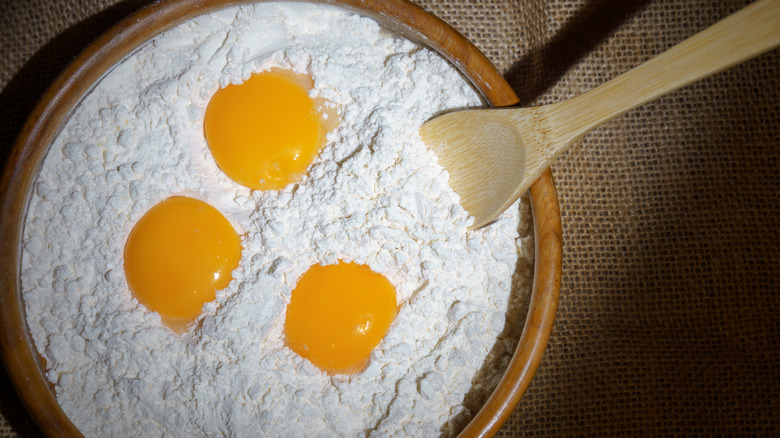
When World War II broke out, food supplies for the United States and its Allies came under huge pressure, with rationing imposed for goods like meat and sugar. Those looking to bake a cake or fry up a classic breakfast were forced to turn to powdered eggs, as the real thing was harder to find.
Ration programs gravitated towards powdered eggs because they were lightweight, space-efficient, had a five- to 10-year shelf life, and were durable; after all, they couldn't crack in transit like shelled eggs. Unfortunately, powdered eggs' practical benefits required serious trade-offs. After rehydration, the taste and texture were generally considered dry, rubbery, and overall unappealing. The powdered eggs reportedly didn't give structure to a cake, with bakers citing a lack of aeration. This is essential for a cake to rise, so those who were looking for a moment of levity during war, say, with a birthday cake, would be stuck with a dense, unpleasant final product. So, arguably the best use for them was to pad out other foods — or just leave them on the pantry shelf.
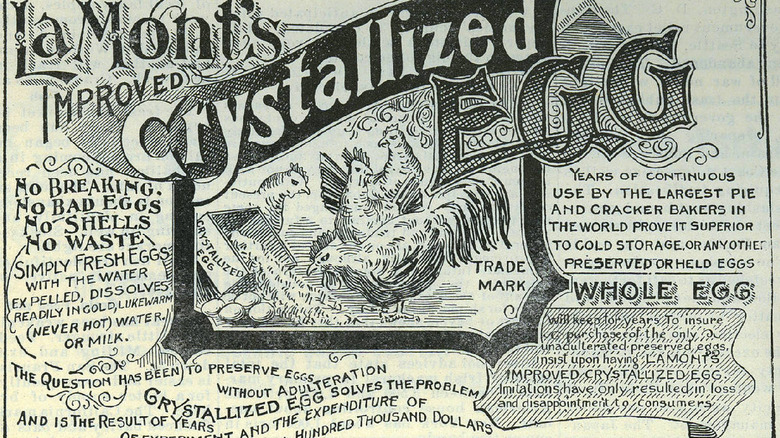
It's worth noting that powdered eggs had existed for a while before the war — advertisements for them date back to the late 1800s. But the war turned them into a symbol of hardship, particularly in the United Kingdom, where fresh eggs were very strictly rationed from 1941 to 1953. That means kids born early in the war may not have encountered "real" eggs until their teen years, possibly contributing to a scarcity mindset that lasted for decades after the war ended.
What made powdered eggs so bad?
Dried eggs were at least made with real eggs: They were cracked, with moisture removed through a method called spray drying, which sprays eggs into a stream of hot air that evaporates their water without cooking them, leaving behind shelf-stable powder. It is the same process for making powdered milk (although that tastes far better and arguably deserves a place in your pantry) and instant coffee. Without diving too far into the science, the process impacts the eggs' proteins, creating a cardboard-like taste and sulfur compounds associated with the smell of rotten eggs. (Some said you could smell it as soon as you open the package.)
Suffice it to say, if the British government had to cajole people with advertisements insisting dried eggs were just like the real thing, demand wasn't exactly soaring. Recipe books with guidance on how to use the eggs were also produced, with recipes like bacon and egg pie and "mock fried egg."
It seems that powdered eggs never really bounced back after the war. Nowadays, there are some survivalists and doomsday preppers who still use them, with some modern versions made through freeze-drying, which reportedly results in better-tasting powdered eggs. But much like during the war, it's still hard to find anyone who gives powdered eggs glowing reviews.