

The Kitchen Liquid That Can Help With Home Safety During Winter Months
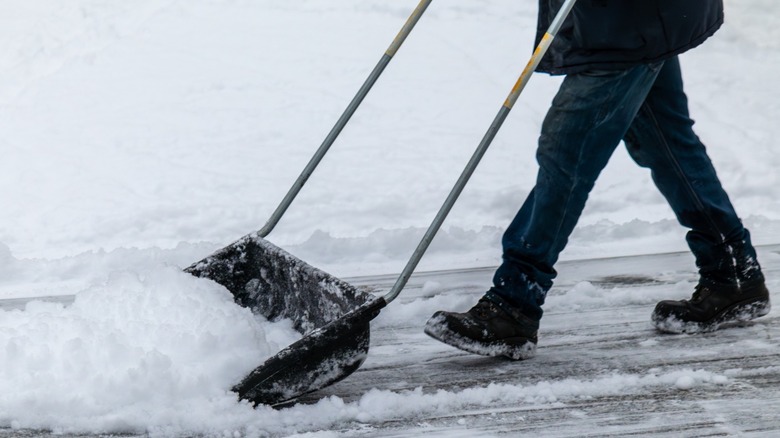
The picturesque winter landscape's beguiling beauty loses its magic once you start getting your cardio in by shoveling snow or, worse, slipping on ice. It's enough to make anyone wish for summer to come sooner. Fortunately, with a simple cooking staple on hand, you might feel safer during the icy trudge from your doorstep to your mailbox. White vinegar can help you keep your kitchen clean, but it can also help keep your yard spick and span, removing the obstructions of winter by melting snow.
Just put on your chemist's hat and mix a 1-to-1 ratio of hot (not boiling) water and vinegar to create this convenient solution. That said, if you don't have white vinegar, don't worry. Any vinegar with a similar acetic acid percentage (5% to 10%) works. For example, apple cider is an option, though white vinegar might be a more common staple in most households and it's generally cheaper. To make it easier to use, enlist the help of a spray bottle. Then, if you have any leftover solution, you can use it to disinfect most food prep surfaces to avoid wasting it.
The combination of hot water and vinegar works because the acetic acid — that sharp scent you recognize when you take a whiff of vinegar — lowers the freezing point of the snow and ice while the hot water gets the melting process started. It's easy and convenient. But this solution isn't without limitations.
How and when to use white vinegar to clear your driveway of snow
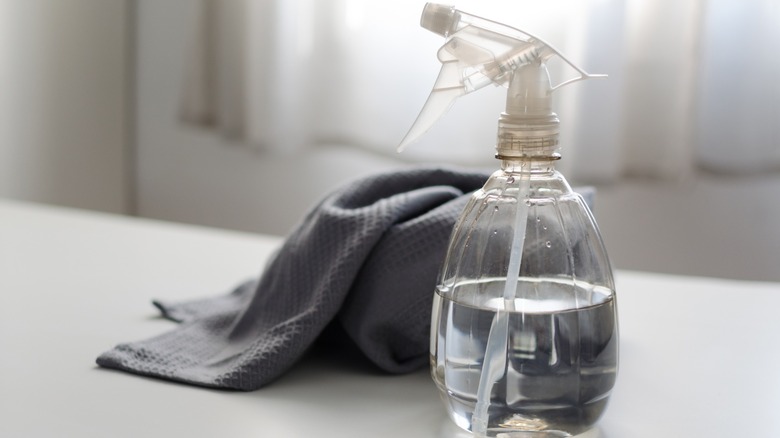
A vinegar-and-hot-water spray isn't effective on all ice and snow, and you still need to scoop the melting slush out of the way, but it will be significantly easier to do with its snow cone-like consistency. That said, you should only use it when you really need to. Just as there are indoor things you should never clean with vinegar, there are outdoor surfaces that vinegar could damage in the long run — just like any other chemical de-icing solutions. This is especially true if you have an asphalt driveway, which might suffer from continuous vinegar exposure and develop cracks over time.
Even if you have a concrete driveway, there are certain caveats to consider. For example, it's less effective on thicker layers of ice. And when temperatures drop below 28 degrees Fahrenheit, it might be better to reach for more dependable freezing-weather substances, like calcium chloride.