

Why Scotch Bonnet Peppers Are Essential For Traditional Caribbean Cooking
We may receive a commission on purchases made from links.
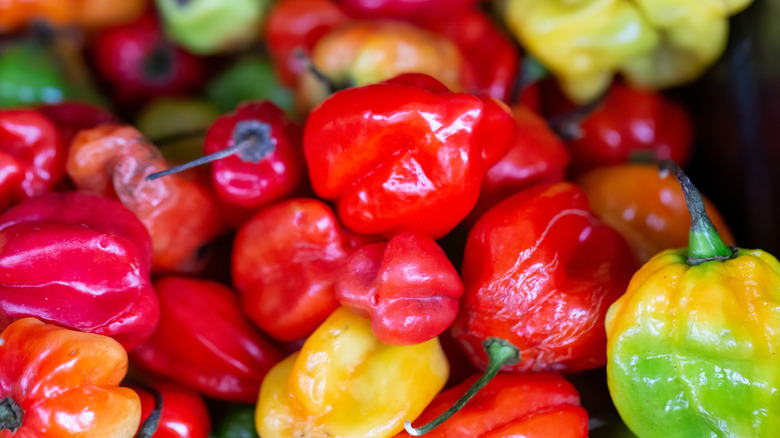
From Jamaican jerk chicken to Haitian beef stew, Caribbean cuisine dishes out some serious heat. Known for being super-flavorful, island recipes also tend to have a bit of a kick — and often, the smoky, recognizable spiciness comes from Scotch bonnet peppers. Brian Seaman, chef de cuisine at InterContinental Hotels & Resorts, spoke exclusively with Chowhound about why Scotch bonnet peppers are so vital for creating true Caribbean flavors.
Seaman told us Scotch bonnet peppers are a foundational element of Caribbean cooking. They aren't just used for adding spice — they also add sweetness and an unmistakable scent. "[The Scotch bonnet pepper] carries a natural fruity sweetness with floral notes that balance its intensity," Seaman explained. "When we cook jerk, pepper sauces, escovitch, stews, or curries, the pepper does more than spice the dish; it perfumes it. That aroma is instantly recognizable across the islands."
Many Caribbean recipes are rooted in fire, and Scotch bonnets truly get to show their stuff when they're hit with heat. Seaman says that giving the peppers some time over the fire — until they develop a slight char — can enhance both flavor and sweetness as the sugars undergo caramelization. The complexity achieved through this sweet, smoky heat is what makes many dishes taste distinctly Caribbean, according to Seaman.
Using Scotch bonnet peppers at home (and what to do if you can't find them at the grocery store)
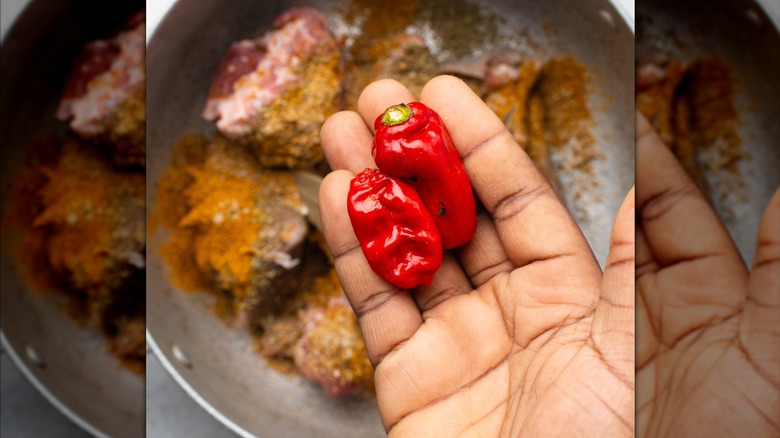
Interested in trying some Caribbean recipes at home? If the instructions call for a Scotch bonnet pepper, do the best you can to find it, as depth and authenticity can be lost without it, according to Brian Seaman. If you have to replace Scotch bonnets with another pepper, Seaman encourages you to choose carefully. "The closest substitute is habanero, as it shares a similar fruitiness and heat level," he explained. If you go with a habanero pepper instead of a Scotch bonnet, you'll want to add a touch of sweetness via a tropical fruit or even a touch of brown sugar to better craft traditional Caribbean flavor. "This helps recreate that signature sweet heat balance," said Seaman. "The key is to respect the pepper's role, not just its spice level."
Generally, part of respecting the pepper's role is charring your peppers with live fire — at least a bit — to impart true Caribbean flavor to your dish. But if you don't have access to an open flame, no worries. You can place them under your oven's broiler for a few minutes to get a similar effect. No matter what method you use to prep your Scotch bonnets, take it slow if you're not used to the heat. Fortunately, if you accidentally overdo it with the spice, there are a few tricks you can use to tone down the heat of Scotch bonnet peppers.