

This Classic Scotch Cocktail Couldn't Be Any Easier With Just 2 Ingredients
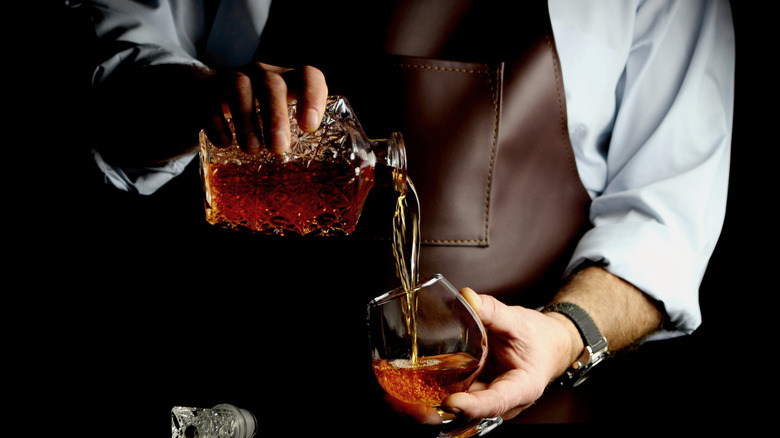
Some drinks are so simple to make at home that anyone can create a superb sip on their first try. But that is not to say even the easiest libations can't be improved upon with a little extra consideration. The classic scotch and soda is a prime example. One needs only the two titular ingredients, plus some ice, to make a great one. But among the many award-winning scotches and mid-shelf scotch options, what might work best? Is there a certain kind of soda that's best to use? And what about the weirdly wide world of ice shapes and sizes?
Chowhound asked expert mixologist Nicolette Bonkowski for answers, and she assures, first and foremost, that your scotch and soda is going to be pretty hard to mess up. The best scotch is also the best scotch for you, Bonkowski says. "Scotch by nature is a very intense flavor, peat and oak are just two profiles that can be used to describe scotch," she explains. "When choosing a scotch, it's all about your tolerance toward the huskiness of it. For some it's the huskier the better, for others they're looking for something a little easier."
For a stronger finish, try a Lagavulin, or Laphroaig, suggests Bonkowski. Both are as intense as they are tasty and refreshing with the addition of soda. She recommends softer scotch-seekers should look to sherry cask-finished spirits. Both a Macallan 12-year and Balvenie 12-year achieve less oaky, less smoky, and somewhat sweeter notes folks might prefer.
Perfecting water two ways in your scotch and soda
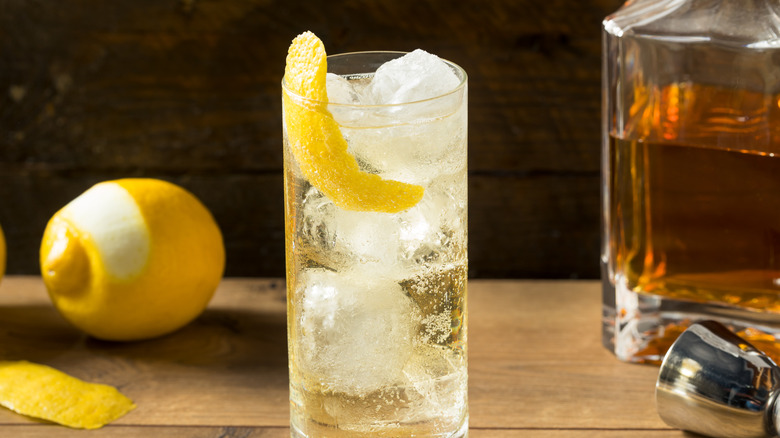
Scotch and soda's bubbly water is also in the eye of the beholder, Nicolette Bonkowski says. She recommends Fever Tree, but you can experiment with the abundance of options on the market. You just want to be careful to skip anything flavored; you don't want anything other than the soda's light salinity to potentially adulterate your carefully chosen scotch. Should you end up with something too fizzy, carefully shaking or stirring soda can reduce its carbonation a bit.
The size and shape of your ice can also change the character of any cocktail, particularly one that only uses two easy ingredients. Bonkowski advises using filtered, distilled water for optimal ice. You can also keep your ice tasting fresh by keeping your freezer, refrigerator, and ice trays nice and clean. Larger ice cubes will also melt at a slower rate, thus diluting your drink at a slower pace, regardless. You will, of course, need to make sure your highball glasses can accommodate them.
The proverbial cherry on top needs only be a little lemon or piece of candied ginger, in this case, Bonkowski suggests. You can experiment with those the same way you should with your scotch and soda components, too. You might be surprised how much additional variation these garnishes can bring to the otherwise low lift mix.