

Does Cooked Or Raw Spinach Offer More Nutritional Benefits?
That spinach is healthy comes as no surprise. A can of the leafy green stuff put Popeye in fighting form, after all. The iron-rich vegetable is full of vitamins, and it makes a great part of a balanced diet. However, you might be wondering if your spinach maintains its superfood status once cooked. A lot of veggies, once sautéed, sizzled, or otherwise cooked, lose some of their micronutrient content. Then again, others may actually see an increase in their nutrient value after cooking, such as tomatoes, which have higher levels of lycopene when heated — good news for anyone who can't stomach raw tomatoes.
So what about spinach? Well, the answer isn't all that clear cut. Raw spinach has higher levels of nutrients such as vitamin C, niacin, folate, and potassium. Cooked spinach, on the other hand, boosts the bioavailability (the amount of a substance your body can absorb) of vitamin A, vitamin E, lutein, calcium, and iron. Additionally, cooking spinach lowers levels of oxalic acid, a substance that prevents the absorption of calcium.
Ultimately, the best preparation of spinach depends on your specific nutrient needs and goals. If you want more calcium in your diet, go for cooked spinach, but if you you want a big dose of vitamin C, go ahead and have it straight out of the bag.
How to cook your spinach
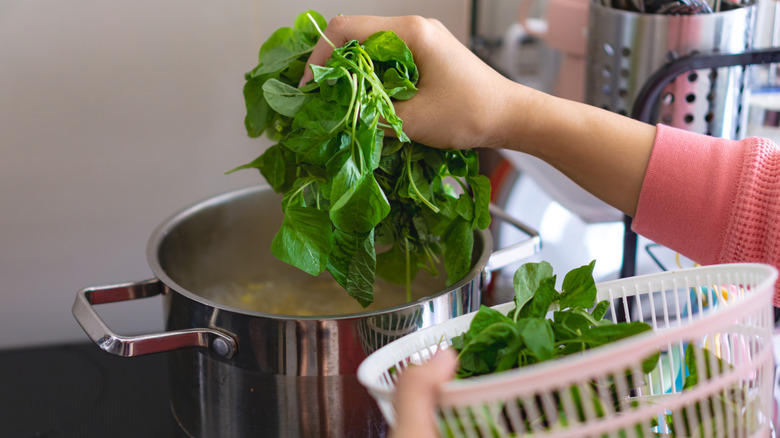
Of course, there are ways to have your veggie and eat it, too. While cooking your spinach will alter its nutrient content, there are ways of preparing it that might help reduce some of this nutrient loss. For example, if you're making a soup, you can add your spinach at the last minute. That way, the leafy green will lose fewer nutrients.
You might also consider cooking your spinach in a pan instead of boiling it. Boiling spinach, especially for extended periods, can leach a good bit of nutrients into the water. Regardless of cooking method, it is best to cook for short periods, and not at high heat. One great option is to blanch spinach by briefly submerging it in boiling water, which will also help it keep its bright green color. You can also sauté your greens for a short period, at low heat, until just cooked. Of course, this advice really only applies to nutrient retention. So if you're really wanting a side of perfectly garlicky, well-cooked spinach, go for it (add a bit of lemon juice for a bright finish).
Preparation matters for raw spinach
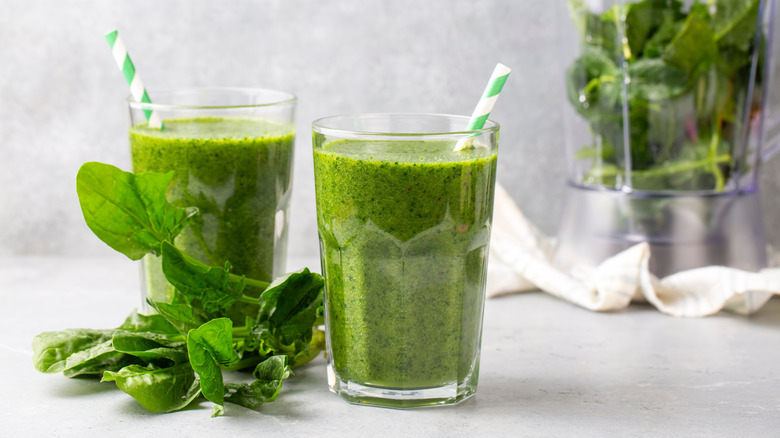
Now, if you choose to keep your spinach uncooked, you may think you're in the clear when it comes to absorbing micronutrients, but you'd be wrong. The way you prepare it can actually impact its nutrient content. According to a 2019 study published in the Food Chemistry journal, chopping or blending raw spinach before serving will help to unlock the leafy green's lutein, an antioxidant that can benefit eye health and reduce cholesterol.
Spinach can also be a wonderful addition to a smoothie, and this preparation might just be the key to getting the most out of the leafy green. Blending helps release lutein, and adding a source of fat can further improve absorption because lutein is fat-soluble. This is great news for anyone trying to unlock its potential cardiovascular benefits. Consider popping a few handfuls of spinach into your next smoothie or juice along with a bit of full-fat Greek yogurt or nut butter to harness the vegetable's nutrient content.