

How To Safely Eat Raw Crab Without Risking Food Poisoning
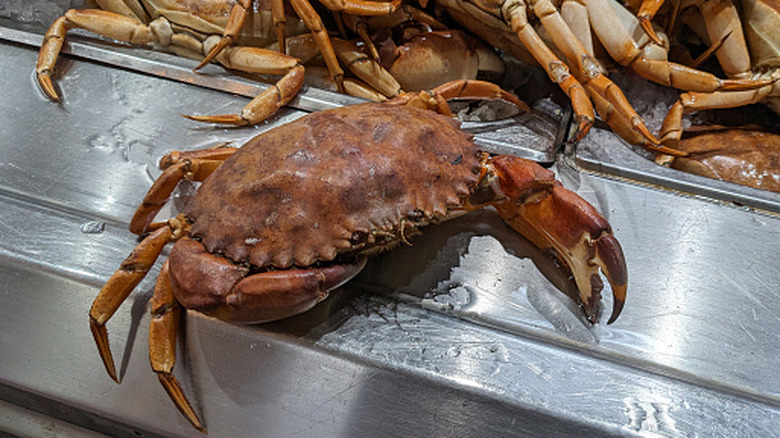
Raw crab can be delicious, but eating raw seafood can be risky. Knowing what to look for when selecting crab you intend to eat raw — and knowing how to prepare it — can help reduce the risk of food poisoning. Michael Morales, culinary director at Sunda New Asian, shared what you need to know to prepare and eat raw crab safely.
First, it's important to know what to look for when you're buying raw crabs. "Sourcing is everything," says Morales. It's also key that you buy live crab, and they should be active when you purchase them. "The more movement the better," says Morales (look for crabs that have their claws up). Additionally, give the crab you're considering a whiff before you buy. "The crab should not emit any odor. No smell is a good thing for seafood," says Morales. After you've properly selected your crab, it's time to move on to the preparation process, and Morales has several safety tips for reducing the risk of getting sick from eating raw seafood.
Safe food preparation and simplicity are key to enjoying raw crab
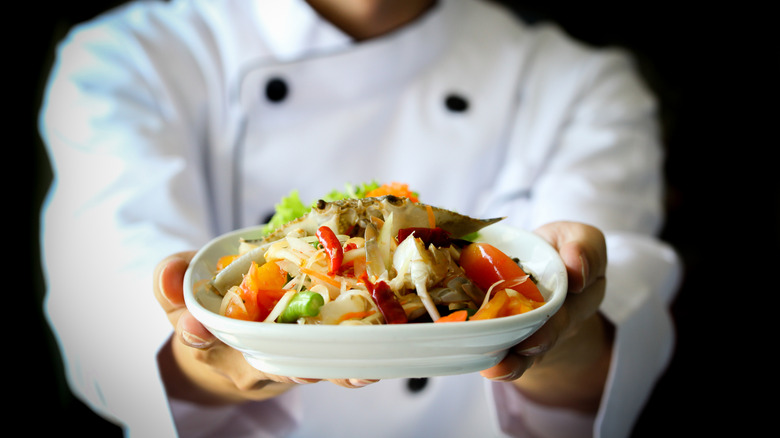
Time is of the essence when it comes to properly preparing raw seafood, says Michael Morales. "It's important to always keep the crab cold, work quickly, and be thorough in sanitizing tools and surfaces," he recommends. You have a few different options when it comes to preparing your raw crab, and Morales says it's smart to consider your audience as you choose a recipe. If your guests have never tried raw crab, Morales says to let the crab meat be the star of the show, recommending "citrus, light acidity, or subtle umami flavors that bring out its natural sweetness." He also recommends serving familiar sides, such as "crispy vegetables, rice, or a light vinaigrette" to make the dish "approachable" to your guests.
While it's always important to keep a clean kitchen — especially when working with animal protein — raw crab requires super-close food safety attention since it can be especially likely to cause foodborne illnesses. "Raw crab needs extra care because it's more prone to bacteria and parasites than a lot of other seafood," says Morales. While this may seem a little unnerving, taking the time to prepare raw crab with care can make all the difference. "No raw seafood is ever 100% risk-free," says Morales, "But when sourced and handled correctly, the risk is minimized significantly."