

The Shrimp Discoloration That Looks Dangerous But Is Actually Safe To Eat

Black spots are not usually a good omen. In a bathroom, it signals potential mold, mildew, and a good set of rubber gloves along with bleach cleaning spray and a hearty scrubber. On food, it is often a signal of spoilage. If your eggs are dappled with black or green powder spots, for example, you should definitely toss them. It stands to reason, then, that is logic might follow for other foods, such as shrimp. Certainly, if you find black spots on your shrimp cocktail you ought to throw them away, right? Well, you might want to hold off on that disposal.
Black spots on shrimp might not be a dealbreaker. Though unsightly, these spots are generally completely harmless. Commonly known as melanosis, these black spots are formed when shrimp are removed from their natural, aquatic environment and exposed to air. When brought out of the water, exposure to the air causes a chemical reaction that results in the formation of these black spots. This is similar to how avocados or apples brown when set out. (By the way, brown guacamole is safe to eat, so keep that in mind before you toss a whole bowl of the stuff.) These spots do not indicate any rot or spoilage.
What keeps shrimp's spots at bay
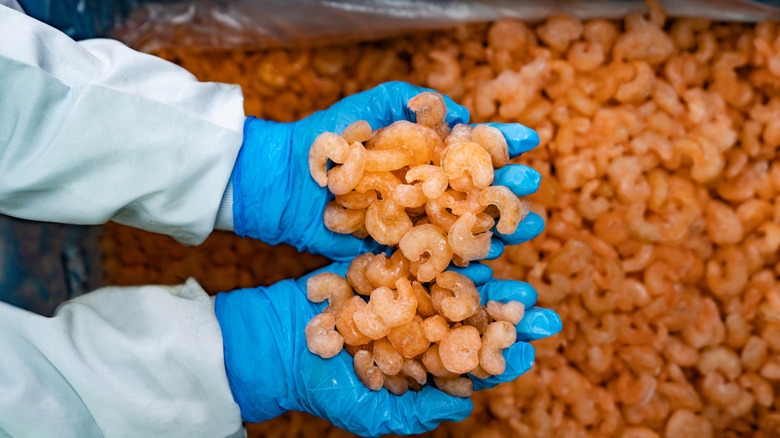
Though not harmful in the least, melanosis is often seen as a turn off for many diners, and so many seafood companies will chemically process shrimp using sulfites in order to prevent the spots from forming. This treatment is effective. However, it can potentially be dangerous for those with sulfite allergies, and may be a turn off for any consumers hoping to avoid sulfites. There are other treatments available which don't contain sulfites, but these treatments are more expensive.
If you do have a sensitivity or allergy to sulfites, make sure to check your shrimp's packaging, as sulfite contents must be disclosed. You can also specifically source shrimp that has not been chemically treated from certain delis or food markets.
How to tell if your shrimp is fishy

So, now that we know that black spots aren't an indicator of shrimp spoilage, how do we spot shrimp that ought to be tossed? Perhaps the biggest indicator that your shrimp is past its prime is its smell. If your shrimp has an intense ammonia odor or a powerful, sour smell then you really ought to plop it directly in the trash. Another sign of spoilage? Texture. Bad shrimp will be slick, slimy, and have a film of viscous fluid covering it. This is a clear sign to do away with the sour shellfish. You'll also want to look out for discoloration in your shrimp.
It's also important to keep safe storage practices in mind for your seafood. Raw shrimp should only be kept in the fridge for one or two days, while cooked shrimp lasts about three or four days. In the freezer, shrimp can retain its flavor for three months to up to a year, so this is the best option if you're not able to eat your shrimp on a tight time frame. Store in an airtight container to prevent freezer burn.