

What To Keep In Mind When Using Kosher Salt For Pickling
When it comes to pickling — making simple cuke pickles, tangy sauerkraut, or other funky, briny creations — salt is everything. But you're not alone if the distinction between the various types of salt feels as hazy as that delicious, tangy liquid left over in your old pickle jar (which has an unexpected benefit if you drink it).
Many pickling recipes call for pickling salt, which is pure sodium chloride devoid of other additives. This pureness keeps pickle brine clear and unclouded, and the fine grain is easy to measure out and dissolve. But kosher salt is another often used and totally acceptable option, and one you likely already have in the cupboard. However, if you want to use it for your next batch of pickles, there are a few need-to-know caveats.
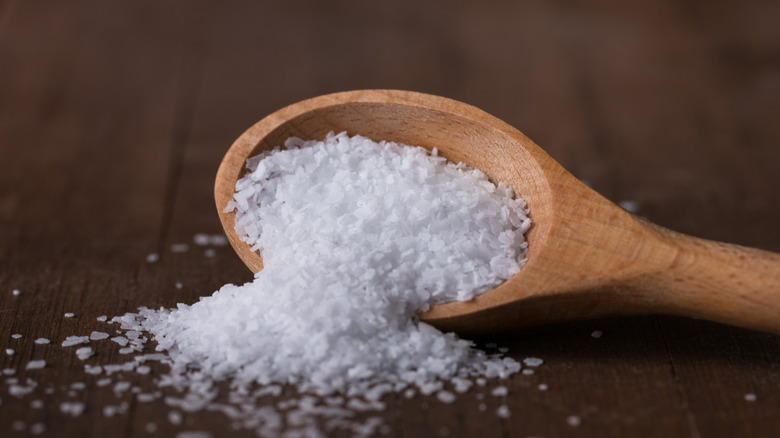
Kosher salt has heft and is flaky, which adds a pleasing crunch when topping roast veggies or even chocolate chip cookies. But that large, light flake also means it's less dense than pickling salt, so you'll need to recalculate your measurements and use more than you otherwise would. As a rule, if a recipe calls for 1 cup of pickling salt, plan to use 1 ½ cups of kosher salt. In other words, you'll need roughly 50% more to achieve the same level of saltiness.
Not all kosher salt is created equal
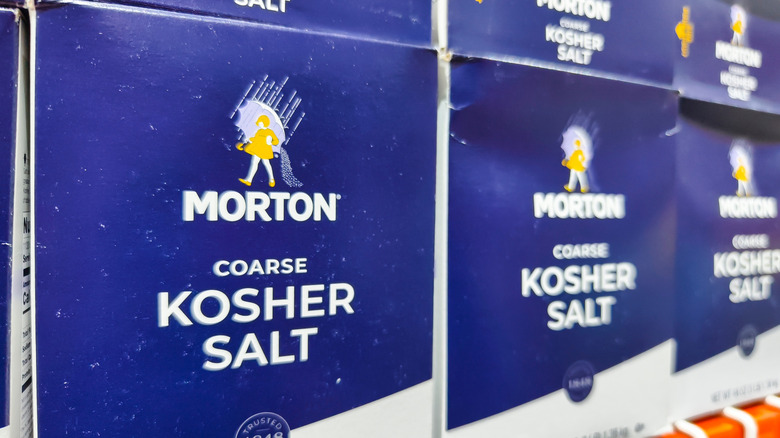
Kosher salt and pickling salt cannot be used interchangeably in your pickling. Complicating matters further is not all kosher salt is created equal. The two leading grocery store brands, Morton and Diamond Crystal, provide wildly different saltiness levels. Due to different methods of processing and extraction, Morton kosher salt is denser and saltier than Diamond Crystal, nearly double, in fact. Therefore, some math is required to avoid vastly over or under salting your pickles. You'll need to use about half as much Morton salt as you would Diamond Crystal, for the same recipe.
Properly salting your pickles impacts not just flavor and brininess but also plays a fundamental role in food safety. Salt is the crucial, magic ingredient in the pickling process, acting as a preservation agent and warding off bacterial growth. Undersalting your pickles can have serious safety implications, especially if you're making the fermented, shelf-stable variety versus a quick-fridge pickle.
Following the 50% more rule when using kosher vs. pickling salt is key, as is knowing the difference among the leading brands. But since kosher salt's flake size can make it tough to get a precise measurement, pros recommend using a food scale to weigh out amounts. Bottom line, pick your brand of kosher salt with intent, and rely on a food scale whenever possible, to ensure a perfectly salted batch of pickles.