

10 Polish Foods You Should Try At Least Once
We may receive a commission on purchases made from links.
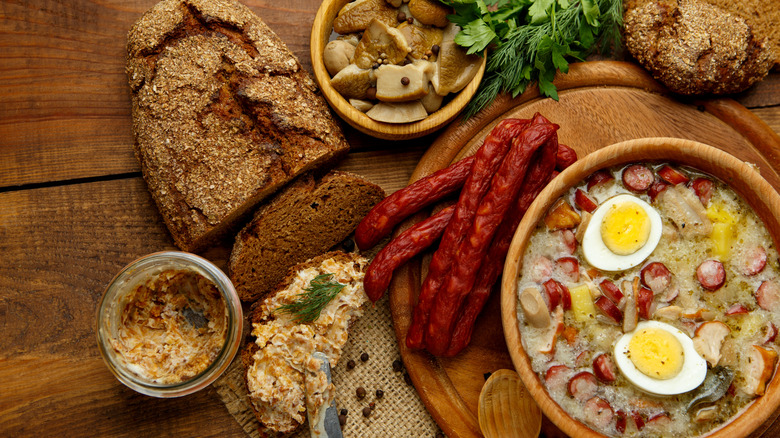
Cavernous bowls of warm soup. Meaty dumplings that burst with flavor as you bite into them. Earthy, sour, and smoky flavors — these are the characteristics of Polish food. You may have heard of pierogi before or indulged in a smoke-kissed coil of kielbasa, but beyond these more common plates, Polish food remains a mystery to many. It's an ideal cuisine to draw inspiration from in these cold winter months, when hearty meals are needed to keep oneself warm.
Michal Korkosz is a food influencer who has published two cookbooks highlighting the cuisine he grew up with. In both Polish'd and Fresh from Poland, he shows his love for the recipes and traditions that come from the Central European nation, and has also shared his favorite dishes in an interview with us. "Polish food is often described as heavy, but at its heart it is seasonal, thoughtful, and deeply human. [It's] not just about tradition, but about care, generosity, and everyday pleasure."
If learning about the techniques and ingredients of other countries is your thing, and finding new dishes to try is a task that gives you life, then you're in for a treat. We've consulted two experts — Michal Korkosz and Jarek Szymanski of Threshold Brewing in Portland, Oregon, — to find out what we're missing when it comes to Polish food. These are the 11 dishes that they agree everyone should try at least once.
1. Pierogi
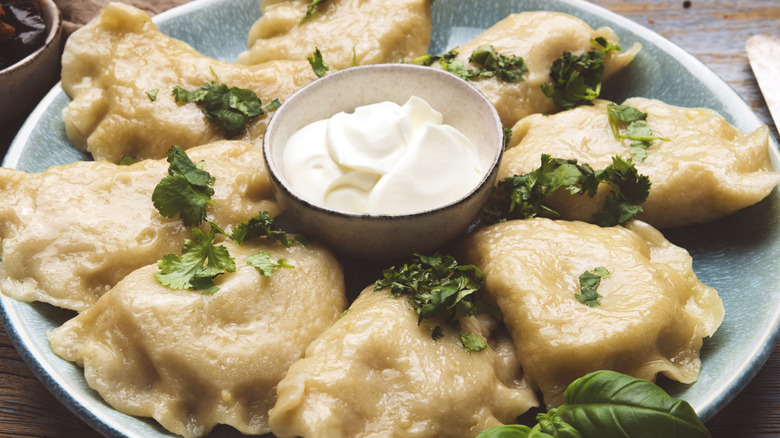
The pierogi is Poland's most notable dish, it's even one of Martha Stewart's favorite comfort foods. Soft dough filled with savory fillings, each piping hot bite is perfectly cooled by an accompanying dollop of sour cream. It seems every country has its version of meat wrapped in dough, from empanadas to xiao long bao (the Chinese soup dumplings that require a bit of technique to consume), and the pierogi fits right in on the list as a dumpling that's comforting, delicious, and homey.
For Jarek Szymanski, pierogi are a "no-brainer" to order if you're visiting a Polish restaurant. "Perhaps Poland's most well-known dish, pierogi dumplings have various fillings and are most often served either boiled or pan-fried and topped with pork bits and sour cream." The beauty is in the simplicity of these dumplings, which will leave you with a full belly and warm spirit.
When you're not ordering them in a restaurant, the process of making pierogi is one that reminds Michal Korkosz of spending time with family in the kitchen. "For me, pierogi are less about the final plate and more about the process. Cooking together, talking, taking time." He devoted a chapter of his cookbook Fresh from Poland to the making of pierogi, which he enjoys either boiled or pan-fried until crispy and served with brown butter. If you're looking for a meal that will get the whole family involved, this is a great place to start.
2. Bigos
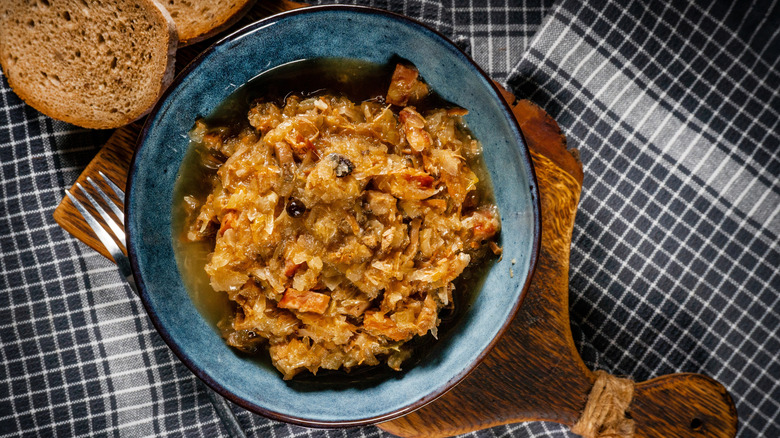
In Poland, where the winters are cold and wet, a good bowl of soup is a staple. Bigos is one of the more popular stews, a generously chunky dish that will satisfy your craving in an instant. For Jarek Szymanski, it's the Polish dish that he wishes everyone could try at least once. "Of course, every Polish family believes their bigos recipe is best — it's a hearty stew of kielbasa, pork, beef, good sauerkraut, dried plums, foraged mushrooms, and various spices. Totally unique to Poland!"
As Jarek notes, recipes for bigos (which is also called hunter's stew) can vary between households, but they typically start with smoky kielbasa, chunks of pork, cabbage, mushrooms, sauerkraut, and a host of herbs, red wine, and spices to round out its robust flavor. It hits on many flavor notes — sour, earthy, a bit of sweetness from the dried plums — and is the perfect soup for the lover of bold flavors.
3. Żurek
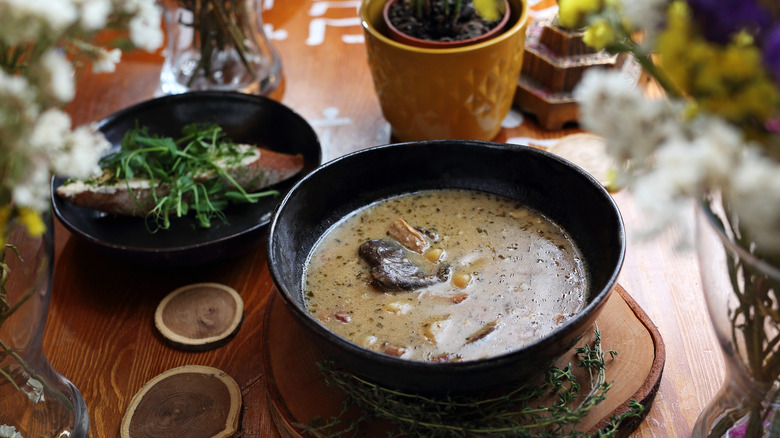
If you're a sour-flavor lover and crave fermented or pickled foods and tart candies, then you're in for a treat with this soup. Żurek has a unique flavor brought about from a fermented rye-flour base similar to a sourdough starter, which is used as a thickening agent as well as for flavor. Combined with cream and a white kielbasa sausage, and topped with a boiled egg, this soup is smooth and comforting.
Michal Korkosz describes żurek as "one of the funkiest Polish soups." For him, it's a dish that doesn't necessarily need to be made with meat, as he features recipes in both of his cookbooks that opt for porcini or oyster mushrooms in place of a protein, and even adds a touch of miso as a more modern take. "Deeply savory, gently sour, and incredibly comforting, [żurek] shows how bold and complex Polish flavors can be."
This soup is typically served as a special dish on Easter, but its unique recipe and flavors make it very popular throughout the rest of the year as well. If you live near a Polish restaurant, you're likely to find it on a menu even outside of the holiday.
4. Golabki
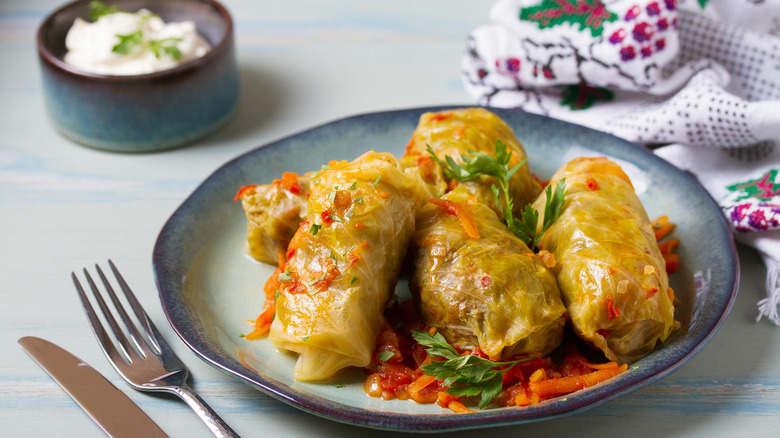
Cabbage is one of those ingredients that most people in the US don't hold a space for on their weekly shopping list. The leaves are thick and awkward, the smell a bit dingy, and the methods of preparation largely unknown. But in Eastern Europe (among other parts of the world), cabbage is revered for its nutrient-dense leaves and longer shelf life as compared to lettuce. And for Michal Korkosz, author of two Polish cookbooks, cabbage is an essential part of Polish cooking. "In all its forms — braised, fermented, stuffed — [cabbage] is one of the foundations of Polish cooking and incredibly versatile."
From soups to side dishes to the main course, cabbage makes a lot of appearances in Polish cooking, but there's one dish that especially stands out. Golabki is a dish of cabbage rolled and stuffed with fillings of meat, rice, and veggies. The leaves are first boiled in salt water to give them a more maleable texture, and once cooked, they're loaded with a hearty filling and rolled up like enchiladas to bake. This dish often appears on the menus of Central or Eastern European restaurants in various forms (the Ukrainian version differs slightly from the Polish version) and is a great order to share with a friend as an appetizer or enjoy as a filling main.
5. Zupa grzybowa and zupa ziemniaczana
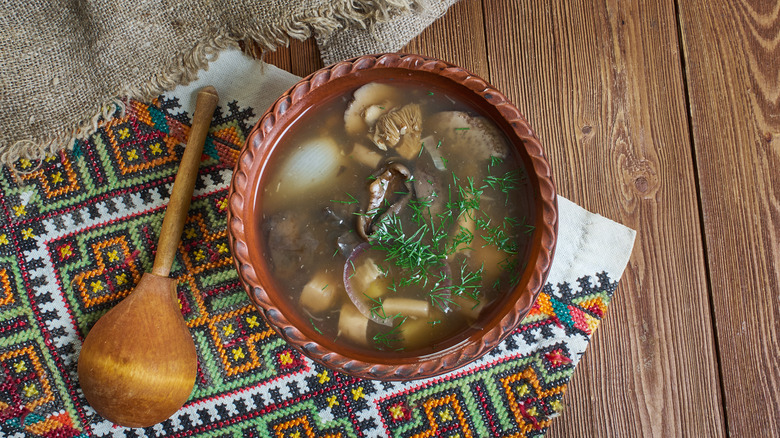
For Jarek Szymanski, who grew up in Poland before immigrating to the U.S. and opening Threshold Brewing, there are two Polish soups that remain undefeated. When it comes to the most nostalgic dish, the one that never fails to warm hearts and hands, zupa grzybowa with kotlety grzybowe was the meal of choice. A soup that's typically only prepared once a year for Christmas, he describes it as a "rich mushroom soup and minced mushroom cutlets," and adds that they often forage the mushrooms themselves. A relatively simple stew, there are many recipes available online if you have a hankering to try making zupa grzybowa at home.
Besides zupa grzybowa, Jarek says zupa ziemniaczana was a close second in terms of nostalgic dishes. "A mouthwatering potato soup, at home we serve it with a side of homemade kluski ziemniaczane (potato noodles with pork rinds) and curd cheese on top." This soup is typically loaded with sausage, bacon, potatoes, and herbs, and is thickened with flour. The result, served with a dollop of sour cream, is rich, creamy, and delightfully hearty.
6. Zapiekanka
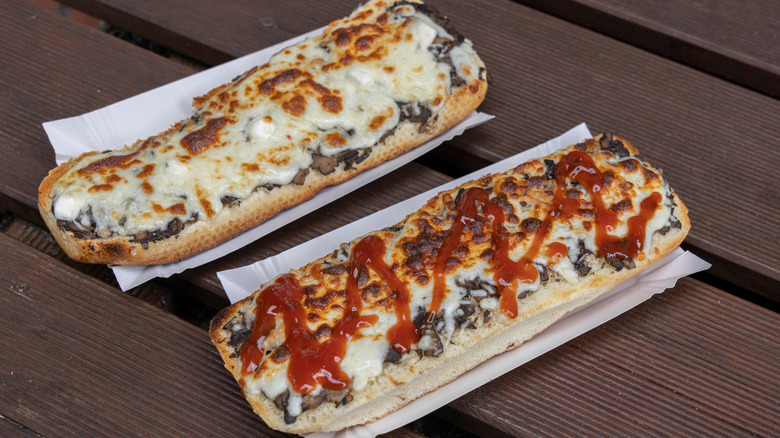
Poland isn't exactly known for an abundance of street food, but there's one dish that can be found at stands all over the country: zapiekanka. Michal Korkosz says, "Poland hasn't had much street food beside zapiekanka, which is a baguette with pan-fried mushrooms, cheese, chives, and ketchup."
For Jarek Szymanski, zapiekankas (which he calls 'zappys') are the dish of choice to serve at his brewery, Threshold Brewing. The toasted bread, melted cheese, and earthy mushrooms constitute the ideal pairing to fill your belly while you sip on a crisp Polish beer.
If you want to try it, check the menu of your local Polish restaurant or brewery to see if this iconic street food is available. If you happen to find yourself visiting the Central European country, Jarek advises that you won't have to look far for a stand whipping up these pizza-style baguettes. However, there's one location that's especially well-known. "The most famous is probably the Okrąglak rotunda in Krakow, a round building with over a dozen zapiekanka window stands coming out like a pinwheel. Zapiekanka paradise."
7. Barszcz czerwony
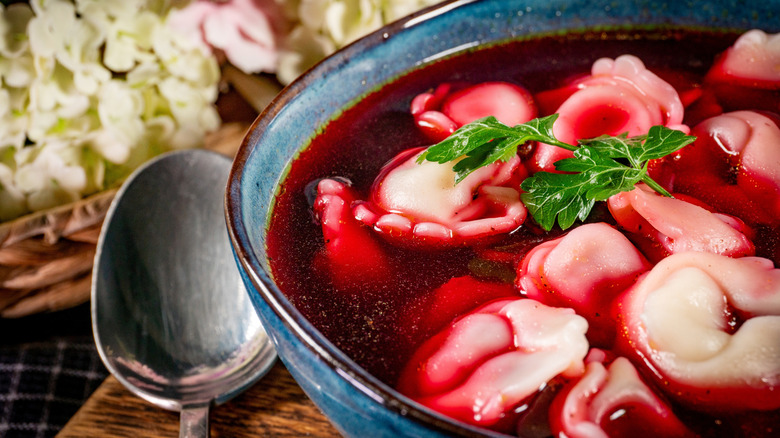
Barszcz czerwony is a Polish soup that at first glance will probably remind you of borscht (the Russian soup that's often served cold). But this soup is traditionally clear — a result that requires a bit of technique to achieve. Michal Korkosz describes it as being "very much like a beet consommé," and says: "The magic lies in how it's made. Beets slowly give up their color and flavor to water, supported by root vegetables, dried porcini mushrooms, spices, and thyme. It is often finished with a touch of natural fermentation or vinegar, just enough to sharpen the edges and make the flavors feel alive." The result is an incredibly clear yet distinctly flavored broth — a culinary feat.
Once the ruby-red broth with all of its subtle flavors is achieved, the soup is combined with "uszka, tiny dumplings shaped like little earrings and filled with wild mushrooms, or with krokiety, delicate crêpes stuffed with sauerkraut and mushrooms, then breaded and fried until crisp." The dish has long been a part of Poland's repertoire, with historical mentions going back to the 16th and 17th centuries. If you want to taste a Polish soup that has a stunning preparation and is made with care and technique, you simply must try barszcz czerwony.
8. Oscypek
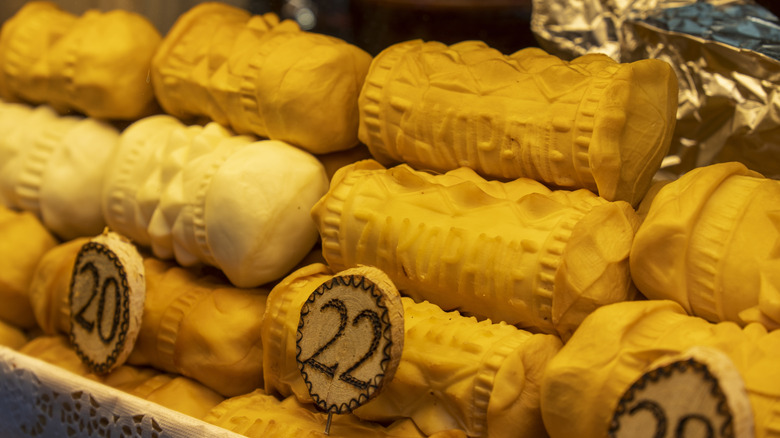
Sometimes the simplest dishes are the most noteworthy, and that's the case with oscypek, a Polish cheese that's smoked until its rind is tan and firm and its insides take on a savory, barbecued flavor. For Jarek Szymanski, it's one of those ingredients you simply have to try when visiting Poland. "You can find it served at outdoor stands, pan-fried for a smoky, savory bite. It's a traditional snack originating from the Polish mountains, and if you travel there, you can find beautifully shaped oscypek from the cheesemakers themselves."
This cheese is typically sliced, pan-fried, and served with grilled onions and cranberry jam to balance out its smoky flavor. If you're not planning a trip to Poland anytime soon, you may be able to find it at a specialty store or Central European deli. It is also available for purchase online, so long as you don't mind paying extra to ship it in a cooler.
9. Sernik
After all the soups, spreads, savory platters, smoky sausages, and cheeses have been consumed, it comes time for dessert. "Once everyone's had their fill, the dinner spread is replaced by two or three homemade Polish cakes," says Jarek Szymanski. "The best of course are szarlotka (a Polish-style apple pie), sernik (Polish-style cheesecake), and makowiec (traditional poppy seed cake)."
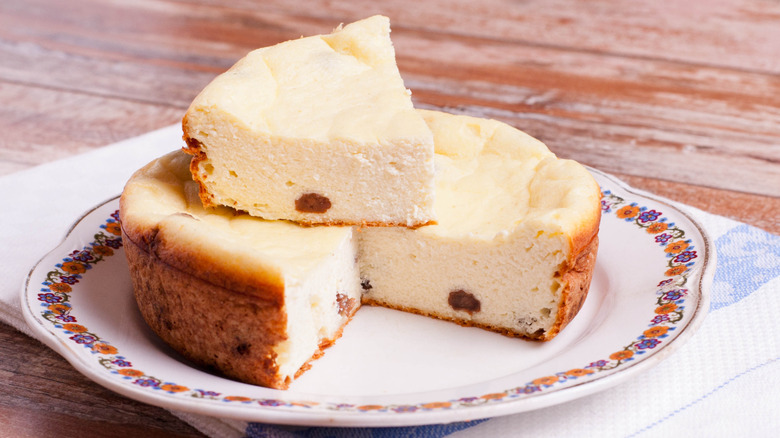
Many countries around the world have their version of cheesecake, and even styles within the US can vary from city to city. What makes Poland's cheesecake, called sernik, special is the use of Polish farmers' cheese as its base. Twaróg is a white cheese that's creamy and sweet, with a hint of sour that tends to shine in the finished cheesecake. Sernik may look very similar to NY-style cheesecake (although the edges tend to be baked until a bit more brown than pale white, and raisins are occasionally mixed in), but in flavor it's distinctly Polish. To make it, you'll want to first find some twaróg farmer's cheese to ensure you achieve the proper flavor profile. If this proves to be a challenge, head to a Polish restaurant and check out the dessert menu.
10. Pączki donuts
The concept of a donut may be relatively simple — fried dough that's glazed, tossed in powdered sugar, or filled with some gooey concoction — but not every donut is created equal. Whether you're ranking US donut chains or comparing Japanese mochi donuts to Greek loukoumades, there's a surprising amount of variety out there when it comes to the puffy treats.
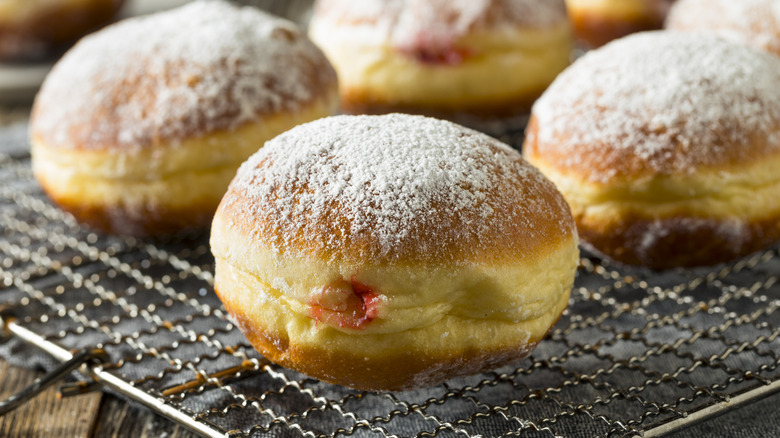
Polish pączki donuts, which are often made with a little vodka, are certainly worth mentioning. Jarek Szymanski says, "Pączki donuts are very well loved in Poland. There's usually a line out the door for every pączki shop." These donuts feature a fluffy, yeasted dough and are often filled with mouthwatering flavors like rose hip jam, plum butter, apricot jam, or cream custard. Although for both Michal Korkosz and Jarek Szymanski, the rose-jam filling is their flavor of choice.
Like any donut, enjoying it fresh out of the fryer is generally the ideal timeframe for consumption, when the smell of yeast is still ripe in the air, and the bite is fluffy and fresh. In the US., this task is most easily accomplished around Mardi Gras (also known as Fat Tuesday) in areas of the Midwest that have a larger population of Polish immigrants.