

Does Costco's Rotisserie Chicken Contain Preservatives?
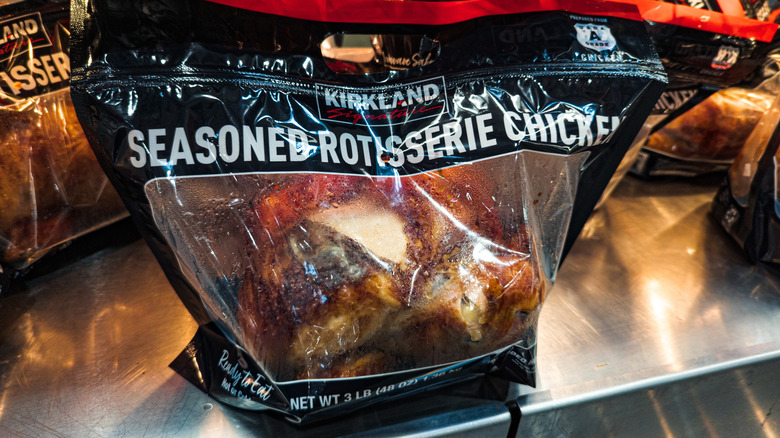
If you're a fan of Costco and enjoy chicken dishes, you've probably eaten or been tempted by the popular Kirkland seasoned rotisserie chicken. Among many facts about Costco rotisserie chicken you didn't know, one is that it draws hungry shoppers into the store. Its budget-friendly price, large 3-pound size, and delicious taste have made it a must-have food for many shoppers. However, you may be wondering what's actually in this prepared bird and if it contains preservatives.
If you look closely at the ingredient list, you'll discover that the Costco rotisserie chicken's seasoning mix does contain preservatives, blended with several common ingredients, some of which are additives you can identify in many processed foods. One ingredient in the seasoning that can be concerning is sodium phosphate, essentially a combination of salt and phosphoric acid. It's used as a texturizer and emulsifier, which prevents the growth of mold and bacteria. But some studies show it may be a health risk for people with kidney disease. Carrageenan, a thickener and stabilizer in the rotisserie chicken seasoning, might also sound compromising, but the FDA considers it generally safe.
Ingredients in Costco's rotisserie chicken and how it compares to other brands

The seasoning in Costco rotisserie chicken has a number of other ingredients. It contains salt, which enhances flavor and is found in most processed foods, though it's probably important to be aware of high amounts. The Costco chicken contains about 380 milligrams of salt for every 3-ounce serving, which is a fairly moderate level. Other ingredients include modified food starch, made from potato and tapioca starch to provide a crispy texture; potato dextrin, another starch that makes the chicken shiny and may affect how the body absorbs fat; sugar, for flavor; dextrose, a sugar made from starch with a high glycemic index; and concentrated spices. Overall, these are common ingredients found in many store-bought foods, and Costco rotisserie chicken is considered to be generally healthier than an average rotisserie chicken.
However, if you're thinking about the health benefits of less-processed foods, you may want to choose a chicken with fewer additives — and it may come down to Costco versus Whole Foods. For a minimally processed chicken, the Whole Foods classic rotisserie may be your best bet. The chicken has no antibiotics, is organic, and is seasoned with just salt and organic black pepper. Its health rating is also much better than average, and the classic variety only contains about 70 milligrams of sodium per serving. While not quite as large as Costco's chicken, this brand is more expensive — though it contains no preservatives. Ultimately, most store-bought foods are likely to be somewhat processed. By checking the ingredient list, you can decide how many additives you're comfortable consuming based on your own preferences.