

Cook Steak Tips To Perfection With These 9 Simple Tricks
We may receive a commission on purchases made from links.
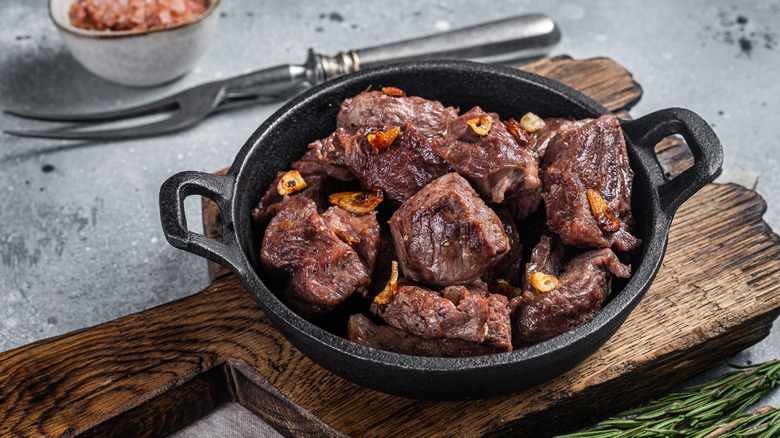
New Englanders definitely know steak tips like the back of their hands. The regional dish is special due to, not in spite of, its hearty simplicity — flash-grilled hunks of marinated steak is all it is, often spiked on skewers at neighborhood barbecues or plated with equally humble side dishes. It's natural to want to up your cookout game by trying this style, and thankfully, it's pretty beginner-friendly. But even if it's relatively no-frills as far as recipes go, you might want a few reminders on making this renowned classic a show-stopper every time.
According to Barry Miles, a Culinary Advisor at Cargill, a delicious steak tips dinner comes down to knowing some simple tricks. "With the right cut and a focus on the basics: good heat, proper cutting and careful timing, you can create something that's simple, satisfying and full of flavor," he told Chowhound.
Access to the holy trinity — a sharp knife, a good skillet, and solid tongs — is all a novice chef will need in their toolkit. And the beef you'll procure is nothing fancy, either — we'll talk specifics soon, but suffice it to say part of the dish's secret is making cheap steak taste expensive. Below, you'll meet other pros we connected with, all offering excellent advice on how to cook this tasty staple to perfection.
1. Begin with the right kind of beef
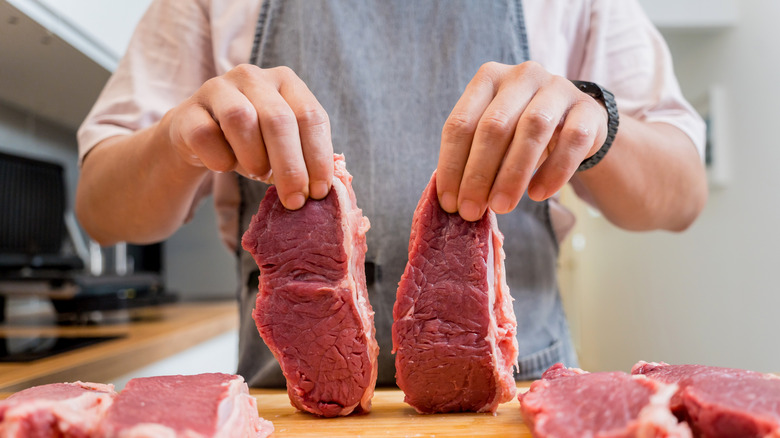
Roasting the tastiest steak tips of your life begins with a crucial first step: selecting what meat you're going to cook with. Authorities on the dish tend to stick with flavorful steak cuts that won't break the bank. Like many of the cooks we spoke with, Jacinto Perez — Executive Chef at popular Italian eatery Constantinos Pasta Bowls in Greenwich, Connecticut — said the best cut for the job is sirloin. "Sirloin offers a great balance of tenderness and beefy flavor, making it ideal for quick, high-heat cooking," he explained.
New England taverns appear to favor this variety quite a bit, but what happens if your supermarket's run out? "Tips" can also be made with other economical varieties that, while less fork-tender, are excellent for stewing in marinades and sizzling to mouthwatering perfection. One alternative Barry Miles provided is Flank steak, which he confirmed offers a similarly charred finish to sirloin due to its placement in the cow's rear end.
Meanwhile, star chef and cookbook author Curtis Stone enjoys a filet for the task of flash-searing, finding it lean and versatile. "It is important to use a tender cut of beef for steak tips, as you want them to be easy to eat and work well with a salad."
2. Slice the steak tips yourself
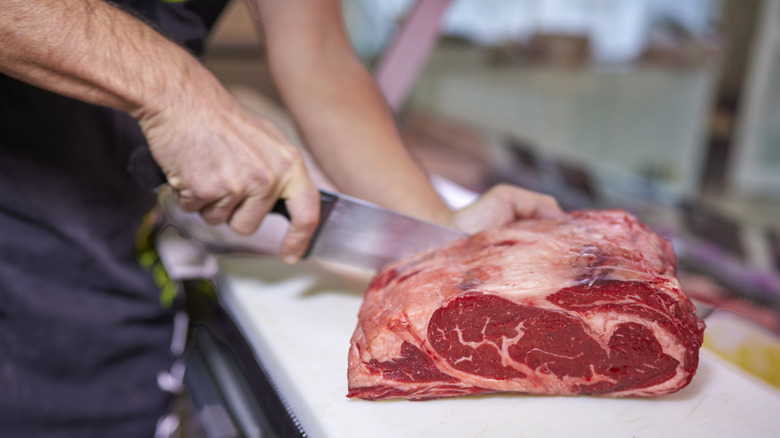
Pan-roasting hunks of beef isn't entirely difficult, but from a beginner's perspective, it's understandable to look for ways to eliminate guesswork. Many supermarkets stock pre-packaged beef, cubed and already seasoned, for the exact purpose of throwing onto a skillet. However, on the question of carving steak tips by hand, Jacinto Perez responded with this pro tip: "It's always better to cut steak tips at home."
Barry Miles seconded this recommendation, elaborating that "starting with a whole cut lets you see the grain, control portion size, and ensure even cooking." From our understanding, not only does the labor yield an improved texture (thus resulting in a tastier beef), your steak will harbor a juicier finish when handled manually in the carving department. As Perez added, "pre-cut tips often come from mixed or inconsistent cuts and can dry out faster." If the answers we received from experts indicate one thing, it's this — eliminating inconvenience should not be your priority.
3. For smoother prep, throw your meat in the fridge first
Cooking steak tips to perfection seems to depend on the prep work you do. You might not have thought, for instance, that cubing up your filet could go much more smoothly if you stashed it in the fridge first. When we asked Barry Miles about simple tricks involving the meat prep, he suggested the brief freeze to counteract hit-or-miss carving. "For cleaner cuts, let the meat chill in the refrigerator for 15–20 minutes before slicing."
There are definitely benefits to taking this initial step as a precautionary measure. For one thing, cold air will help tighten the grain, the meat's muscle fibers. When the filet for the steak tips is slightly solidified, cooks will be able to slice into the protein far more seamlessly. A firmer base comes with less risk of tugging or creating unnecessary friction that can rip or tear up the pieces. Additionally, chilling the steak is just safer than lopping off raw beef that's thawed out slightly. Holding sharp cutlery as meat jiggles and jives around your cutting board is nightmare fuel beginner cooks don't need to bargain with.
Some folks are divided on the methods for this practice. Debates between the freezer and refrigerator in terms of effectiveness rage online. At the very least though, experts stand by not handling straight-up slimy meat.
4. Use correct meat-carving techniques
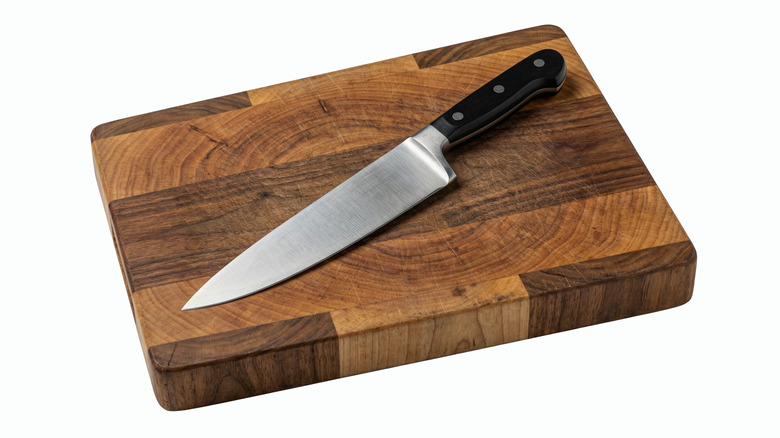
Leathery steak tips are a hard pass. To cook them to perfection necessitates correct knife usage, and a foolproof trick that's simple to remember is to cut across the grain of your steak. Beef tissues shrink as they cook, and if you slice the meat in the same direction the threading runs in, texturally it'll be unpleasant. "Shortening the muscle fibers is one of the easiest ways to make every bite feel more tender," revealed Barry Miles.
Shooting for consistency when slicing the meat is one of those simple tricks veteran chefs scream to the rooftops. Whether you opt for diced chunks or lengthy slabs, the beef might come out dense or chewy if they aren't the same proportions. "Cut the steak into even sized strips or tips so they cook consistently and develop good color on all sides," said Chef Curtis Stone. Stone and Miles both confirmed aiming for small chunks is preferred; guidances might vary on specific dimensions, but typically it's acceptable to chop them into one or two-inch bits.
Let's be clear: you don't need to be armed with professional butchery skills. But having proper techniques in your back pocket — especially on the slicing end — will be critical. Cooking steak tips to perfection counts on it.
5. Obtain the right cookware
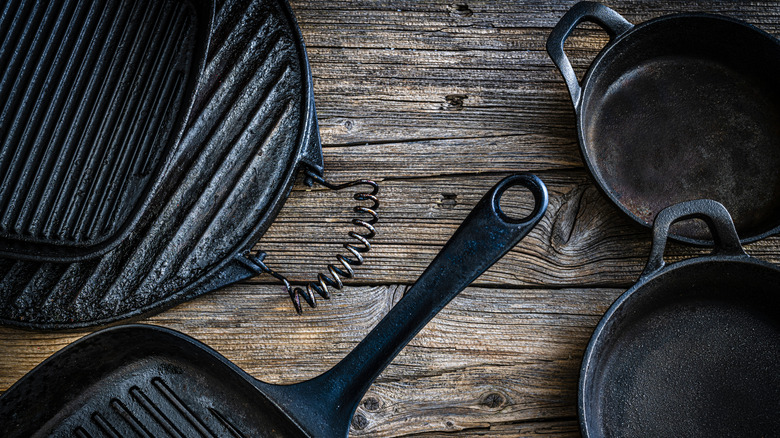
Maybe it seems like a given, but obtaining the proper cookware is a must for good steak tips. Blazing your beef like a champ won't occur with any old griddle you have lying around the kitchen. Multiple chefs we spoke to recommended hardy skillets. Cast-iron seemed to be the best option for blackening chunks of beef, as Curtis Stone told us: "It retains heat well, which allows the steak to sear properly when it goes into the pan."
Don't believe a quality pan needs to be a splurge, either. Brands like Lodge make models at fair prices (around $25 on Amazon) any novice cook could reasonably budget for in their kitchen.
When asked about equipment that's indispensable to grilling steak tips, Jacinto Perez noted finding tongs super helpful. "A quality pair of long-handled tongs gives you precise control when flipping or moving pieces." Something like these 16-Inch Scissor Tongs would also the oil splatter at bay.
Now, is there cookware you shouldn't cook steak tips with? According to Barry Miles, nonstick pans "don't get hot enough to develop a good crust." They also lack tolerance for higher cooking temperatures, and the protective coating, which gives it its slickness, can flake away when subjected to heavier heat.
6. Avoid frying too much steak at once
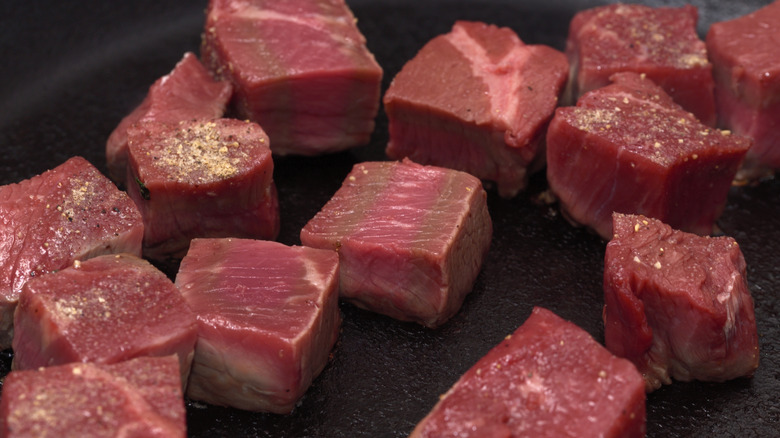
Assuming your butcher hooked you up with a lot of sirloin, you might be inclined to prepare it all at once. We admire the moxie, but jamming chunks of raw steak into one skillet? That's not going to benefit your tips in the slightest, Barry Miles warned us, and during our talk he explained why it's not a good idea to overcrowd your skillet. "When the pan is too full, the beef steams instead of searing, which leads to uneven cooking and less flavor."
Remember, you're dealing with beef that's a bit tougher. Even chopped into tiny nuggets, those steak tips still need enough space to breath, and pieces stacked onto one another, with areas not exposed to the heat from the burner, won't roast as thoroughly. Which, besides interfering with the browning (a sign they're cooked to perfection) means they'll take longer to sear on the grill, drying out and causing a chewy, gummy taste.
Work smarter, not harder. Rather than dumping all 3 pounds in one fell swoop, split up the searing, fully cooking each load before pouring in the next. Simple tricks like this ensure your morsels get broiled, and actually grill adequately.
7. Heat your pan on high to avoid overcooked beef
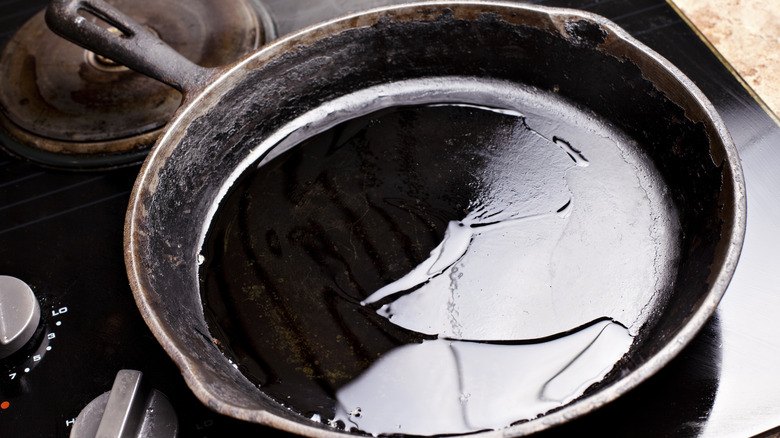
Professional chefs repeatedly emphasized that the pan needs to be quite hot to produce mouthwatering, broiled beef. An intense flame prevents meat tips from sponging up the oil, and means they'll gain excellent charring near-instantly, resulting in the lean, moist result we expect. By contrast, under-heating the skillet will cause a steaming effect — the beef simply won't broil, nor cook quickly enough to retain the juiciness we crave.
"Use high heat for a quick sear, then pull the meat before it's fully done and let it rest," Jacinto Perez instructs. And if you're wondering what constitutes "fully done," Barry Miles endorsed medium or medium-rare as an appropriate range to reach, which is 130 to 135 degrees Fahrenheit if you use a meat thermometer. At this stage the beef is a rich red, but coated in a healthy browning that's crisp to the touch.
Curtis Stone had another tip to keep in mind: don't fuss with the tips too much as they sizzle. Flipping morsels prematurely interferes with the formation of that deep crust (and the preferred finish just noted above). "Let the caramelization develop before moving it so you get good color on the outside while keeping the center pink, juicy, and tender."
8. Let steak tips rest after searing
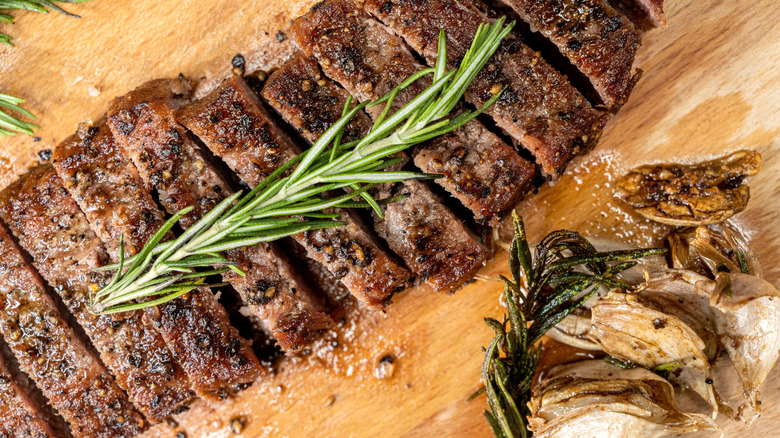
When we asked Jacinto Perez about helpful grilling advice, he mentioned one simple trick many chefs ignore, and often at their own peril. "Not letting the meat rest is a missed opportunity; a short rest keeps the juices where they belong." This refers to essentially placing the meat to the side after it's finished cooking, and only for a brief period, hence the "resting" stage.
Meats like beef tend to leak lots of grease as they sizzle. High temperatures agitate the juices, of course, which will cause them to flood out of the steak — where they belong — and into the skillet If a cook gets antsy, and decides to serve those steak tips hot off the burner, when the moisture within the meat hasn't gotten a chance to cool down and solidify a bit. In other words, your beef could instead turn dense due to moisture loss, as opposed to the tenderness promised in every bite.
You want your steak tips cooked to perfection, not toughness, so this step is a must. There's no need for fancy equipment. A simple cutting board or plate will work. Set the tips on the surface, tear off a little foil, and wait. Gently cover it, but not too tightly — you don't want to ruin your steak crust from steaming it. Some people even propose using a wire rack for better air flow as it cools.
9. Season well for amazing steak tips
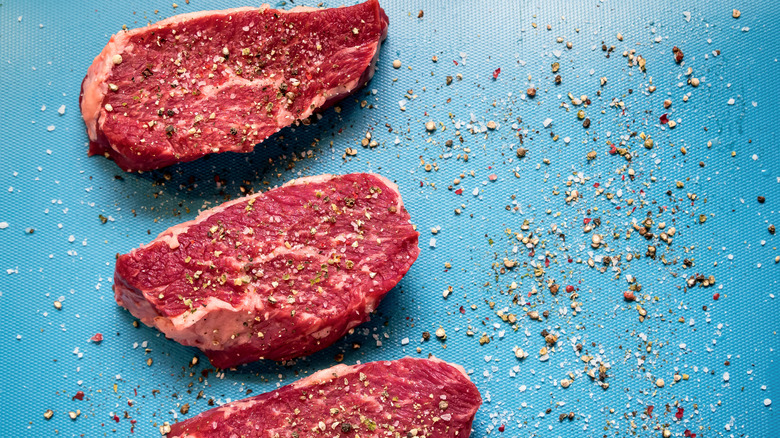
Even if your steak tips are fork-tender, nothing can really save a plate where that hasn't been seasoned. Bland meat is all-too-frequent in culinary circles, and Barry Miles urged us not to neglect the spices. They are part and parcel to the finished dish. "Steak tips benefit from being seasoned just before cooking, or lightly marinated ahead of time, to enhance flavor without masking the beef."
Combinations don't need to be complicated. Start with salt, then sprinkle in ground black pepper, garlic, or herbs like basil and dried parsley. Gliding on fat will reinforce flavor and assist the searing. Chef Curtis Stone told us he likes coating the beef in olive oil as a binder, then sprinkling on the spices prior to cooking to perfection.
Assuming you have more time, trying out a marinade would be excellent for your attempt. Not only do they coax out deeper flavors from your beef, but the protein's texture will turn out moister less dry. A bottle of Italian salad dressing is a simple trick that works in a pinch.