

This Thin Cut Of Steak Seems Simple To Cook, But Looks Can Be Deceiving
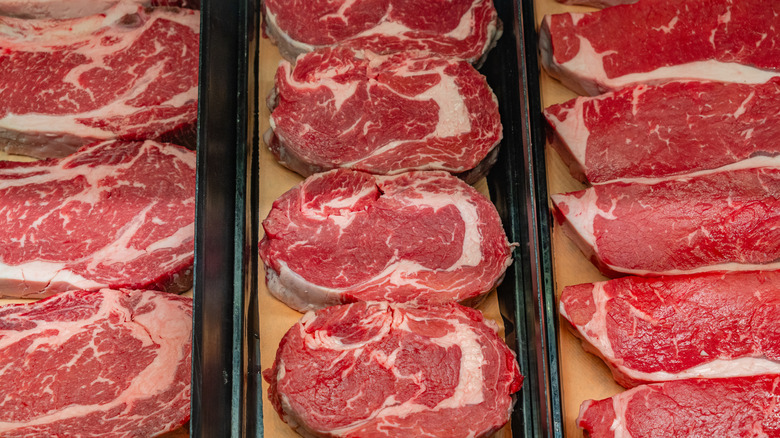
You've at least noticed skirt steak at the butcher or in the meat section of your local grocery store. Long and thin, with a texture like a pleated skirt, it's an eye-catching cut of meat that nonetheless looks simple to cook. It's not big and showy like a porterhouse, for instance, which is literally two steaks in one, plus has a bone to contend with. Don't be deceived, though. Despite its relatively low-key appearance, skirt steak can be a tricky one to get right.
That thinness is a major factor behind skirt steak's culinary fussiness. Typically ½ to 1 inch thick, it cooks fast, so it's easy to overcook the inside before you get a nice crust on the outside. This equals a grim, gray exterior and a tough, punishing chew. If you're grilling, another not-so-fun feature of the skirt steak is its tendency (shared by numerous other succulent cuts) to cause flare-ups. It's not wildly marbled, like a ribeye, but there's enough fat in it that, when rendered over a flame, you can get some unwanted fireworks sparking up from your grill. This is particularly true of the outside skirt steak, as compared to the inside. That's right — to further complicate things before you even get into the kitchen, there are two types of skirt steak: inside and outside.
Don't let these challenges stop you from trying out this short plate primal cut. There are certainly steak cuts to buy and ones to avoid, and skirt steak sits firmly in the "buy" camp. When chosen and cooked correctly, it can be a tender protein with robust, beefy flavor that lends itself well to a variety of dishes.
How to cook skirt steak that isn't tough and gray
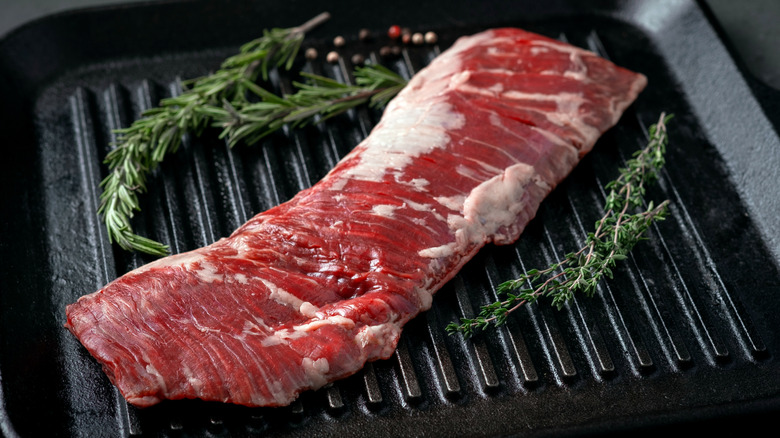
First things first: It's essential to know which kind of skirt steak you're buying. The inside skirt is wider, thinner, and tougher than the outside skirt, which is notably more tender and marbled with tasty fat. Either can turn out great, but expectations must be realistic. Whichever one you get, marinate it before cooking, as the acids will help to tenderize the muscle fibers. But over-marinating is a major mistake with skirt steak — give it only 30 minutes to an hour or so, or the meat will get mushy.
A grill is good for skirt steak, but a screaming-hot cast iron pan works as well. Hit the steak with high heat right off the bat; this isn't a cut to treat with lower temps and longer cook times. This high-heat approach will get you a nice, browned exterior and an inside that's the furthest thing from shoe leather. Have a skirt-friendly end temperature in mind, too. Skirt steak is one of those unicorn cuts, along with flap, flank, and hanger steak, that's actually better at medium than medium-rare. Skirt steak's tough, contracted muscle fibers don't really relax to their tenderest state until they've reached 130 degrees Fahrenheit.
If you're grilling, avoid flare-ups (and meat that tastes like ash) by trimming off excess fat before you start marinating. Afterward, soak up any wet marinade still adhering to the meat, and make sure your grill has a cool side to move the meat to should a flare-up still occur. When done, rest the steak, then slice it along the grain, not against, for the tenderest skirt steak possible.