

How To Know If Grocery Store Produce Has Been Sprayed With Pesticides
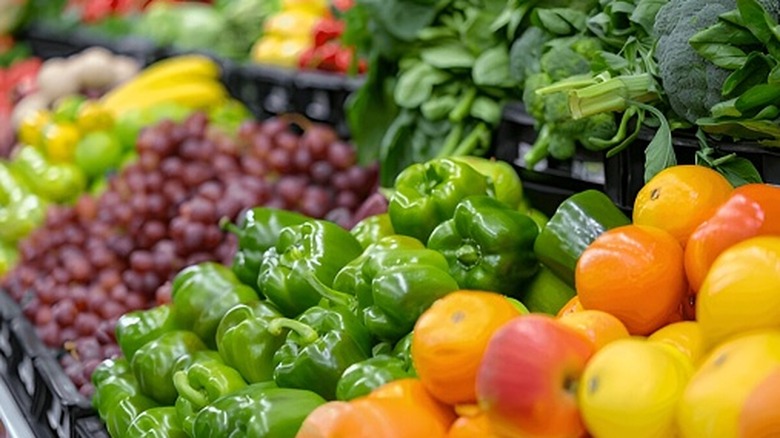
If you're an organic produce shopper, food grown with pesticides is probably the No. 1 thing you're looking to avoid. While there's nothing inherently dangerous about properly cleaned nonorganic fruits and vegetables, the other biggest difference between organic and nonorganic produce is often the cost. The last thing you want to do is spend extra money on something that's in the wrong bin or isn't properly labeled. That's why Chowhound spoke exclusively to Oliver Amdrup-Chamby, founder and chief executive officer of the clean supplement company Puori, who's spent his entire career focused on transparency in labeling to get the beat on how we as consumers can tell if the produce we buy at the grocery store has been sprayed with pesticides.
"The first and most obvious is looking for organic certifications," Amdrup-Chamby says. He also advises you check whether the produce is certified pesticide-free by an independent third-party. If you see any kind of certification label on the produce, look it up on your phone so you know what it means before you buy. Organic doesn't always mean pesticide-free. If you don't see a certification, pay attention to the labels, as they will tell you a lot of what you need to know. "If the PLU code has five digits and starts with a 9, it is organic produce. If the PLU code starts with 3 or 4, it will be conventionally grown, and the pesticide profile is unknown," Amdrup-Chamby shares. Note that the PLU code only tells you what the manufacturer told the retailer it is. It doesn't imply independent third-party testing. Additionally, organic food may still be treated with organic pesticides.
What to do if you don't see a pesticide-free certification or organic label
Getting an organic certification may cost thousands of dollars, which smaller farms — ones that may actually adhere to organic farming practices — might not have. In that case, you might simply ask them about pesticide use, building a rapport with them to gain behind-the-scenes knowledge in the process.
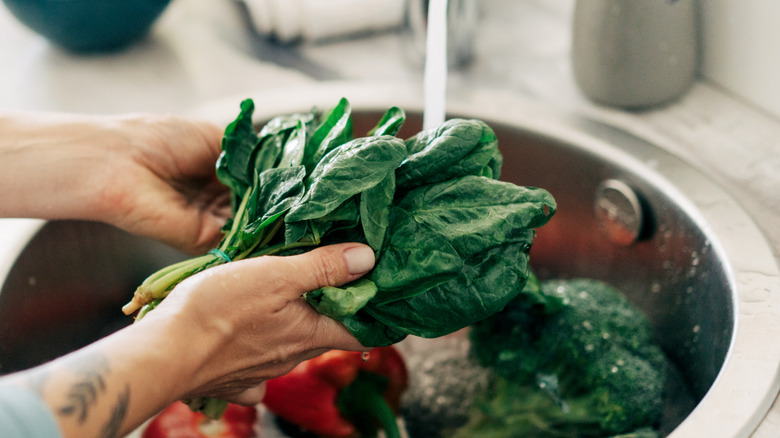
Either way, the government regulates pesticides used in food, and most of the time, any food you buy, even the ones that were grown using pesticides, are perfectly safe. But that doesn't make it okay to ingest them regularly, which is why you should wash all your produce properly. Even if your produce is supposed to be pesticide free, the phenomenon of pesticide drift from pesticide-using crops could lead to trace amounts. Oliver Amdrup-Chamby says, "Wash under running water (preferably filtered) with friction." Rubbing the produce — with your hands or a brush — helps get rid of pesticides. But Amdrup-Chamby advises doing so just before eating rather than before storing it, as moisture can speed up the spoilage process.
Note that working with Dirty Dozen produce — an annual Environmental Working Group list of the most pesticide-contaminated food plants — calls for more aggressive treatment. Clean the produce with a baking soda solution for 30 minutes. Further prep your Dirty Dozen produce by peeling or discarding the outer leaves. Both are also good tips for regular produce, though they only need a five- or 10-minute baking soda solution bath. Or you can just stick to the Clean Fifteen, which is produce classified as having the fewest lingering pesticides.