

6 Store-Bought Pasta Brands To Buy And 2 To Avoid, According To Experts
We may receive a commission on purchases made from links.
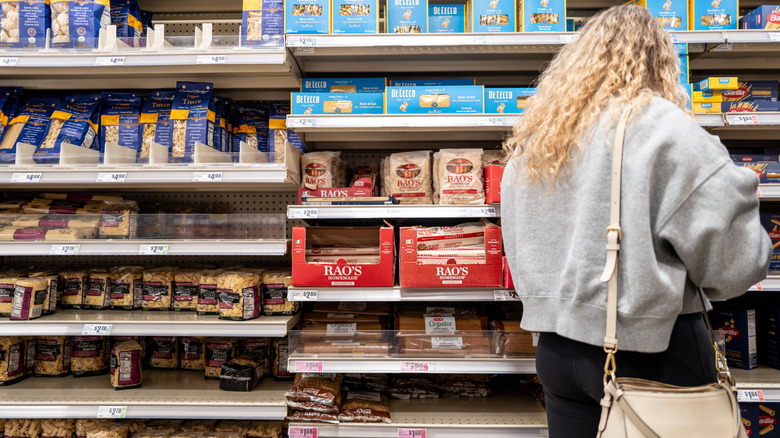
If you've ever stood in the pasta aisle, blinking at names you can't pronounce and wondering which brands deserve space in your pantry, you're not alone. Supermarkets these days offer a wide range of noodles, from Italian bronze-cut pasta (a sign you're at the right store) to Teflon-die-cut, organic, gluten-free, and occasionally fresh stuff in the deli section. Then there's the myriad of obscure shapes, each with its own use, and cooking instructions, per the noodle geometry. It's a lot. Novice home cooks can get lost in the sauce, but it's always best to focus on taste and texture first and foremost. Which pastas hold up to a hearty ragù, which collapse into mush, which provide the silkiest sauces — and do cheap grocery store brands fall short of costlier, imported ones?
The truth is that some brands should be avoided altogether, while others are worth every penny. This couldn't be more apparent in simple pasta dishes with two or three ingredients, where the noodle quality has to be on point. What's more, with certain pasta dishes, creating a restaurant-like, silky sauce is almost impossible with the wrong noodle. To hone in on the brands we think readers should avoid, and the ones you should take home, we tapped the experts. Four Seasons Hotel Beverly Hills' Executive Chef, Jesus Medina, Donatella Boutique Hotel and Restaurant's General Manager, Alfonso Platone, and Julia Chebotar, a private chef and "Chopped" Champ, have all kindly chimed in. Buon appetito!
Buy: Divella
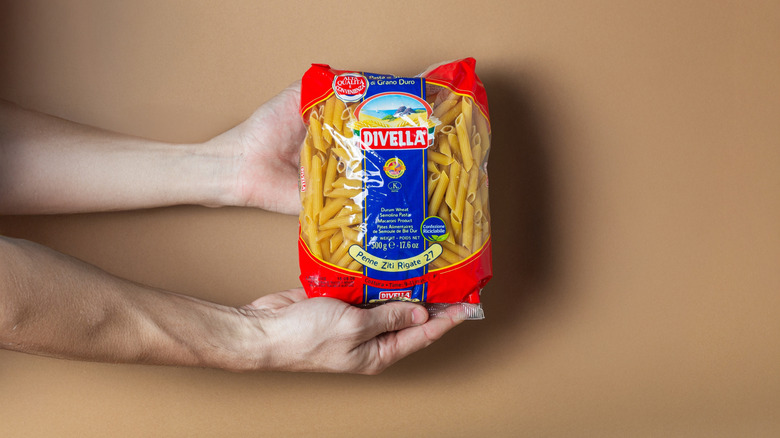
Divella might not be on everyone's radar, but it is an authentic Italian brand worth seeking out. Hailing from the southern part of the country — the heel of the boot, as they say — Divella's pasta factory in Bari, Italy, kicked into gear in the early 20th century, and is still going. The brand offers an impressive array of pastas, with its bronze-extruded line encompassing classics like spaghetti, linguine, rigatoni, fusilli, and more. In regard to pasta, the term extrusion refers to the process of pushing the dough through a die (cutter). Julia Chebotar sheds some light on its importance: "Extrusion affects how sauce clings and how the pasta cooks, and the cut matters just as much," she says. "I look for bronze die extruded pasta because the texture holds sauce better."
What this means is that with each gleeful bite, you leave less sauce on your plate. Alfonso Platone is in lock step with Chebotar. "Bronze-cut pasta grips sauce better, making the dish more flavorful," he tells us. The rough edges create more surface area for sauces to seep into. It also facilitates the release of starch to thicken sauces, imparting a creamy texture once emulsified. "For reliable results, [...] Divella offers good value and wide availability," Platone notes. If you see this brand in the wild, look for its bronze-extruded pastas to take home and thank us — and Platone — later.
Buy: De Cecco
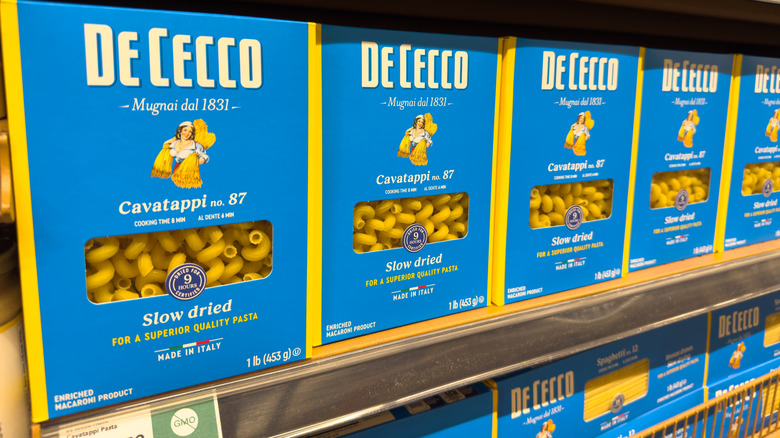
The De Cecco brand is widely available at grocers across the nation, from gourmet boutiques selling imported cheese and canned fish to larger retailers like Aldi. You'll certainly have no trouble finding De Cecco. But is it good? Many question big brands on quality, but readers can rest assured that this one passes the test, with all three of our experts co-signing on it. This brand passes the test for many reasons, chief among them being the type of wheat used. "When selecting store-bought dried pasta, I look for a few essential qualities — first and foremost, it should be made from 100% durum semolina wheat," Chef Medina says. "As for brands that consistently meet these standards, I'm loyal to a few — De Cecco is a reliable choice that's widely available and delivers excellent quality," he affirms. Alfonso Platone states that this brand also has a good chew. "Brands like De Cecco hold their texture extremely well," he tells us.
It's not just about cooking a pasta "al dente," it has to hold up on its own. "I look for pasta that holds its shape, has a real bite, and releases starch so the sauce actually clings," Julia Chebotar says. This is thanks in part to the wheat cultivar, extrusion methods, and, equally important, the drying. Good dried pasta must be slowly cured, and De Cecco employs a low-temp proprietary drying method dating back to 1889. If you're seeking an easily accessible, celebrity chef-approved quality pasta, look no further.
Buy: La Molisana
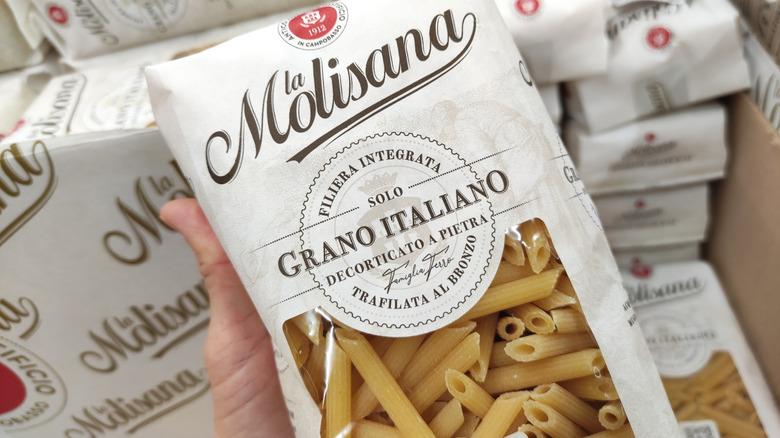
La Molisana is an unassuming brand that punches above its weight and is vetted by our experts. You've probably seen those familiar beige bags on supermarket shelves before, right at home next to De Cecco. It's neither premium nor entry-level, and per the criteria we've set forth, it ticks the boxes. La Molisana pasta has a line of bronze-extruded pasta, or, as the package says, "trafilata al bronzo" in Italian. When pasta shopping, this is actually a good phrase to keep in your back pocket, as many brands from the old country have very little, or sometimes no English on their packaging. La Molisana has been around since 1912, and its classic line provides that rough, bronze-die texture that's so important to sauces.
The brand claims that its pastas are made with only Italian wheat, providing 14% protein with easy digestibility. To this end, some fans of Italian food may encounter digestion issues, feeling bloated after a bowl of pasta. And while we can't provide nutritional guidance, it could be due to a low-quality noodle made with subpar flour. "One hundred percent durum semolina provides better texture, flavor, and digestion," Alfonso Platone tells Chowhound. Chef Medina is simpatico: "I tend to steer clear of very low-cost pasta brands or labels that use mixed or lower-quality wheat flours, [...] pasta should have structure, elasticity, and the ability to carry flavor, and that's where quality ingredients make all the difference."
Buy: Garofalo
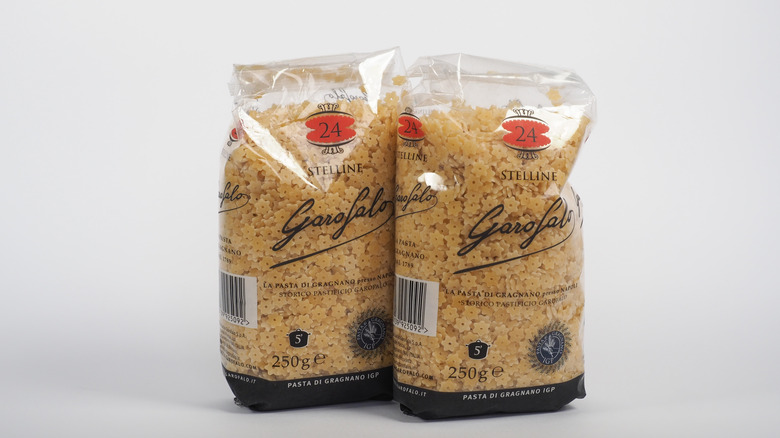
When shopping for pasta, you generally have two roads to go down: regular, semolina wheat-based, and gluten-free noodles, which we conducted a ranking of previously. For most home cooks, you're going to consume a durum semolina-based product of varying quality. If by now you can't figure out the difference between inferior pasta and the brands we're covering, such as Garofalo, you're forgiven. The best thing to do when unsure is to inspect the noodle color and texture and read the box. "The ingredient list is so important, as it directly impacts both the quality and final texture of the pasta — pasta made from 100% durum wheat semolina has a higher protein content and stronger gluten structure, which results in a better bite and true al dente texture," Chef Medina explains.
Julia Chebotar also reads labels closely, sharing, "I skip pastas with long ingredient lists, enriched flour, fillers, or anything that looks overly shiny or artificial. If the ingredients aren't clean and straightforward, it usually won't perform well in the pot." Cheaper pastas made with Teflon dies create an ultra-smooth, shiny surface — the complete opposite of what chefs want. "A slightly rough, matte surface is a very good sign," Alfonso Platone tells us, which is an easy thing to suss out in-store. "Garofalo offers wonderful shape variety and consistent texture," Chef Medina claims, with Platone also praising the brand for its overall quality noodles — which date back to 1789. It only uses high-quality semolina flours made into PGI (Pasta di Gragnano)-certified shapes, extruded through long bronze dies.
Buy: Rustichella d'Abruzzo
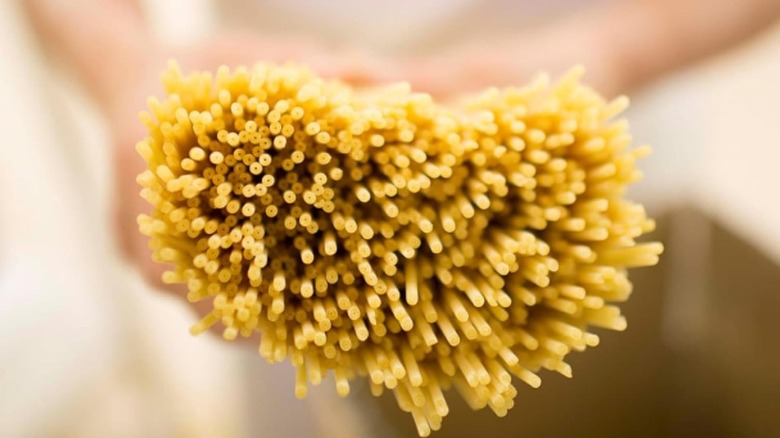
Pasta makes us happy — most of us know this already. But good quality noods — the foundation of any great pasta dish — might make you even happier. Rustichella d'Abruzzo, while perhaps a lesser-known noodle brand on our list, is one of the best of the best. Be warned, though, that you may have to shell out a few more bucks to acquire it, and it might be one of those brands kept at fancy gourmet shops rather than large retail grocers. To this end, it was actually first available stateside at Dean & Deluca in New York City, with roots going back to the early 20th century, and later a family relaunch in the early '80s. The brand has since maintained an artisan focus that the Abruzzo region is known for, and it is far from a secret among chefs nowadays.
Chef Medina says that quality comes down to how and where the pasta is made. He explains, "I've found that options made in Italy, especially those that clearly name a specific region like Tuscany or Abruzzo, often perform beautifully — that said, they tend to be slightly more expensive than standard supermarket brands. Those regions have a long pasta-making tradition, and it shows in the texture and consistency." If you're looking to splurge for artisan, craft dried pasta that is undoubtedly made in Italy, Rustichella d'Abruzzo is calling your name.
Buy: Rummo
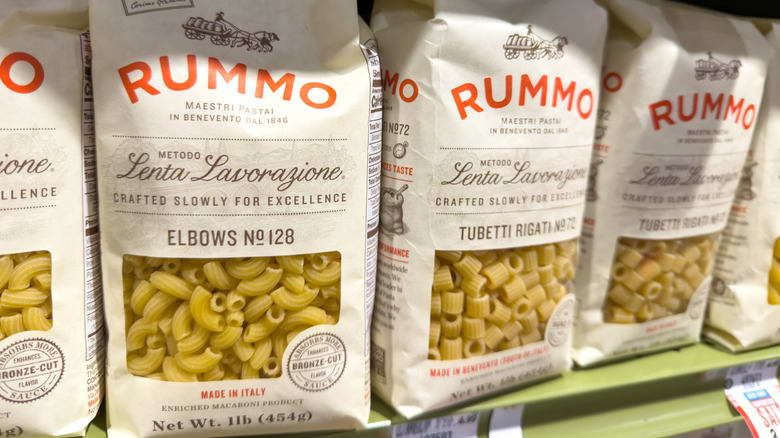
While some readers who've wandered down the pasta aisle will recognize Rummo, it's an easy brand to overlook — along with its inherent quality. Alfonso Platone says that the brand holds its texture, and excels with short-cut pasta shapes in particular. This is great intel for when you're looking to make a stellar sausage and broccoli mafaldotte, or a pasta e ceci with some tubetti rigati. Rummo is also the current favorite of Chef Medina, who says, "Rummo consistently holds its texture best. It delivers excellent color, clean wheat flavor, and a reliable al dente bite, even if you push the cooking time slightly."
Beyond a rock-solid endorsement from Chef Medina on the Rummo brand writ large, he does raise a good point: cook time. We've all been there: you have your mise en place ready, the aromatics are sizzling, and the pasta is boiling aggressively alongside. It's a delicate dance to get the timing just right when making pasta, and a mere 30 seconds off can really change the texture. But this is more of a risk with cheaper, low-quality pastas, as our experts have explained, and thankfully, Rummo is more forgiving here. Just don't forget to save that pasta water — liquid gold!
Avoid: Barilla
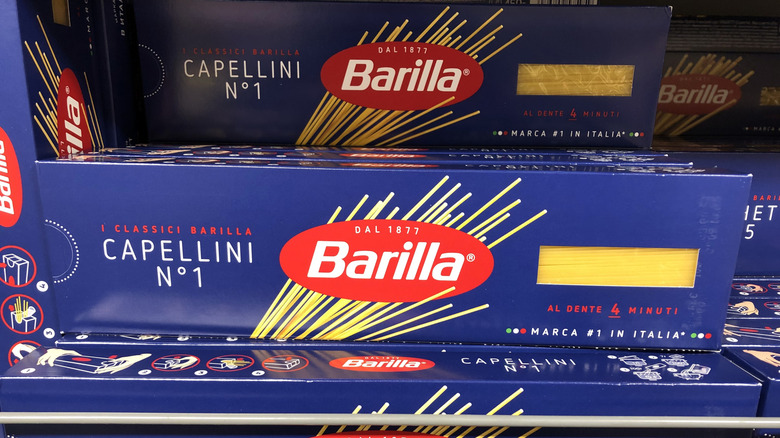
Barilla is pretty much impossible to avoid. As an ultra-affordable pasta brand, it's stocked as widely as, say, Coca-Cola or Doritos, emblematic of a mass-produced, entry-level product. You'll be hard-pressed not to see Barilla in your town or city, but that doesn't mean its pasta should go home with you. These noodles are really bottom-of-the-barrel, and will leave you wanting more, wishing you ponied up a few more bucks for a nicer noodle. We wish there were a cheap and cheerful brand offering the chef-approved qualities we've explored above (especially in this economy), but unfortunately, with Barilla, you get what you pay for.
"I tend to avoid Barilla, as it can overcook very quickly and often lacks the structure needed to properly hold and bind with sauces, resulting in a softer, less cohesive final dish," says Chef Medina. He continues, "I'd steer clear of mass-market brands like Barilla — while it's ubiquitous and affordable, it's made with Teflon dies, which creates that smooth, slippery surface that doesn't allow sauce to properly cling," he says. "The truth is, Italians have been perfecting pasta for centuries, and there's a reason the traditional methods produce superior results." We couldn't have said it better. Unless you're in a bind and really need a quick and cheap pasta fix, we say avoid Barilla's blue box line, which won't produce anywhere near chef-approved results.
Avoid: generic budget private labels
This last one isn't for a specific brand, but rather for the cheapest pastas available at large chain grocery stores. They are typically for the most budget-conscious of shoppers, and are often "white labeled" or "private labeled," which is industry-speak for one factory making noodles for multiple brands. These ultra-affordable noodles are really going to weigh down the final dish, leaving much to be desired in terms of flavor, texture, and digestibility. According to Alfonso Platone, they're also probably not even made in Italy, and are mixed-flour pastas — as opposed to 100% semolina — with no country-of-origin details. They are also usually overly polished thanks to the Teflon, with a yellow hue and smooth texture that negates silky sauces.
"As a general rule, I tend to steer clear of very low-cost pasta brands or labels that use mixed or lower-quality wheat flours," Chef Medina tells Chowhound, adding, "In the kitchen, these pastas often break down quickly during cooking, resulting in a texture that's mushy or gummy, rather than al dente." Gummy? Yuck! Julia Chebotar also avoids these types of cheap noodles: "I skip pastas with long ingredient lists, enriched flour, fillers, or anything that looks overly shiny or artificial," she says. "I also pay attention to color — if it looks overly yellow or artificial, it usually means the pasta won't have the structure or bite you want." We hope this helps you improve your at-home pasta game, one bite at a time!