

The Louisianan Way To Eat Alligator Meat Is Also One Of The Best (Hint, It's Not Fried)

For many Americans, alligator is arguably a novelty meat, something that you might eat in nugget form for an adventurous snack while visiting Gulf Coast areas where it's more common. But in Cajun cuisine, the reptile is far more popular, and you might find it prepared in various ways, from grilled to fried to stewed in a chili or gumbo. However, one of the best ways to cook alligator is to use a classic Cajun and Creole approach, blackening.
To the uninitiated, blackening may resemble frying as it can be done in a skillet, but it's something much more specific. Blackened alligator is coated in a spice blend and then seared over high heat (either in a pan, skillet, or on the grill). It's done quickly, developing a nicely spiced crust while the inside stays juicy. Blackening is a particularly good method for alligator because its meat has a low fat content, which means it dries out easily. For contrast, fried alligator may involve breading and more oil; with this technique, the flavor instead comes from the seasoning.
Alligator's mild, slightly gamey taste makes it something of a blank slate for spices and seasonings, which is another point in the method's favor. In Louisiana, blackened gator appears in a variety of dishes from étouffée to tacos, or just on its own to keep the focus on the meat. Plus, eating gator helps to keep things local, as they're farmed in the state's swampy bayous.
What else to know about blackening and gator meat
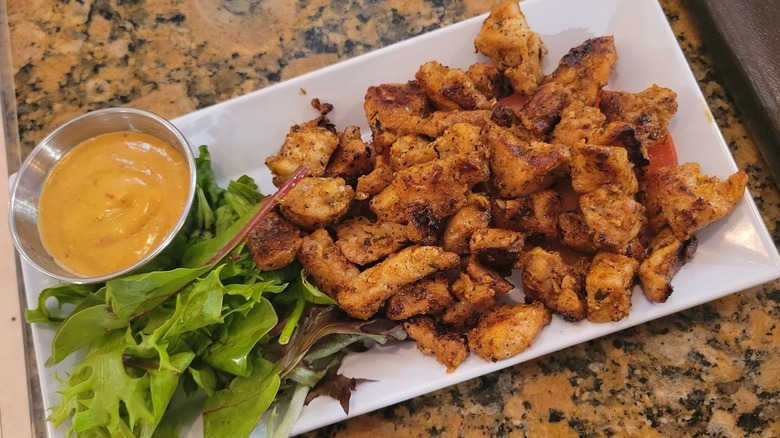
As a method, blackening isn't just used for cooking alligator. It's part of both Cajun and Creole cooking styles, and is a relatively recent creation, credited to New Orleans chef Paul Prudhomme in the 1980s. His original blackened dish used redfish, although it's used much more broadly nowadays. It's not far off from charring or char-grilling, in that the high heat burns the spices and creates a crust with nuanced flavors.
Blackened meats are usually dipped in butter before being coated in a blend of spices. Prudhomme's mix is pretty similar to classic Cajun blends and includes salt, cayenne pepper, paprika, powdered garlic and onion, oregano, and thyme for a herby kick; recipes today tend to follow suit but may include small variations, such as the addition of other chile powders.
If you've never eaten alligator, a common refrain is that it tastes a bit like chicken but with a hint of fishiness. It's considered closer to a white meat (though technically classified as seafood), and when cooked properly, strikes the right balance between toothsome and tender; it becomes rubbery when overcooked. As with most meats, you can purchase different cuts: The tail is known for being the closest to white meat, with some resemblance to both chicken breasts and veal. Cuts from the body can lean a bit more towards red meat, with a stronger taste. Luckily, any type of gator meat you get will shine when blackened.