

10 Types Of Sugars, Explained
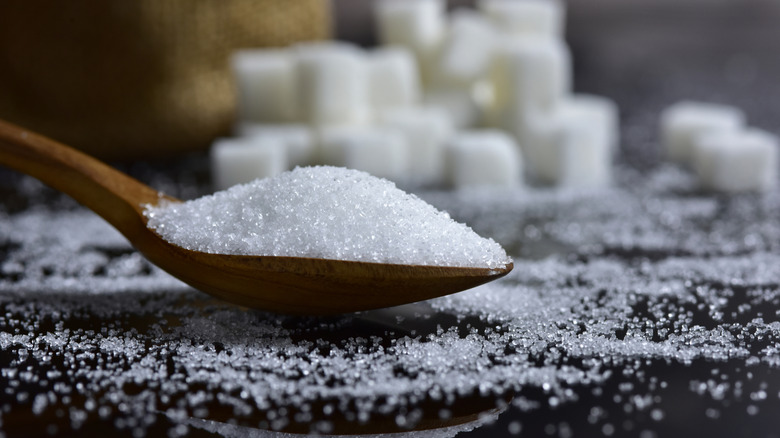
If you, too, are humming along to the 1969 hit by The Archies, you wouldn't be the only one. Sugar plays an essential role in our lives, as it's used in a whole host of recipes — and not just the ones we think of as being traditionally sweet. It can add a depth of flavor to everything from marinara sauce and marinades to your favorite chocolate chip cookie recipe.
Besides just adding flavor, sugar also plays a very important structural role in recipes; it's an essential addition to apple and other fruit pies because it helps thicken the watery filling, in turn preventing a soggy crust. Likewise, it adds structure to buttercream so that it can be easily piped onto your cupcakes or layer cake. But there are so many different types of sugar out there; how are you supposed to narrow down just one to use in your recipe? Is raw sugar "better" than white sugar? Does it make a difference whether you use light brown or dark brown, or confectioner's or powdered sugar, in a recipe? We have answers to all those sugar-related questions and more. Treat this as a handy guide to all things sugar, from how to best use each of the respective types to how to substitute one for another in a pinch.
1. Granulated sugar
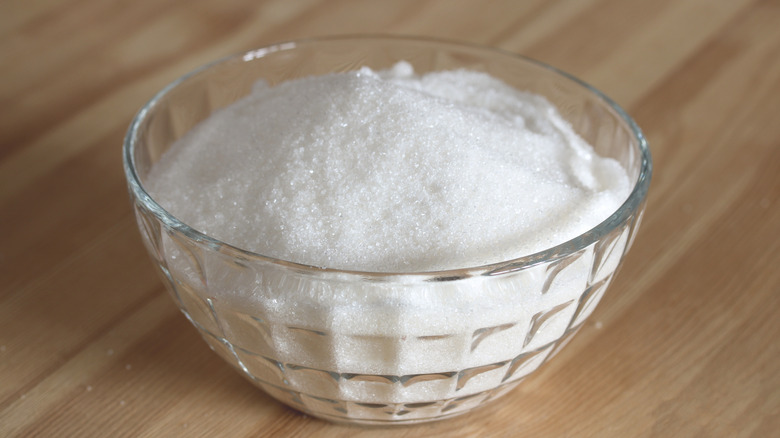
Granulated sugar is one of the most common types of sugar out there, and chances are that you have a bag of it sitting in your pantry right now. As its color suggests, it's a white sugar and can either be made from sugar beets or sugarcane. This color comes from a critical step in the refining process; once the molasses has been removed, the sugar is run through a filtration system, which whitens it and removes any impurities.
Due to its abundance and relative cheapness, granulated sugar is used in a whole bunch of recipes, especially in baking. Many recipes are standardized to the crystal size of granulated sugar – which is roughly the size of table salt – meaning that it may not be able to be substituted for coarser sugar varieties, like raw sugars. However, you can usually swap it with an equal ratio of superfine sugar by weight. Granulated sugar is also a popular addition to baked goods because it doesn't have much of a flavor besides being generically "sweet." Functionally, it is excellent at trapping air bubbles, like in a buttercream or cookie dough, and will dissolve into most batters with ease.
2. Superfine sugar
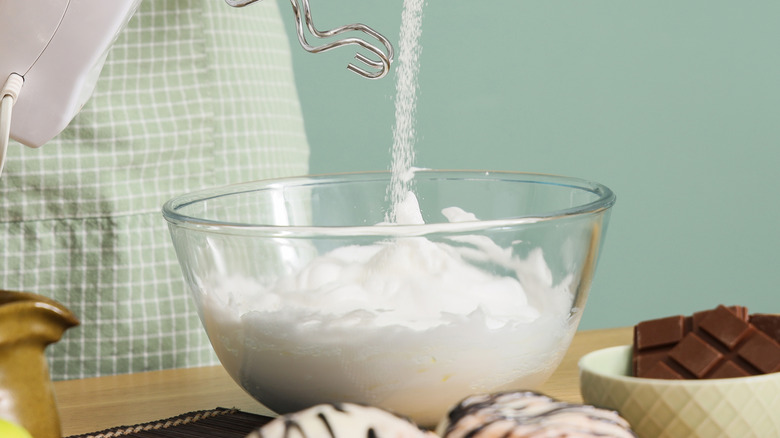
Superfine sugar is like a textural intermediary between granulated sugar and powdered sugar. It goes by other names, including caster sugar and extra-fine sugar. The flavor is similar to plain white granulated sugar, though the crystals are much smaller, meaning it better distributes into batters and recipes where you don't want grittiness — such as in a meringue or stirred into lemonade. Caster sugar is often found in British recipes in one of two types: white (or regular) and golden, the latter of which has more caramel notes due to the higher molasses content.
Since the flavor of superfine and granulated sugar is similar, you can substitute without issue. However, if you only have granulated sugar and need it to have the same crystal size as superfine sugar, you can simply add the same amount of granulated sugar to a blender, by weight, and blitz it until fine to get superfine sugar.
3. Powdered sugar
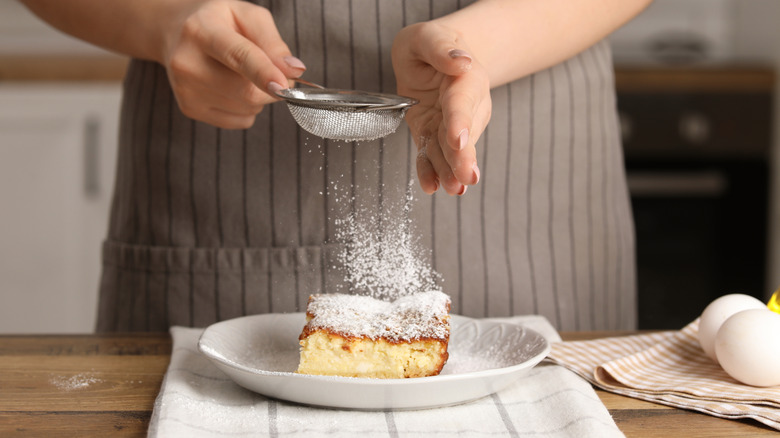
Powdered sugar is another essential ingredient in the baker's pantry, especially for plating and decorating. As its name suggests, powdered sugar has been ground even more finely than superfine sugar until it resembles a white powder. The small crystal size means that it looks like freshly fallen snow atop your recipe, which is why many folks like to sieve it on top of their bakes before serving them.
Powdered sugar is often used interchangeably with confectioner's sugar, and while the two may be similar in particle size, confectioner's sugar has one extra ingredient added to it: starch (including corn, tapioca, or potato). This prevents the sugar from clumping, and it will also cause the powder to sit atop the dessert, rather than melting into it, which makes it the better option for decorating. However, some people have said that the starchy flavor of confectioner's sugar is evident and recommend using powdered sugar instead for recipes where you can actually taste the sugar — like in a frosting.
Aside from decorating, powdered sugar is a must-have for bakers because it'll diffuse seamlessly into your recipe, though it won't trap air like granulated sugar would in something like cookie dough. When used in large quantities, it's rather dense and heavy (since the crystal size is so small), so be sure not to substitute it for granulated sugar if your recipe doesn't okay it first.
4. Brown sugar
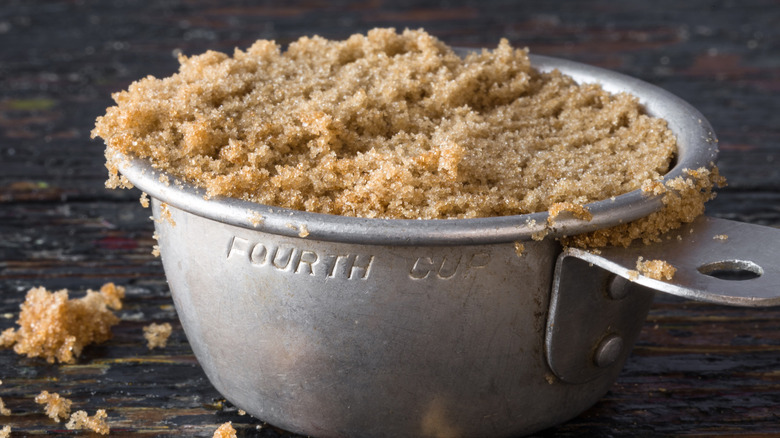
Brown sugar is yet another pantry essential; it's often called for in caramelly, chocolatey, or otherwise heavy desserts where its molasses flavor is warranted. If you've ever picked up brown sugar with your fingers, you can probably tell that it's very different from granulated white sugar. This is because the molasses has been added back into the white sugar after refining, which gives it its color, moisture, and flavor.
There are two products under the brown sugar umbrella: light brown and dark brown sugar. The former has around 3% molasses, while the latter has around 7% molasses, giving it a darker color and more toffee notes. Although the color and flavor intensity of these types of brown sugar vary, you can generally use the two of them interchangeably in your recipe.
However, it's important to note that you can't substitute white sugar for brown sugar in your recipe unless you make some modifications. Not only are the flavor and texture of these two sugars different, but the molasses content also alters the acidity of the baked good. To make your own homemade brown sugar, add 1 tablespoon of molasses to a cup of granulated white sugar for light brown sugar, and bump it up to 2 tablespoons for dark brown sugar. This molasses addition will give you the acidity and the flavor that your baked goods need to look and taste great.
5. Cane sugar
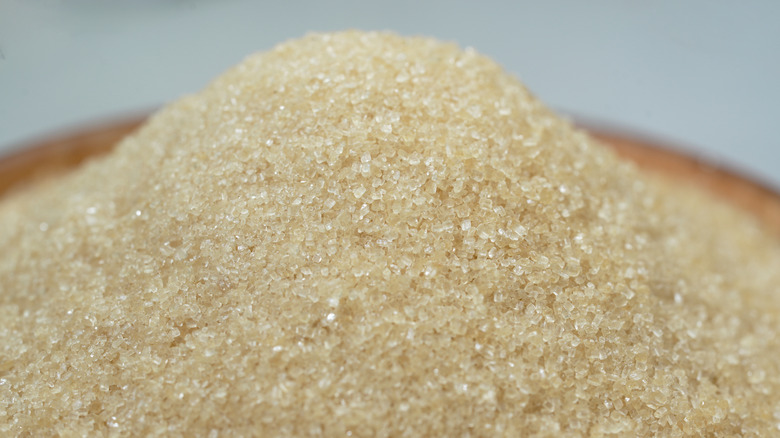
The difference between cane sugar and granulated sugar is like a rectangle and square relationship — all cane sugar is granulated sugar, but not all granulated sugar is cane sugar. That's because granulated sugar can be made with sugarcane or sugar beets, while cane sugar is, well, only made from sugarcane. Besides this sourcing difference, cane sugar isn't as processed as granulated white sugar, meaning you may notice that there are some color impurities or subtle molasses undertones — though they aren't as pronounced as they would be in brown sugar. Cane sugar crystals are usually larger than granulated sugar as well, so if you're looking for a sugar that dissolves readily into your recipe, cane sugar shouldn't be your top choice.
However, the fact that cane sugar doesn't dissolve as easily as granulated sugar actually has some benefits, specifically for folks looking to decorate the tops of their treats with sugar. You can add it to the top of freshly baked muffins, for example, without worrying about the sugar sinking back into the batter. You just need to be wary of its crunch and subtle caramel undertones when swapping it for granulated white sugar.
6. Sanding sugar
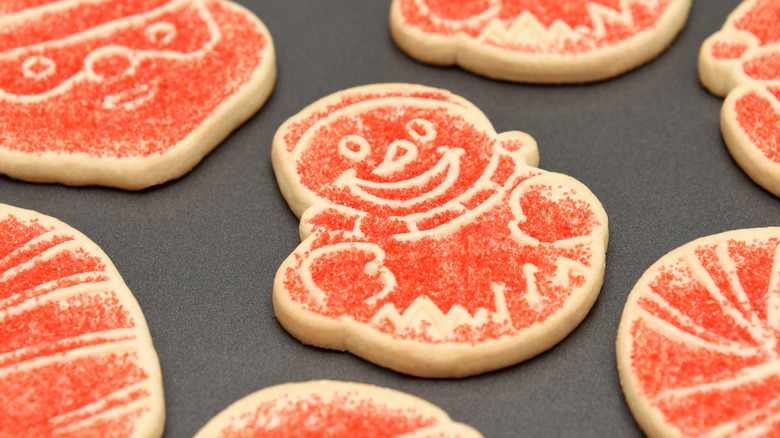
If you find yourself decorating Christmas cookies every year, you're probably no stranger to sanding sugar. This colorful sugar is a decorator's must-have, and it's not just the color that sets it apart from other types of sugar on this list. To make it, naturally brown-colored raw sugar is melted, clarified, and decolored before being concentrated, recrystallized, and dried. The process renders crystals that are super pure — around 97% pure sucrose. Sanding sugar is about twice the crystal size of granulated sugar — about the size of grains of sand (as its name suggests). The last step is coloring, then the crystals can be treated with edible wax and confectioner's glaze. This process is what gives the crystals their distinct shine — and what makes them stand out on your sugar cookies.
These coarse crystals do not easily reabsorb into baked goods, which is what makes them such a good decoration for things like cookies, cupcakes, and more. It's often falsely confused with sparkling sugar; the primary difference between these two types is that sparkling sugar usually has even larger crystals. Like sanding sugar, it comes in many different colors and can add both shimmer and crunch to your favorite baked goods.
7. Pearl sugar
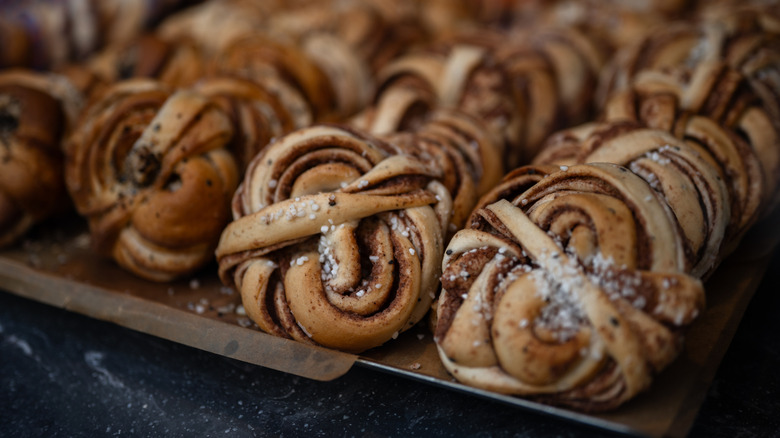
If you've ever indulged in a liège waffle or admired the shimmer on top of an ornately tied Swedish kanelbullar, chances are you've tried pearl sugar before. This decorative sugar, like sanding or sparkling sugar, won't dissolve into your baked goods because the sugar fragments are so large. This means you get a beautiful crunch when you sprinkle them on top of your baked goods. The crystals usually only come in one color — white — and range in size, with some being more sand-like and others being nearly pea-sized. To make pearl sugar, sugar water is boiled and left to recrystallize, then the crystals are broken and separated, resulting in super coarse crystals. The sugar can also be extruded, though the boiling method is the more common technique. You'll sometimes hear it called "hail sugar," as it can look like white hailstones.
There is some regional variation in pearl sugar; the Swedish version tends to be smaller, while Belgian pearl sugar is often mixed into the baked goods themselves, such as in the aforementioned liège waffles. Although their names might sound similar, pearl sugar and sugar pearls are not the same thing. Sugar pearls are rounder, smoother, and spherical (like little beads), while pearl sugar looks like tiny shards.
8. Turbinado sugar
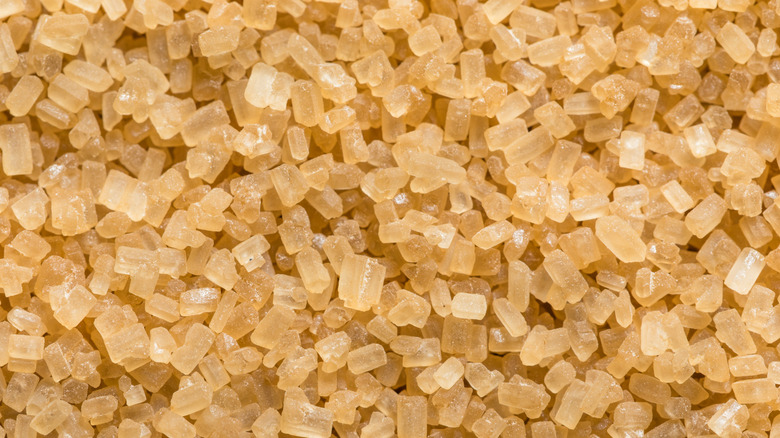
Turbinado is one of those alternative sugars that you may be seeing more of in the grocery store, especially in the natural foods section. You may notice the sugarcane-based sweetener labeled "natural" or "raw" sugar. Its large crystal size and slightly caramel-colored hue make it look different from other types of brown sugar. As its color suggests, not all of the molasses is removed during processing. This gives it a slightly more toffee-like flavor than plain sugar, as well as a darker appearance that makes a statement in baked goods.
Since it has a larger crystal size than other sugars, turbinado shines as a finishing sugar; try adding a sprinkle to your blueberry muffins or on top of a rustic apple tart. It doesn't have the same moisture content as brown sugar, so it's important to remember it won't behave like it (or dissolve like granulated sugar) in your recipe.
9. Demerara sugar
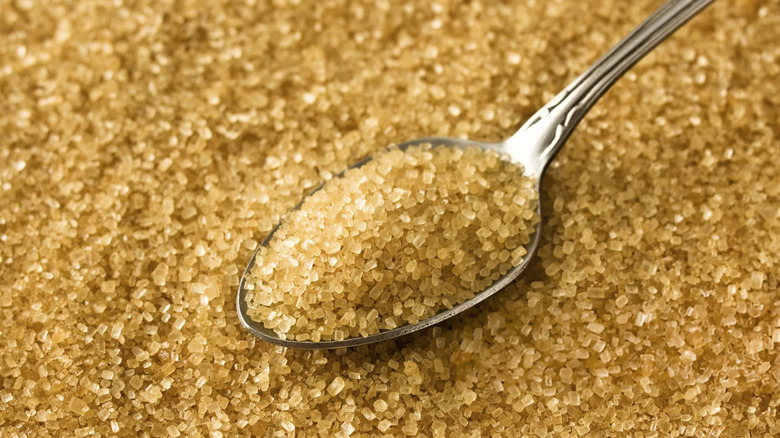
Demerara sugar, like turbinado, is considered a raw sugar (meaning it's been crystallized once; granulated white sugar undergoes two rounds of crystallization). While it does undergo some refining to remove most of the molasses, it still retains those caramel notes, which gives it a bit more flavor dimension than plain granulated white sugar. Based on looks alone, it would be easy to confuse demerara sugar and turbinado sugar, as they have a similar color and crystal size. However, the difference between them is that demerara is slightly coarser and stickier because it retains more of its molasses content.
As you can probably assume by its coarseness, demerara does not dissolve readily into batters in the same way that brown sugar or granulated white sugar would, which is why it shines more as a finishing sugar than as a component inside recipes. Try rolling your cookie dough balls in the sugar for extra crunch, or consider rimming a glass for a sweet cocktail with it.
10. Muscovado sugar
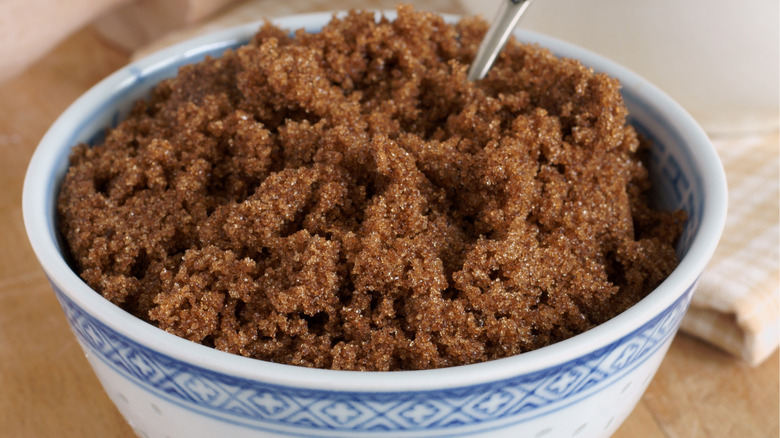
Muscovado sugar, also called Barbados sugar or molasses sugar, is one of the darker and more molasses-forward raw sugars on this list. It undergoes minimal processing and maintains its high molasses content and moisture. It's also different from regular brown sugar — which is made by adding molasses back to white sugar — because the molasses isn't removed from the sugar in the first place. This locks in the moisture and the toffee-like, slightly bittersweet flavor that muscovado is known for. There are two primary varieties of muscovado sugar available: dark and light — the latter of which has a very small amount of molasses removed.
Since muscovado sugar has a very strong and bold flavor, it's best used in applications where a dark brown sugar would also shine — like in a batch of fudgy brown sugar brownies or gingerbread. Its bold and bittersweet flavor also makes it an excellent addition to marinades and sauces, as it adds a balancing sweetness but also a wider depth of flavor than other types of raw sugar. Since muscovado sugar is comparatively difficult to find, you can swap it for dark brown sugar — though unrefined brown sugars, like jaggery and panela, make excellent substitutes as well.