

These Are The Only Times It's Safe To Reuse Leftover Dredging Flour
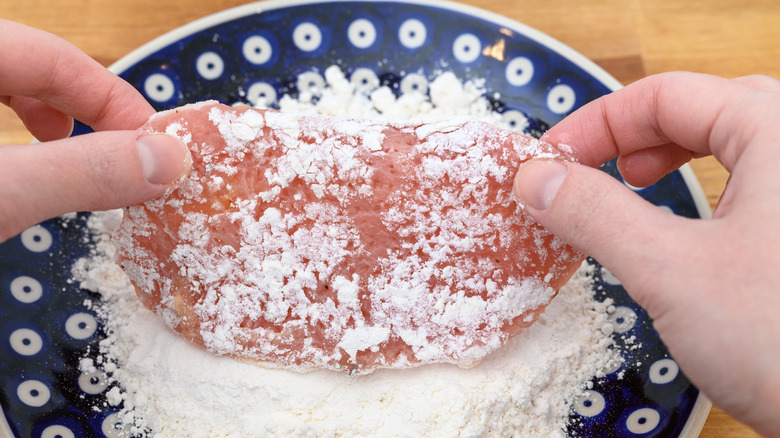
So you're about to cook up some classic fried chicken, and maybe you've poured out a little too much dredging flour, and you're wondering if it's safe to save it for next time. While this may be commendably frugal, it's generally a bad idea to reuse dredging flour. If it's been in contact with raw meat, there's a risk of it picking up contaminants.
That said, if you're dredging vegetables, tofu, or other plant-based, non-meat, and non-seafood items, reusing that leftover flour can be done safely. It's absolutely essential that the flour has only had contact with these items, and not with animal products. (That includes indirect contact: For example, if you dredged meat and then poured out fresh flour to dredge vegetables but used the same plate.)
This is because vegetables have a much lower risk of carrying pathogens than raw meat (although don't be lulled into thinking produce can't carry pathogens; fruits and vegetables have been at the center of some big food recalls). You'll still want to be safe with that flour, though. Flour is considered a raw food, so keep it away from anything that won't be cooked before being eaten. (Incidentally, this is part of why you shouldn't eat most cookie dough.) Put the dredging flour in a separate container, not back in the flour bag, to reduce any possibility of cross contamination. Besides, it may pick up some flavor from the veggies, so you won't want to mix that back into the rest of your flour. For that same reason, you'll probably only want to reuse any dredging flour for savory purposes like a batter, to thicken sauces, or more dredging.
Why it's typically not safe to reuse dredging flour
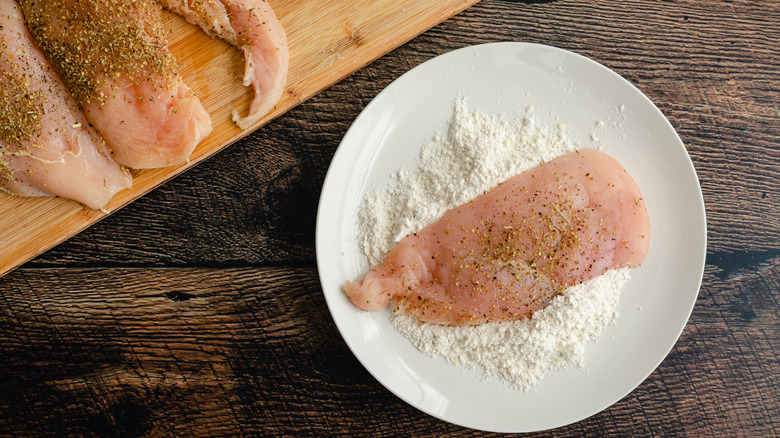
When it comes to meat and seafood, the risk of your dredging flour getting contaminated is higher. Particular risks include salmonella and E. coli, both of which can be deadly or make you very ill. When that raw meat hits the flour, those pathogens can be transferred over to it.
Of course, if you were to reuse dredging flour that had been in contact with raw meat, it would presumably be getting cooked. (After all, raw flour is hardly appetizing to most people.) So, you may think that reusing it is not such a big deal. However, it's probably not worth the risk. If you reuse it in a dish that's only quickly cooked, the pathogens could stick around. You'd also have to keep careful tabs on that recycled flour. Plus, because flour is so powdery, it can spread to other places in your kitchen easily and possibly unnoticed, including onto foods that might be eaten without being cooked. The longer you keep that potentially contaminated flour around, the more chances it has to spread, so it's wiser to just throw it out.