

Do Corian Countertops Burn Or Scorch Under Hot Pots?
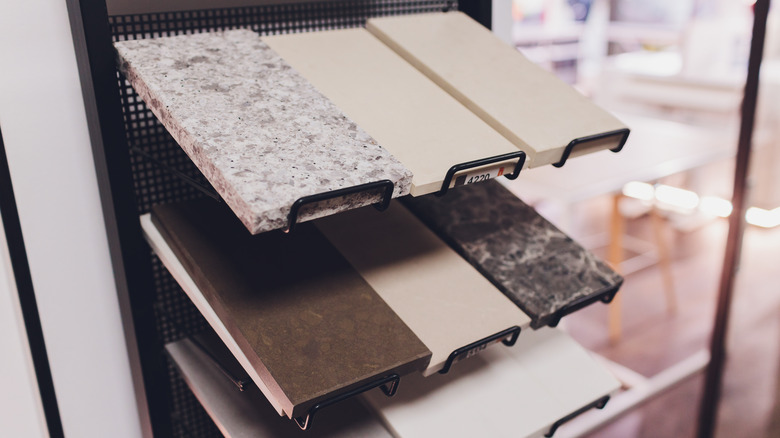
Investing in good-quality countertops is an important part of a kitchen remodel. The material you go with depends on what kind of use you plan to get from the countertops. Whether you're looking for a natural stone like granite or a man-made, solid surface like Corian, be mindful that not all countertops are the same. If you're considering Corian, understand that placing a hot pot on this material could cause it to burn.
Corian countertops are made from aluminum trihydrate, a natural mineral, paired with either an acrylic or polyester resin. Hot pots and pans can do varying degrees of damage to Corian, depending on the temperature of the pot, the length of time it's on the counter, and how frequently a hot pot or pan is placed in the same spot. Corian countertops are only heat resistant to temperatures up to 212 degrees Fahrenheit, and many hot pots and pans are scorching far beyond that when they come right from the stovetop or oven. According to Dr. Chris DeArmitt, fellow of the Institute of Materials, Minerals, & Mining and founder of the Plastics Research Council, damage can easily occur if Corian makes contact with temperatures 300 degrees Fahrenheit or higher. DeArmitt, who is also a fellow of the Royal Society of Chemistry and a chartered chemist, noted that a hot pan off the stove is usually anywhere from 390 degrees or above. Cast iron needs temperatures between 450 and 500 degrees Fahrenheit to properly season, and it can easily reach around 500 degrees Fahrenheit or higher when cooking.
The damage incurred to Corian can depend on the timing, too
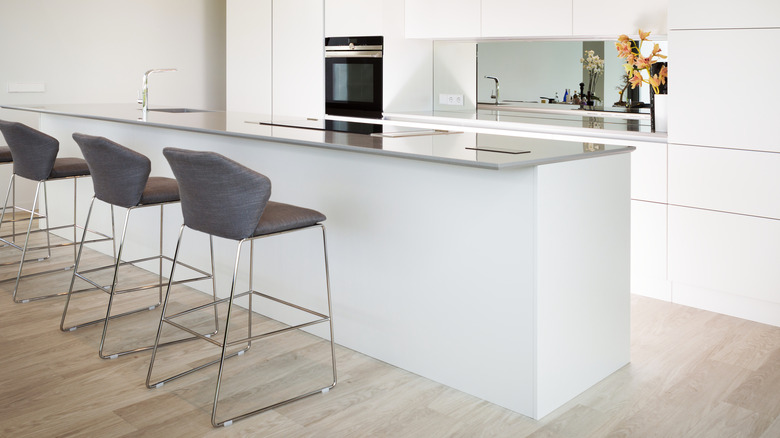
If you place a hot pot or pan on a Corian surface for just a few seconds, it's possible that no visible damage will occur. However, it's still impacting the Corian in ways you might not see. "Heat is going to weaken the polymers in Corian," Jonathan Palley, CEO of Clever Tiny Homes, told Chowhound. "If it happens repeatedly in the same place, those polymers are only going to get weaker. He noted that even if the damage isn't visible, "the surface will be more sensitive to heat and could warp or stain more easily."
According to Dr. Chris DeArmitt, repeated contact can also lead to cracks in the Corian's surface due to temperature changes in the material, called thermal gradients. Visible damage, which might occur with prolonged contact, includes "yellowing, whitening, or dark scorch marks," he added.
"As a general rule, if it's just been on the stove or come out of the oven, it should sit on a more heat-resistant surface for a few minutes first or go on a hot pad," Palley said. While the solid surface makes Corian easy to clean, if you're looking for a more heat-resistant countertop surface, you're better off going with a material like quartz or granite.