

'Entitled,' 'Negative,' And 'Universally Loathed' Were Anthony Bourdain's Words To Describe These Restaurant Goers
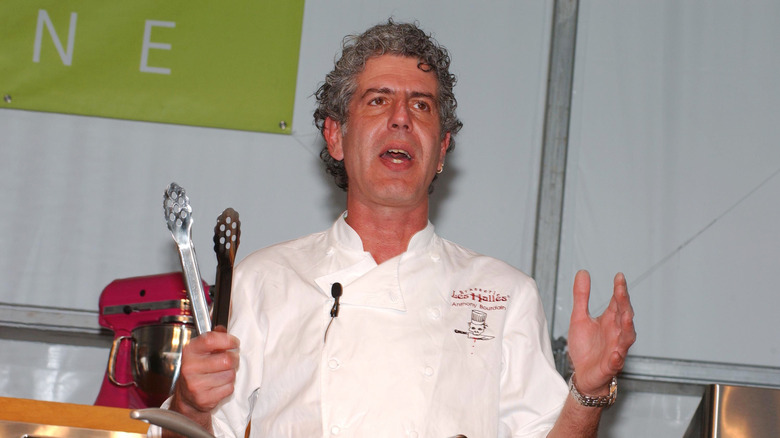
A couple hundred years ago, a town crier might have stood in a public square grousing about the merits of an 1800s seafood novelty called Lobster Newburg. Today, the role of unsolicited critic has moved to TikTok and other social media platforms. And plenty of other foodie nuisances have existed in the intervening centuries. In 2017, the celebrity chef, writer, and culinary ombudsman Anthony Bourdain, known for his savage takes, railed against a self-appointed group of hospitality jurists: elite Yelpers.
"There's really no worse or lower human being than an elite Yelper," Bourdain told Business Insider. These "elites" are a self-selecting group of internet users who have dedicated their precious time, and, in most cases, money, to providing free content for the multinational, billion dollar company in exchange for illustrated badges of escalating rank, however imagined. "They're universally loathed by chefs everywhere. They are the very pictures of entitled, you know, negative energy," Bourdain said. They're bad for industry pros, he continued, and they can also be detrimental to your area's overall restaurant landscape, too.
Yelp reviews don't tell the whole story, and can damage local restaurants
Anyone who's ever tumbled down a Yelp rabbit hole has likely found an abundance of what the site has become known for: totally wackadoo personal screeds. Peruse the posts on pages for some of New York City's most esteemed destinations, for example, and you'll find one-star gripes detailing such offenses as not being able to produce magical tables for last minute walk-ins on busy nights. While an erroneous takedown such as this might not cause as much harm to acclaimed, splashy operations, similar missives written by somebody who hasn't even eaten at a given establishment can needlessly injure smaller restaurants.
Rambling narratives detailing these perceived slights are one of the red flags you should keep in mind with reading restaurant "reviews," particularly those of amateur authorship. They reveal nothing of what might be a restaurant's studied product sourcing, the chef's technical excellence, or the bar's expert beverage program. Instead, they can dilute a whole place's reputation based not on performance, but out of some totally irrelevant personal bias. And, in the worst case scenario, enough of them can lead to a premature closure that prevents you from ever experiencing what might have been a wonderful neighborhood gem for yourself. Yelp's images can be useful to check things like portion size or seating arrangements, but its written reviews are best approached with healthy skepticism.