

6 Defunct Fast Food Drive-Thrus We Almost Forgot About
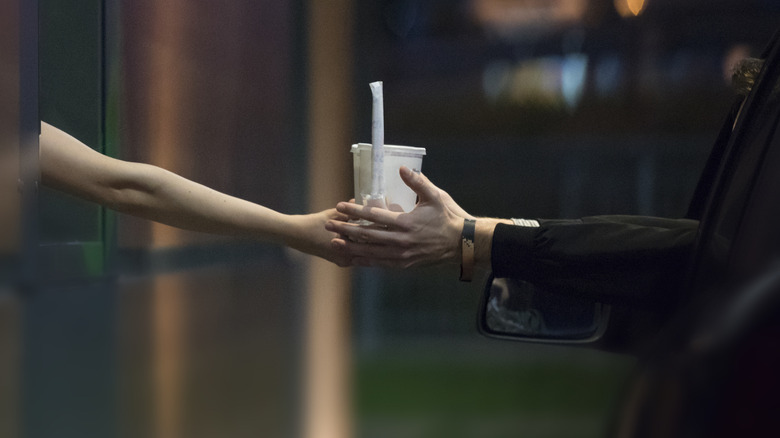
Your favorite drive-thru will always be there for you — until it isn't. We get so used to visiting particular chains whenever we go out that we can't quite fathom the thought that they might one day no longer exist. But this has happened to many drive-thru restaurants over the past decades, and even chains that are popular now can begin to have problems with profits and customer counts, leading to business taking a dive. Sometimes those problems become too great for the company to overcome, leading to its closure.
Drive-thrus have been around since the 1920s, and as the U.S. and other countries adopted car-centric cultures, the notion of picking up food without getting out of your car has expanded across other industries, giving us things like drive-up pharmacies and ATMs. Most people alive now likely have at least one memory of their parents picking up food at a drive-thru or desperately trying not to let the sodas in those cardboard holders topple over as the car pulled away from the pick-up window. When those nostalgic locations close, it can be kind of sad because people know a part of their childhood is now gone. The memories of those restaurants risk fading into history, and the same is true for these six defunct drive-thrus that we almost forgot about.
1. Burger Queen
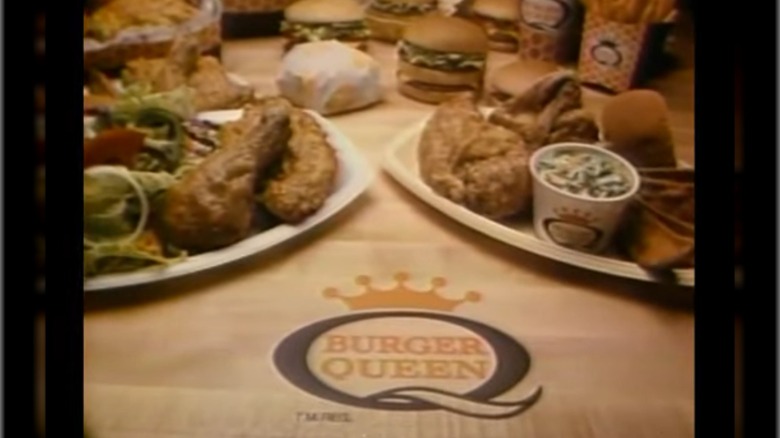
Burger Queen opened in 1956 in Winter Haven, Florida, and the owners tried to start franchising almost immediately. That was a smart decision; in 1961, the owners sold franchise rights to a friend who wanted to open locations in Kentucky, resulting in rapid expansion. While many burger chains had mascots from the start, Burger Queen was a bit late to that game, not introducing its mascot Queenie Bee until 1971.
Not all of the locations had drive-thrus, either, although some added them later. The chain was successful, but also had to deal with trademark issues concerning Burger King and Dairy Queen. The company reached an agreement with Dairy Queen in 1971 and, in 1976, Burger King, which had actually held the Burger Queen trademark in Florida, finally gave up its legal battle, allowing Burger Queen's founder to grab the trademark.
1976 was also the start of Burger Queen's attempts to open outside the U.S. By 1978, the company had locations in Canada and Taiwan, and in 1979, branches opened up in the U.K., changing the name to Huckleberry's out of respect for the Queen of England. However, the name confusion with Burger King and Dairy Queen (not to mention the 1978 name change of a Philippine ice cream parlor to bee-themed Jollibee, just as the Taiwan location was about to open) led the company to change its name in 1981 to Druther's, and its mascot to Andy Dandytale. Only one Druther's remains open, in Campbellsville, Kentucky.
2. Milligan's Beefy Burgers
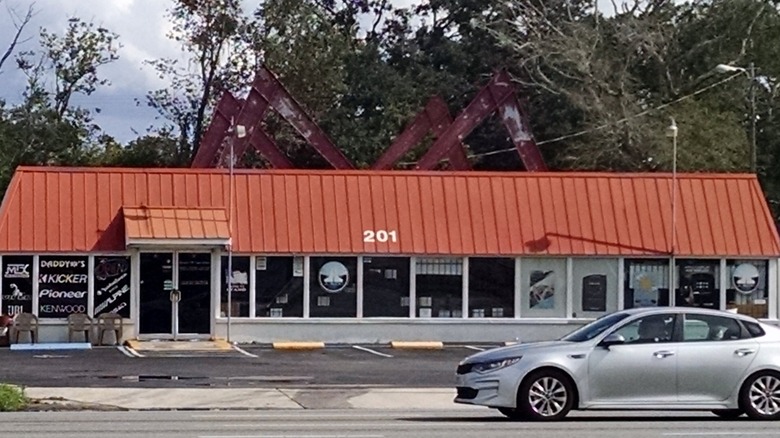
If you drive around Jacksonville, Orlando, and other cities in northeastern and central Florida, you may see small buildings with a pointy "M" structure sticking out of the roof. Some of these house burger joints, while others are home to non-food businesses like car dealerships. These are all former locations of Milligan's Beefy Burgers, Florida's first drive-thru chain. Elmer and Dorothy Milligan opened the first location in Starke, northeast of Gainesville, in 1942. The restaurant was a hit, selling close to half a million burgers within the first year.
The Milligans didn't open their second location until 1950, after they had moved to Jacksonville, but in the next 14 years, the chain expanded to 16 different locations in five different cities. 10 were in Jacksonville, and the Milligans also ran Milligan's Hamburger Hut in downtown Jacksonville and Milligan's Grill in another section of town. At the chain's peak, Beefy Burgers locations were selling upward of 5 million burgers per year. The company stayed in business until 1974, unable to keep up with the competition — much of which came from rival Jacksonville chain Burger King.
3. The Pig Stand
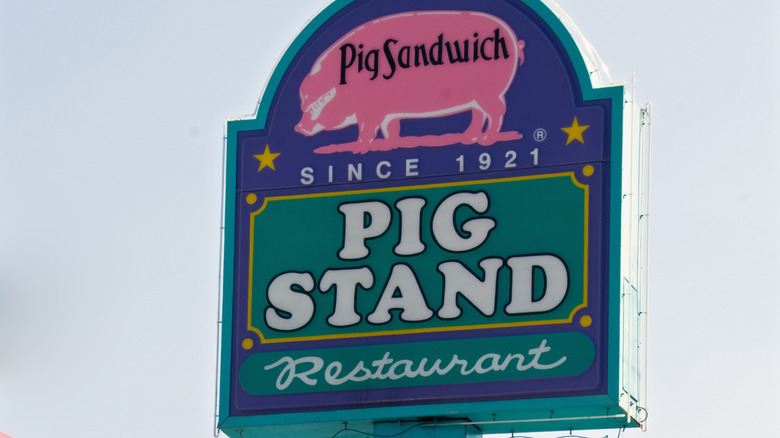
The Pig Stand is the oldest drive-in and drive-thru restaurant chain in the country. While most of the attention goes to In-N-Out because of its innovative drive-thru technology, the Pig Stand started serving to-go customers at their cars in 1921. The chain opened in Dallas, first as a dine-in/drive-in restaurant just outside of town, selling BBQ pork sandwiches. In 1923, a second location opened in central Dallas, and the chain took off like a rocket, expanding to over six states outside Texas. Founder Jesse G. Kirby and his partner, Dr. Reuben Jackson, were instrumental in creating classic fast-food features. The drive-in, the drive-thru, and carhops are all Pig Stand creations, and it's also said (unverified, but said) that the chain invented Texas toast, onion rings, and chicken-fried steak sandwiches. Unfortunately, over the decades, the number of Pig Stands slowly dwindled until the last one in San Antonio closed in 2023.
The drive-thru came about early on, when Kirby became frustrated with the small size of the restaurant parking lot. Customers loved the drive-in concept and kept wanting to eat the food in their cars. Kirby (whose take on it wasn't too kind; he reportedly used the word "lazy" to describe people in their cars not wanting to get to eat) couldn't serve everyone in the parking lot and invented the to-go drive-thru window as a service solution.
4. Pup 'n' Taco
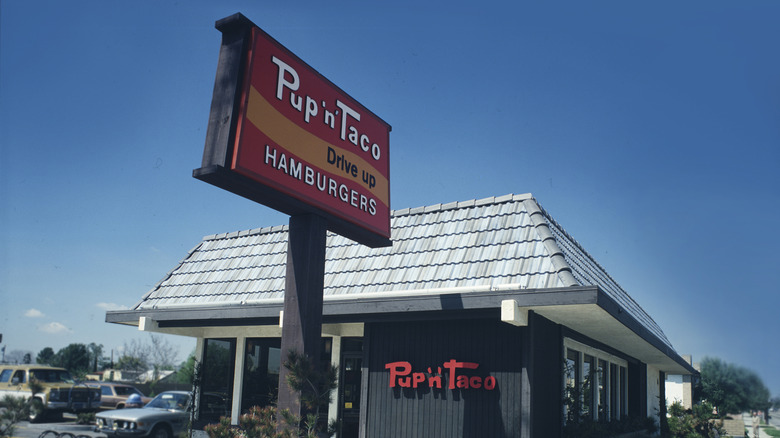
Pup 'n' Taco's founder not only created another then-famous chain, he also was responsible for one of the most iconic symbols found in the Los Angeles region: those giant cement-coated donuts that adorn so many buildings. Russell Wendell was a doughnut-machine salesman who opened a company called Big Do-Nut in 1951. He also had an architect create a large doughnut statue that would sit on the building. As the chain expanded, so too did the number of doughnut statues, and Wendell started a second chain for hot dogs, burgers, and pastrami (the combination is a Southern California thing). This restaurant eventually became Pup 'n' Taco.
Depending on the source, Pup 'n' Taco opened either in 1956 or in 1965. The first location with that actual name was opened no later than 1965. Pup 'n' Taco was also a drive-thru, or drive-up, as it called itself, that expanded rapidly in the early 1970s. The new chain (slogan: "Bite the one you love") became a Southern California favorite and opened locations in Albuquerque and Denver. Its red, orange, and white logo is one of those that lives on in the memories of anyone who grew up in the area in the 1970s and 1980s. Wendell sold most of the 100-plus Pup 'n' Taco locations to Taco Bell in 1985, except for three in Albuquerque that were taken over by a relative and renamed Pop 'n' Taco. Those eventually closed down.
5. Burger Chef
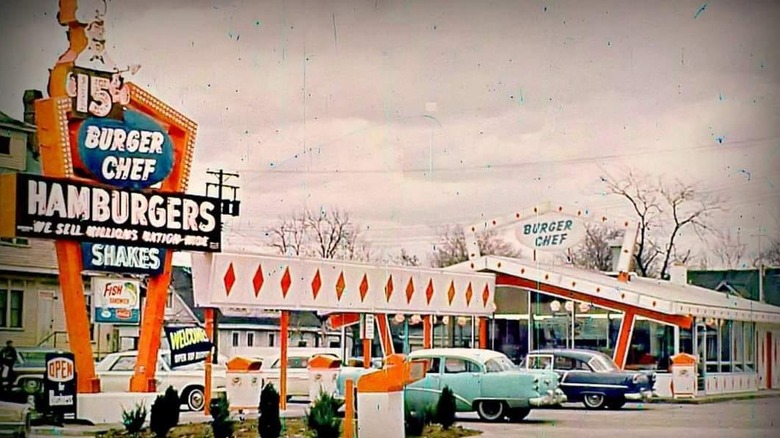
Burger Chef first opened in 1957 in Indianapolis. The founders of the chain, Frank and Donald Thomas and Robert Wildman, had an equipment company that invented a broiling machine which used an open flame broiler to cook burgers. Initially, Wildman and the Thomas brothers planned to license the machines to other businesses, including Burger King, but they later decided to give fast food a go themselves. Burger Chef quickly grew into a nationwide chain known for its cooking technique that could cook up to 2,000 burger patties per hour by the 1960s.
The team sold the company to General Foods in 1968. The company didn't manage the restaurants well, and the chain's popularity dwindled. In 1978, one of its Indiana locations was also the scene of a horrific murder, with four employees being killed. General Foods sold the chain to Hardee's in 1981 for $44 million, and since then, every Burger Chef has closed down or been converted to a Hardee's. Physical buildings still exist, but they all house different businesses now. Hardee's has served Burger Chef's "Big Shef" burger a few times as part of limited promotions.
During its heyday, the chain was highly innovative, allowing orders by phone and serving kids' meals (Funmeals) that pre-dated the Happy Meal. Burger Chef actually took McDonald's to court over the Happy Meal, claiming trademark infringement, but lost the case. The chain also had salad bars for customers, as well as drive-thrus. Burger Chef was such a fixture of the 1960s that it even landed a plotline in an episode of "Mad Men."
6. Kenny Rogers Roasters
Kenny Rogers Roasters still exists outside the U.S., so it isn't exactly defunct as a restaurant. But its U.S. locations, drive-thrus and all, have been gone for quite a few years now, to the dismay of those who loved the chain's wood-roasted chicken. Back in 1991, John Y. Brown, Jr., partnered with country singer Kenny Rogers to open a chain of chicken restaurants that focused on roasted chicken. Obviously, having Rogers' name attached to the venture was huge, but what really made this a big deal was that Brown was the man who bought KFC from Colonel Harland Sanders in 1964. Brown was instrumental in expanding KFC; in other words, the man knew chicken, and he knew how to run successful chicken restaurant chains. Kenny Rogers Roasters looked like a winner.
And, for a while, it was. The chain very quickly expanded across the country, from its original location in Florida in 1991, all the way to California and outside the U.S., reaching locations like the Middle East by 1994. By 1996, the chain had 300 restaurants. However, in 1998, the main company had to close several restaurants and file for bankruptcy, claiming it couldn't handle the operating costs. That still left a lot of franchised restaurants, however, and Nathan's Famous swooped in to grab the company. Eventually, the chain again had to file for bankruptcy in 2011, closing the last of its U.S. locations.