

10 Department Store Restaurants That We Still Think About
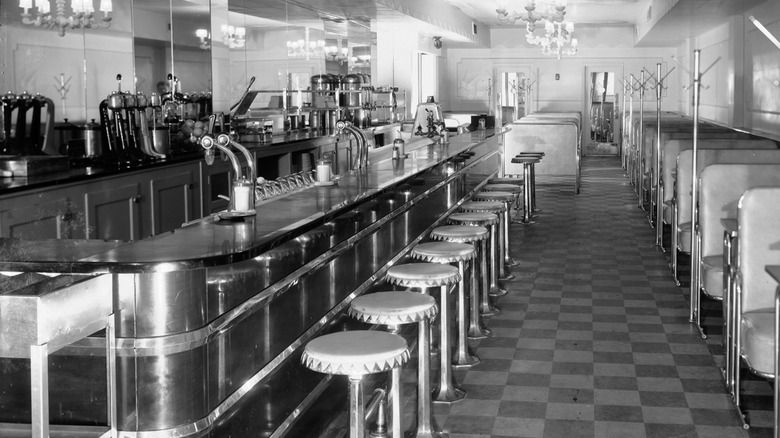
After walking around Costco or IKEA for several hours, it's nice to be able to sit down for a moment and get something to eat. However, the in-store restaurant was a feature of department stores for decades prior to Costco's food court, IKEA's cafeteria, and even Kmart's cafes. The department store long reigned over the shopping world; while you could shop in smaller stores, the department stores were like these one-stop shops for everything fashion-related. The stores wanted customers to linger, as more time in the building meant more sightings of items that shoppers might decide they need. Enter the department store restaurant or tea room, with elegant furnishings and sometimes even more elegant menus. In later years, some department store restaurants focused on family dining or quick meals before heading home.
Many restaurants are still open, such as the vaunted Walnut Room at Macy's State Street location in Chicago. Others closed and then came back in another form, such as the Crystal Tea Room at Wanamaker's in Philadelphia; the original tea room closed but later reopened as a venue for a catering company. Some found new life when outsiders reopened the restaurant years after the original store closed; the last Woolworth's lunch counter in Bakersfield, California, is a great example of this. But others are long gone, except in people's memories. If time travel were a thing, we'd like to hop back a few decades and have lunch at these 10 department store restaurants.
1. The Corinthian Room at Strawbridge & Clothier in Philadelphia
Justus Strawbridge had already been running a small store on Market Street in Philadelphia when he partnered with Isaac Clothier in 1868; what followed were repeated expansions of the Market Street store and a growing good reputation. The company created programs to help its employees, which wasn't something other stores were known for doing. For example, the store created a small medical and dental center for employees, and as the company expanded to other locations, each got its own nurses' station. Customers got fair treatment, too. Prices on products were set (no haggling needed), and cash was king.
The Corinthian Room was the restaurant located in the company's flagship store. It was on par with the Crystal Tea Room at Wanamaker's, and together the two were the classy lunch locales for women shoppers. Rows of trim tables and chairs were lined up neatly along the length of the space, and the restaurant holds a special place in the minds of those who remember eating there. You could even send postcards that featured the restaurant. It was also one of the few departments at the store where African Americans could work before World War II. The company's pre-war history was definitely segregated and kept African Americans out of view for years; unfortunately, the company reportedly did not have the best track record in terms of segregation and sexism. The Corinthian Room closed just before the company itself went out of business.
2. Bullock's Tea Room at Bullock's Wilshire in Los Angeles
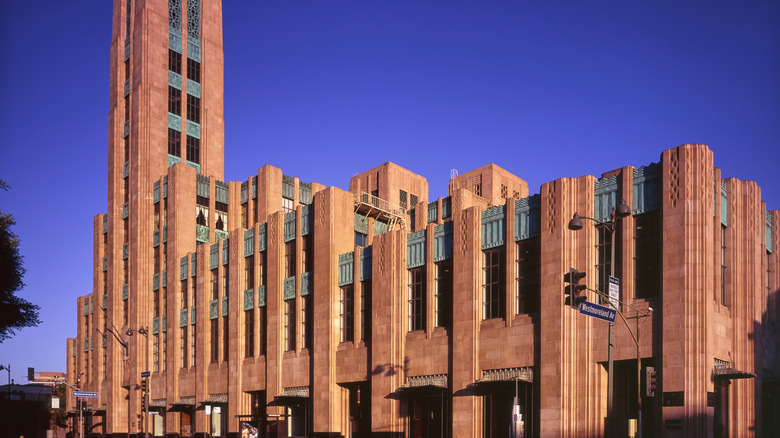
The Tea Room at Bullock's Wilshire in Los Angeles is one of the best preserved restaurants in the country, thanks to the efforts of a law school that bought the building after the store closed. Bullock's was a large chain, but its building on Wilshire Boulevard was a gem of Art Deco architecture. You'd enter the 1929 building and find yourself in an absolutely glorious combination of understated decor with luxury service, complete with models modeling clothes for you and a nursery that would babysit your kids while you shopped. Unfortunately, the 1992 riots damaged the building, and Bullock's closed the tea room just before closing the entire building in April 1993. Southwestern Law School purchased it in 1994 and embarked on an extensive restoration project.
The Tea Room was astonishing. A central dining room ringed with private rooms, the Tea Room had a soothing color scheme and an extensive menu ranging from small tea sandwiches to its famous coconut cream pie. By the 1990s, the food was no longer to people's tastes, but when word spread that the Tea Room would be closing, everyone wanted one last meal — and some souvenirs, as reports say things like cutlery and menus suddenly went missing. After Southwestern Law School purchased the building, it reopened the Tea Room as a student dining facility. The old Tea Room is rarely open to the public now, save for a few special occasions.
3. The Bird Cage at Lord & Taylor in New York City
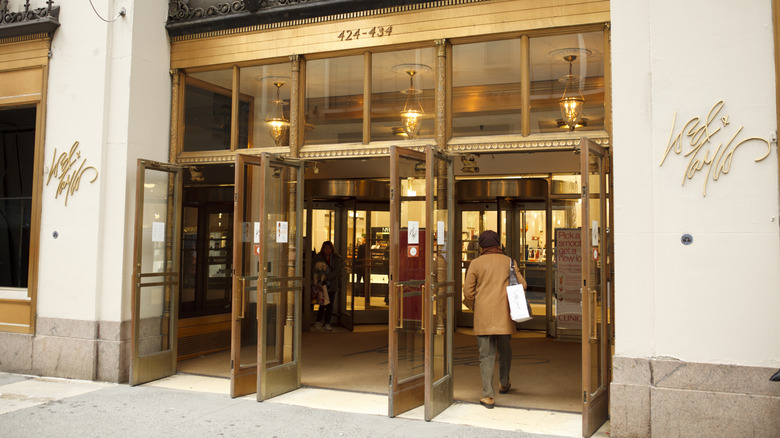
Lord & Taylor opened in New York City in 1826 after Samuel Lord, who ran a dry-goods store, partnered with family member George Washington Taylor. The store took its time expanding, only opening its second location in 1853. By 1914, the main store for the company moved into its flagship location in Manhattan on Fifth Avenue. Three things set Lord & Taylor apart from its competition. One was its staff's ability to help ensure your clothes fit perfectly and coordinated well so that you had an actual wardrobe to wear, and not just random clothes. Another was its appointment of Dorothy Shaver as president in 1945; Shaver had been with the company since 1924 and was the first woman to head a department store.
The third was the Bird Cage. This was the restaurant that opened at the flagship store in the 1930s. It was a true tea room, complete with scones, tea, clotted cream, and tiny sandwiches, but it was meant for families and not just women shoppers. The company opened identical versions in some of its outposts. But the tea room concept soon faded, and by the 1980s, the Bird Cage became Cafe American Style. Eventually, the Fifth Avenue location closed in 2019, and Lord & Taylor itself closed permanently in 2021. In 2024, Regal Brands Global announced that it would open a new version of Lord & Taylor as an online retailer.
4. The Yorba Room at Buffums in Santa Ana
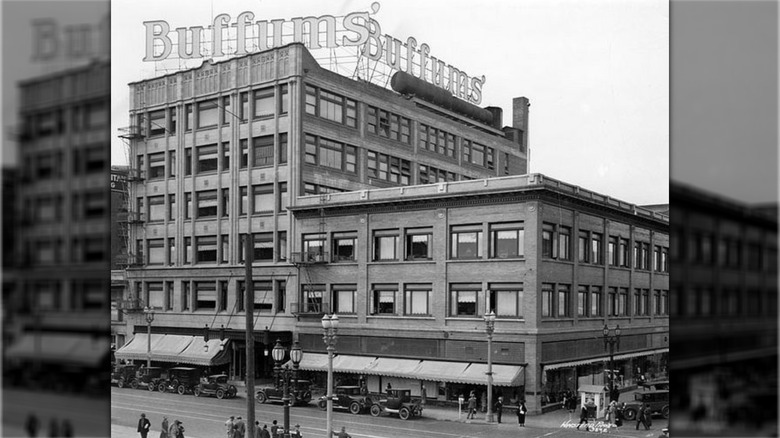
Buffums (initially Buffums', but the chain dropped the apostrophe) was a high-end department store whose flagship location was in Long Beach, California. Brothers Charles and Edwin Buffum bought a dry-goods store in 1904 and transformed it into what became one of the top department store chains in Southern California. It was expensive and aimed its products at older shoppers for most of its existence. Initially, just the flagship store expanded its physical footprint. But in 1950, Buffums opened a second location in the city of Santa Ana.
The flagship location had a restaurant, as did other places as they opened. But the eatery that brings up the most memories for shoppers was at this second site. The Santa Ana Buffums had the Yorba Room, known for its Thursday lunchtime fashion shows and history-themed decor. People who remember eating there will tell you about the murals, ice cream, cinnamon rolls, and Monte Cristo sandwiches. The Yorba Room became a regular spot for some families, who'd eat there monthly.
Buffums in Santa Ana was so popular that it remained in business even as competitors closed, although in the 1980s, when a nearby mall was rebuilt and started attracting customers away, Buffums decided to close the Santa Ana location. Buffums itself was sold in the 1970s, but the new owner couldn't keep the chain going. The company eventually closed in 1991.
5. Boscov's Restaurant at Boscov's in Wilkes-Barre and other cities
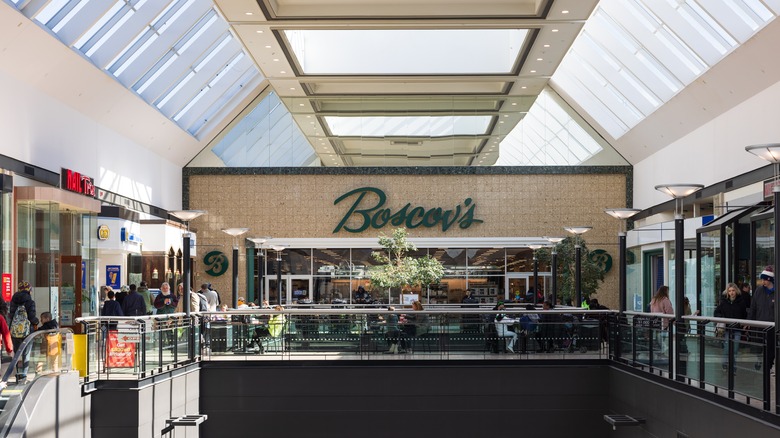
Boscov's is a popular chain of department stores that started in Reading, Pennsylvania, in 1918. Founder Solomon Boscov was a Russian immigrant who'd been selling merchandise in the countryside, often for food and lodging, since 1914. By 1918, he had enough money to buy the store from which he had been buying his merchandise. However, it wasn't until 1962 that the store opened another location. By the 1980s, the company had expanded to other states, functioning as a community member, rather than just a store.
Each Boscov's also used to have a restaurant. Alternately known as Boscov's Restaurant and The Greenery, these were not fancy tea rooms. These were cozy, sensible spaces that served comfort food. They were meant to be places where customers could sit and relax. Unfortunately, cozy indoor spaces with people talking were not allowed to stay open once the pandemic hit. Two of the restaurants eventually reopened — and then the really bad news hit. Boscov's had decided not to reopen the other restaurants, and it would close the open locations in 2021. Pandemic restrictions had made it difficult to financially support the restaurants. Boscov's is still family-owned, so this wasn't a cold corporate decision; employees and family members both said they'd miss that side of the business. Customers were devastated as not only were they losing good food, but they also lost a space to relax and eat without being rushed.
6. Le Train Bleu at Bloomingdale's in New York City
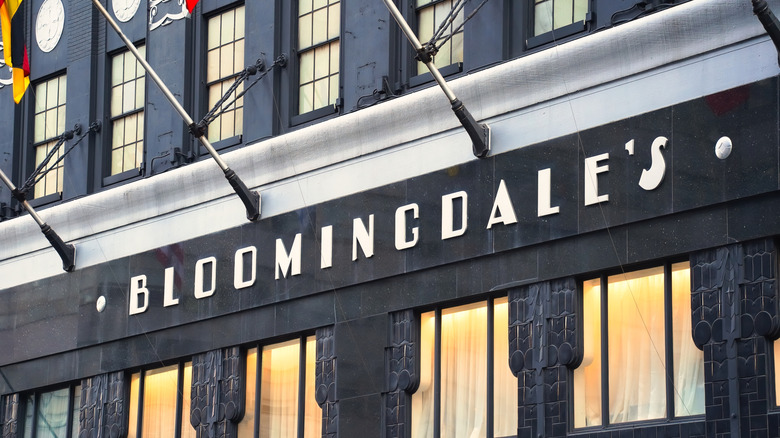
Department store restaurants have run the gamut from cafeterias to luxury cafes, but Bloomingdale's Le Train Bleu took that individuality one step further — it was an actual train car at the top of the building. The name "Le Train Bleu" originally referred to the Calais-Mediterranée Express, a first-class train that went from Calais in the north of France to the French Riviera. The train had dark blue velvet interiors, hence the nickname. The name then referred to a Parisian restaurant opened in 1963 as a tribute to the train. One of the visitors, years later, was Bloomingdale's Marvin S. Traub.
In 1979, Traub placed a modified, widened train car on the roof of Bloomingdale's and connected it to the floor below via a narrow staircase that was hidden from the view of most of the department store. It wasn't exactly a secret, but it wasn't advertised everywhere. You had to find out about it from others, rather than advertisements. The interior was definitely bigger than a regular train dining car, but the decor looked like it could have been in another train on the Calais route. Velvet and mahogany materials and a luggage rack for diners' belongings evoked images of old European trains from earlier in the century. Unfortunately, Le Train Bleu closed at the end of 2016.
7. Charleston Gardens at B. Altman & Co. in New York City
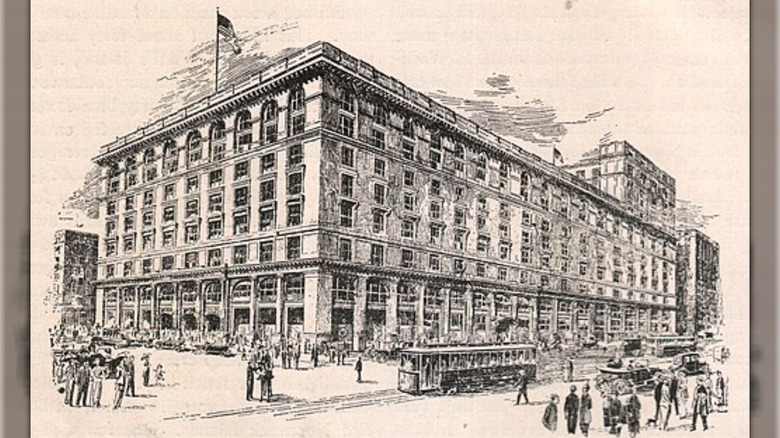
B. Altman & Co. on Fifth Avenue in New York City started as a dry-goods store in the Lower East Side in the 1860s. Its popularity took off, and the store had to move a couple of times, eventually ending up on Fifth Avenue. It became one of the most upscale department stores in the city, selling both cloth and fully finished clothing, glassware, home furnishings, and everything else the savvy shopper of the early 1900s would expect. By the 1930s, the city of Charleston, South Carolina, had become a theme among department stores, and B. Altman was no exception; one line of products was called Charleston Town, and there were rooms with sample furnishings known as the Charleston rooms.
Above those rooms was Charleston Gardens, or The Charleston Garden as it was officially known. This restaurant was decked out to look like a mansion in Charleston, complete with murals of the city, giant columns, and a large Southern porch. Salads, small sandwiches, and desserts formed the majority of the menu. The restaurant was said to have very good food, at least at first; however, by the 1980s, you could find restaurant reviews that called the food awful and advised getting only the tea. B. Altman & Co. closed down entirely in 1989.
8. The Circle Restaurant at Charles A. Stevens in Chicago.
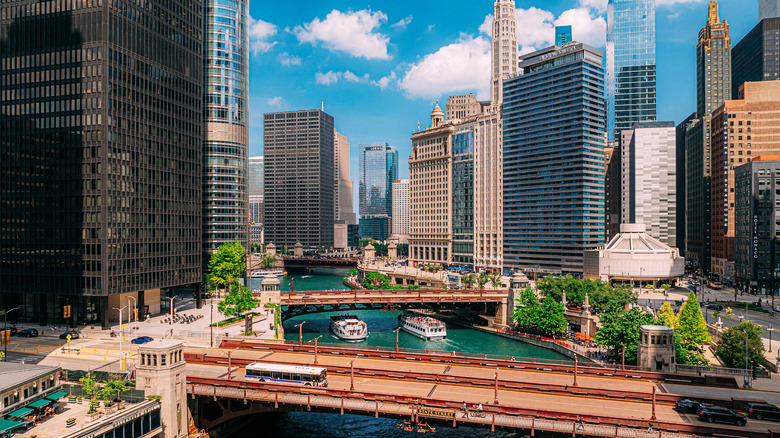
The Charles A. Stevens & Co. department store on State Street in Chicago was one of many well-known department store companies that lined the avenues of the Loop, but it was also the one known for fashion in the mid-20th century. It had come a long way from its start as a catalog business in 1886; its founder, Charles Anthony Stevens, sold silk and sewing notions. However, as the catalog gained more customers, Stevens opened a department store and started selling fully finished clothing. By 1912, the company built what became its flagship store, and over the years, it expanded to several other locations. The flagship was marvelous; most of the upper floors were occupied by smaller shops, but the basement and six floors were Stevens', complete with a beauty salon, fur shop, and award-winning window displays. However, the company was sold in 1986, and by 1988, it had to file for bankruptcy. It closed in 1989.
The flagship store was home to The Circle restaurant, a fairly casual sit-down restaurant with custom-designed furniture. The Circle opened in 1941 and was known for having smaller portions; the restaurant was aimed squarely at women shoppers. Little is known about exactly how long the restaurant was open, but if you look at comments online from former shoppers, they all remember the restaurant. Those small portions really left a big impression.
9. The Magnolia Room at Rich's Department Store in Atlanta
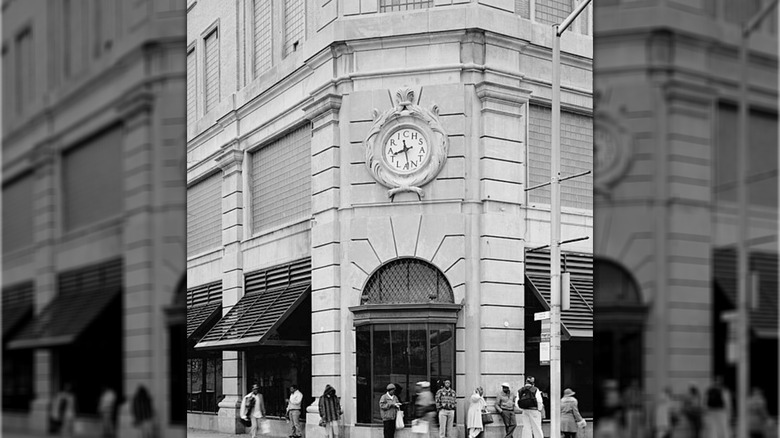
Rich's Department Store was a well-loved chain in the South, with a flagship store in downtown Atlanta. The chain began as a small store in post-Civil War Atlanta; the founders were two Hungarian brothers who thought the recovering city offered some good opportunities. Mauritius and William Reich, who later changed their names to Morris and William Rich, opened that store in 1867 as M. Rich and Co. However, as the store grew more popular, people just started calling it Rich's. By the mid 1920s, Rich's moved into its classic downtown location and expanded into a chain, eventually placing stores in malls.
Shopping at Rich's was a dress-up occasion. Rich's Magnolia Room was located at the downtown store and was an elegant affair in itself, known for coconut cake and chicken amandine with frozen fruit salad: a frozen mass of canned fruit, mayo, marshmallows, cream cheese, food coloring, and powdered sugar. While that might sound odd today, back then, food like that was almost glamorous. But the Magnolia Room was also segregated then, so in 1960, Dr. Martin Luther King, Jr., chose it for a sit-down demonstration that ended with the arrest of 15 people. Rich's closed the downtown store in the 1990s and was later bought out by Macy's. However, the name evokes so many happy memories that when one man reopened Atlanta's S&S Cafeteria in 2018, he renamed it the Magnolia Room Cafeteria.
10. The cafeterias at Fedco in Southern California
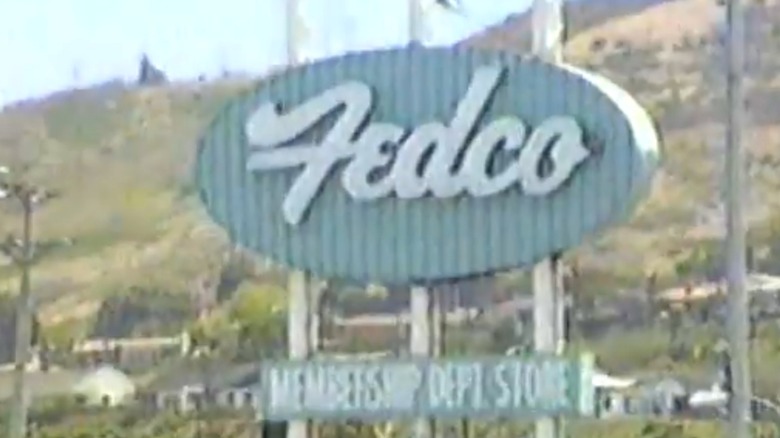
It would be called a big-box store today, but Fedco billed itself as a membership department store. You can thank Fedco if you enjoy shopping at Costco; Price Club founder Sol Price founded FedMart as a rival to Fedco years before he opened Price Club, and it was a Price Club employee who started Costco.
The Federal Employees Distributing Co. opened in 1948 after postal workers contributed money to start a company where they could buy supplies wholesale amid inflation and wage freezes. Fedco originally allowed only federal employees and those retired from federal jobs to join, although membership criteria were eventually expanded. The store expanded to 13 locations throughout Southern California, with the majority in Los Angeles. Fedco remained nonprofit throughout its life and issued lifetime memberships for a few dollars. Unfortunately, it couldn't compete with newer big-box stores and eventually closed all locations by 1999.
Fedco also opened up cafeterias in its stores. They weren't fancy, they had no names, and the menus were of the hot dog/pizza/sandwich variety. But there's a lot of nostalgia for the food, and anytime someone mentions Fedco on social media, you can count on former Fedco shoppers to flock to the comments, reminiscing about "Matterhorn" sandwiches, popcorn, Icees, and "Pizza Pups," which were hot dogs wrapped in a pizza slice. That Matterhorn sandwich was so well-loved that you can find requests for copycat recipes, along with detailed answers.