

12 Strange Food Gifts US Presidents Have Received Through The Years
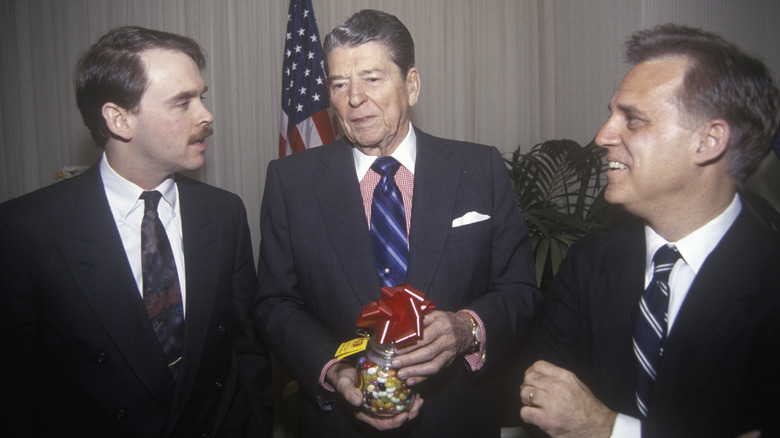
The act of gift giving in politics has long been a tradition between nations' diplomats and from citizens to their country's leaders. Gifts are used in a variety of ways to improve relations, show support, and maximize press. The National Archives are full of thousands of gifts received by U.S. presidents — by law, presidents typically do not personally use or keep gifts, especially if they are perishable. Some of the strangest presidential gifts over the centuries have come in the form of food, whether edible or not.
The United States has a rich history of presidential gifting, but the tradition also comes with a lot of red tape. U.S. Constitutional law (Article I, Section 9) prohibits presidents and other U.S. Government officials from accepting personal gifts from foreign states without the approval of Congress. But gifts from within the country, either from domestic leaders or the U.S. public, are fair game for presidents to keep or toss. Typically, the Secret Service destroys gifts of food and drink to protect the First Family, but it isn't always clear if this happens. Read on to learn the history behind 13 of the strangest food gifts given to U.S. presidents.
1. Thomas Jefferson's 1200-pound mammoth cheese
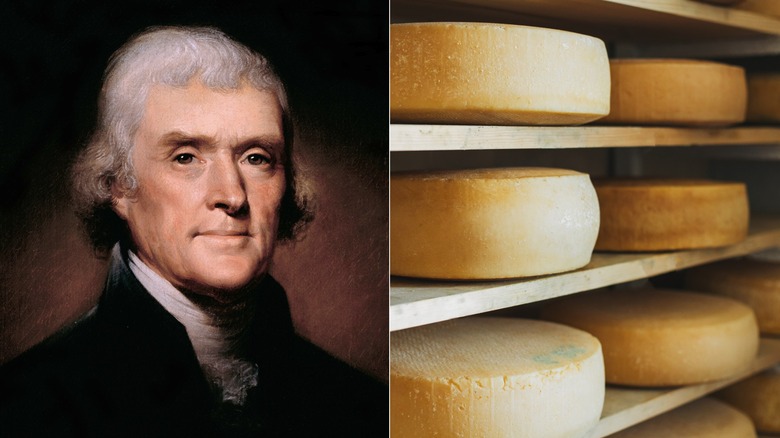
Americans have a penchant for oversized objects, and it might just be in our blood. One of the earliest gifts on record to a U.S. president arrived by wagon near the end of 1801, and its absurd size made it instantly famous. The gift in question? A 1200-pound wheel of cheese made from the milk of 900 cows by a Baptist congregation in Chesire, Massachusetts. It was dubbed the Mammoth Cheese by the Hampshire Gazette in an attempt to explain just how absurd it was.
President Thomas Jefferson was on the receiving end of too much cheese for one person. On the day of its arrival, along with Baptist Elder John Leland, Jefferson wrote to his nephew and friend John Wayles Eppes, "The Mammoth cheese is arrived here, & is to be presented to-day. it is 4. f. 4½ I. in diameter, 15. I. thick, & in August weighed 1230. ℔. it is an ebullition of republicanism in a state where it has been under heavy oppression." Leland presented the cheese to Jefferson in a New Year's Day ceremony; however, Jefferson had a staunch policy of refusing all gifts while in office, and so paid Leland $200 for the offering. According to historical records, the cheese remained in a room at the President's House for at least two years, creating such an impression that Jefferson commonly referred to the room in which it was stored as the "Mamoth Room" in letters to his correspondents. There's no record of it, but we're hoping Jefferson used at least a little of the Mammoth Cheese to make his famed mac n' cheese recipe.
2. Andrew Jackson's 1400-pound cheddar cheese
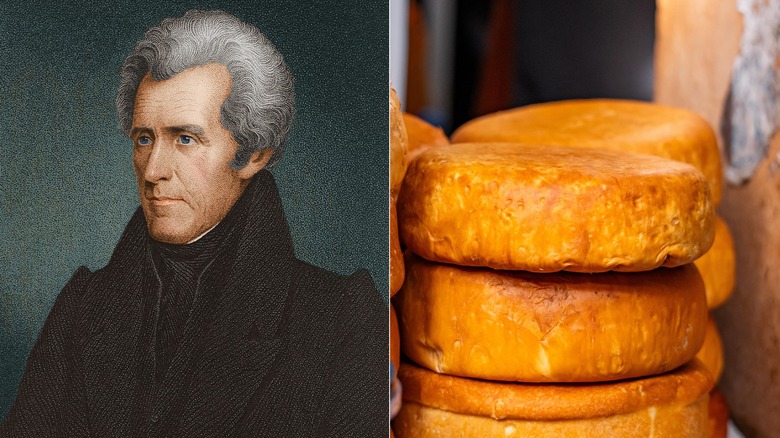
If oversized objects are America's bread and butter, setting new records is a close second. A few decades after President Jefferson's Mammoth Cheese came President Andrew Jackson's one-upping 1400-pound hunk of cheddar cheese. Gifted to the seventh president by dairymen from Oswego County, New York, the largest cheese gift the White House has ever seen arrived in 1835 via a cart pulled by 24 horses.
Jackson held onto the cheese for two years until inviting the public into the White House as a final reception before he vacated the position. According to historical records, the entire city shut down early for the event, and crowds were so large that people who couldn't reach the doors made their way in through windows. Brought together were the average Joes and diplomats of Washington, pulling chunks of cheese from the massive wedge until it was gone. What didn't leave was the smell or staining: The White House floors and carpets had to be removed, and even still, the smell of cheddar lingered for months after the event.
3. Rutherford B. Haye's lemon pig
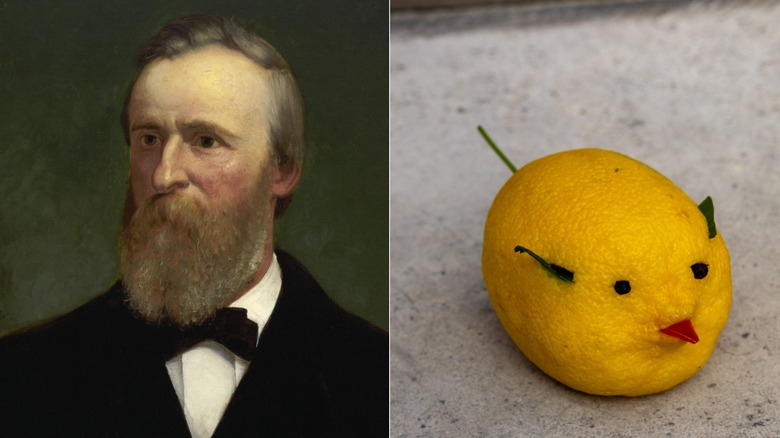
It's not entirely clear who gifted the nation's 19th president with a homemade lemon pig, but it's safe to say they probably never would have guessed just how long the little piggy graced archive and museum shelves in Washington, D.C. The pig featured a carved lemon with matchsticks for legs and a curly twine tail. In recent years, lemon pigs have seen a resurgence in popularity as a New Year's tradition meant to bring the creator good luck for the year ahead.
Haye's lemon pig may have been inspired by his wife and First Lady, Lucy Hayes, who abstained from alcohol. This earned her the nickname "Lemonade Lucy." What neither could have predicted was that the small gift would be put on display in 1992 in an exhibit of strange gifts sent to U.S. presidents at the Herbert Hoover presidential library and museum. Said Richard N. Smith, the museum director at the time, "It looks a little like you'd expect a 110-year-old lemon to look."
4. William Howard Taft's Presidential cow
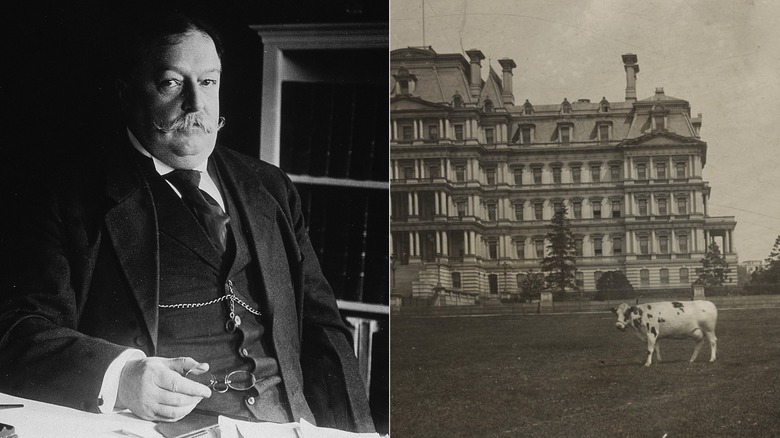
It was not unusual for U.S. presidents to keep cows grazing on the White House lawn around the turn of the 20th century due to Washington D.C.'s lack of milk delivery companies. In 1910, after the death of his beloved cow Mooly Wooly, President William Howard Taft received a 1500-pound Holstein-Friesian from a Wisconsin State Senator named Isaac Stephenson. Her name was Pauline Wayne, and she arrived in a large crate via train all the way from Stephenson's farm in Kenosha, Wisconsin.
Pauline's primary purpose at the White House was producing dozens of gallons of milk weekly, and she was so well-known that her milk was sold in souvenir bottles for 50 cents at the International Dairymen's Exposition of 1911. Pauline received a lot of positive press in her time as Taft's dairy cow and pet, and her cowbell sits on display at the Presidential Pet Museum.
5. Calvin Coolidge's Thanksgiving raccoon
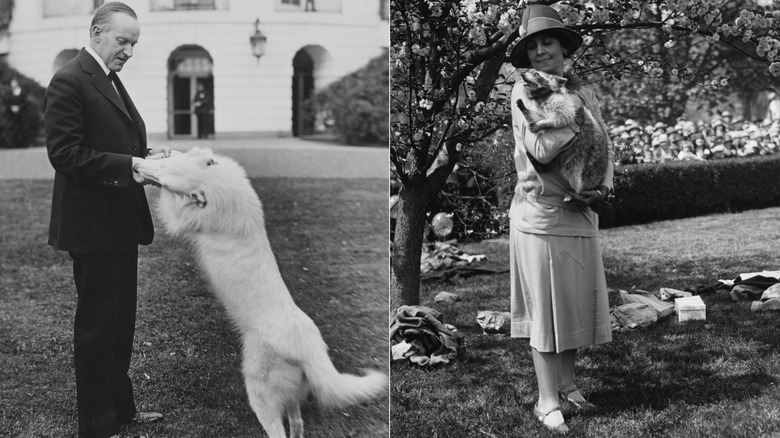
Each year, companies and citizens alike send perishable gifts around holidays with the hope that the First Family may enjoy these offerings on their holiday tables (and maybe, in the case of companies, bring in some decent free press). One such gift arrived at the Calvin Coolidge White House in November 1926 from Mississippian Vinnie Joyce. Joyce shipped a wriggling soap box to the White House containing a live raccoon intended to be killed and eaten for Thanksgiving dinner. Joyce described raccoon meat as "toothsome." Coolidge, having never eaten raccoon meat and not particularly keen to try, couldn't bring himself to send the animal to slaughter. Instead, he named her Rebecca.
It wasn't too unusual a move for President "Silent Cal" Coolidge, who had a gaggle of beloved pets, including dogs, cats, and birds. Rebecca became Coolidge's well-known pet, frequently showing up at events like the annual Easter Egg Roll. According to First Lady Grace Coolidge, Rebecca's hobbies included playing in the bathtub and traveling with the family on vacations. Rebecca lived a pretty blessed life in the most famous house in the United States– a far cry from becoming dinner.
6. Franklin D. Roosevelt's 30-pound cherry pie
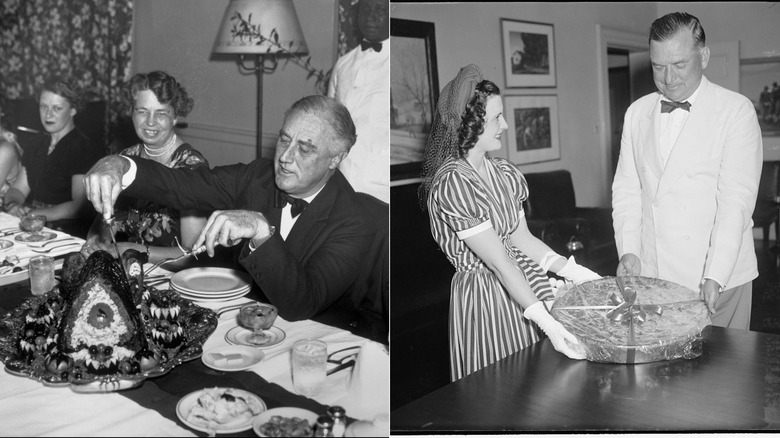
Gift giving to U.S. presidents is often tied to state pride. Who wouldn't want to show off the best of their state's exports? Michigan's climate is one of the best around for growing a plethora of summer fruits, including cherries. The state's residents love their cherries so much, they host an annual National Cherry Festival, which celebrates its 100-year anniversary in 2026. Cherry pie may have been George Washington's favorite dessert, but it was President Franklin D. Roosevelt who received the ultimate cherry pie gift.
In 1939, one young Michigander had the opportunity to wow President Roosevelt. Jean Halmond was 19 when she took the crown as National Cherry Queen at that year's festival and used her culinary prowess to prepare and bake a 30-pound cherry pie for the president. The stunning dessert, which was about quadruple the size of a standard 9-inch pie, was handed over from Halmond to Presidential Secretary Edwin M. Watson, wrapped in plastic and tied with a bow. If a standard pie holds about six cups of cherries, it's not unreasonable to imagine this beast containing somewhere around 24 cups. Hopefully, Miss Halmond was careful to remove all those pits!
7. John F. Kennedy's two dozen eggs
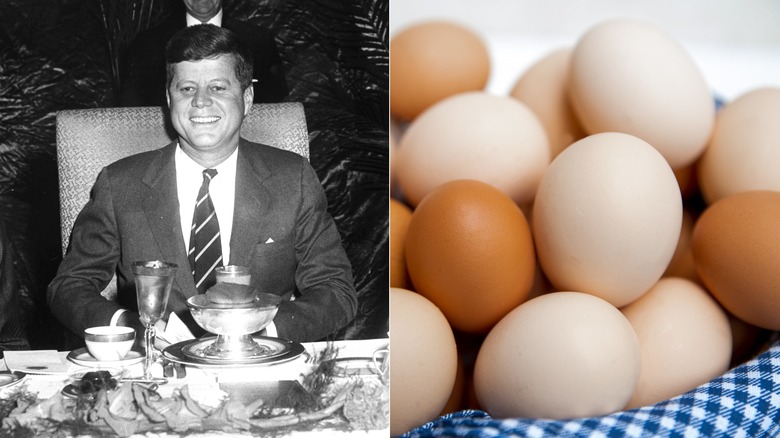
Gifts from the American people stream into Washington, D.C. during every presidency and include everything from local memorabilia to handmade art. These gifts find their home in the National Archives unless they are extremely valuable or perishable, in which case they are often returned or destroyed, respectively. Some of these gifts come via mail, and some — like this interesting pick for President John F. Kennedy — arrived by personal delivery from the gift giver themself.
One such gift arrived the early morning of June 28, 1961, according to documentation taken by a White House security agent. A private citizen, Irving Freed, personally delivered two dozen fresh eggs for the president and a silver dollar for his young daughter, Caroline. The exchange was brief, with Freed simply leaving the eggs for JFK with the security agent before departing. Among JFK's favorite breakfast foods was poached eggs, which may have inspired this unusual offering. No word on whether the eggs made it into the Executive Residence's kitchen or were tossed by security.
8. Richard Nixon's two grains of rice
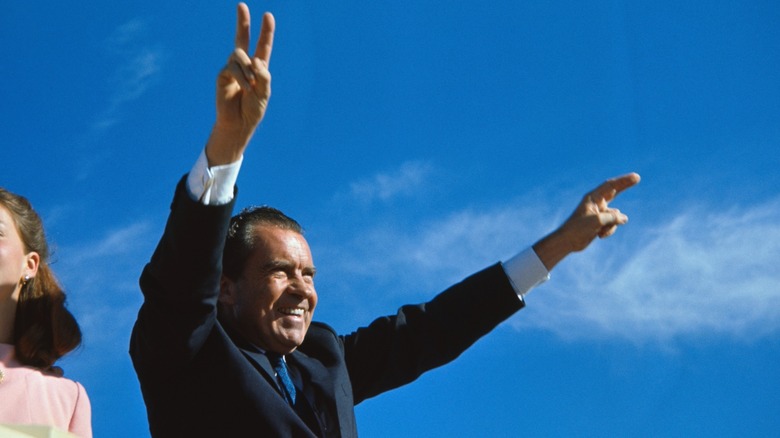
Food gifts to U.S. presidents haven't always been edible; foodstuff can, in fact, make quite an interesting medium for artistic expression. One such example of this occurred during Richard Nixon's time in office. A Pakistani citizen named S. Nabi Ahmed Rizvi sent President Nixon a blue velvet box containing a magnifying glass and two grains of rice, on which he had painted in exquisite detail two portraits of the president. One grain showcased Nixon as president, and the other depicted a young Nixon during his service in the Navy.
The inspiring display of artistic skill was showcased in a 1993 exhibit presented by the National Portrait Gallery titled, "To the President: Folk Portraits by the People." While Rizvi's art was the star of the show, other food-based works of art were also on display, including a peach pit carved in John F. Kennedy's likeness and a Ronald Reagan mosaic of jelly beans.
9. Ronald Reagan's Jelly Beans
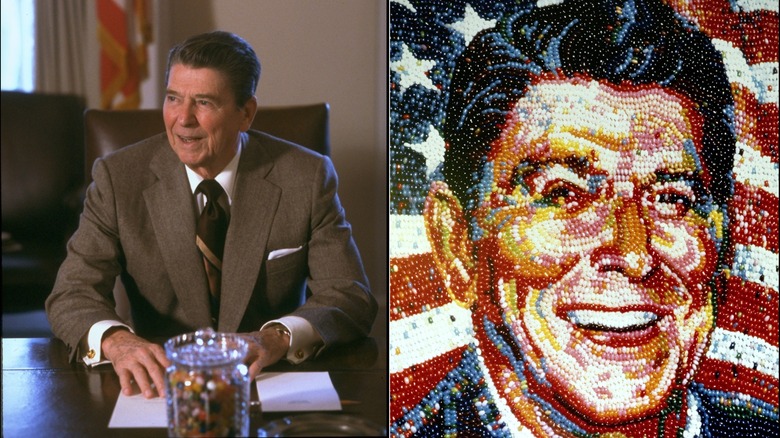
For President Ronald Reagan, jelly beans were the gift that kept on giving throughout his two terms in the Oval Office. But Reagan's obsession with the candy began long before his presidency, during his campaign for the Governor of California in 1966. The nation's 40th president used jelly beans to successfully curb his pipe-smoking habit by keeping a custom-designed jelly bean jar on hand. Soon after, it became well-known that jelly beans were Reagan's favorite snack. The Herman Goelitz Candy Co. and Goelitz Confectionary Co., an Oakland-based company, kept Reagan's Governor's Office stocked with a monthly delivery of jelly beans for his two-term position as Governor, and it wasn't uncommon to see Reagan in meetings with a jar of the chewy candy within arm's reach.
The Herman Goelitz Candy Co. and Goelitz Confectionery Co. would later be rebranded to the company we know and love today: Jelly Belly. Reagan maintained a relationship with the candy company, which sent three and a half tons of red, white, and blue jelly beans to the President's 1981 Inauguration. Jelly Belly eventually began producing a small jelly bean jar featuring the Presidential Seal, which Reagan regularly gifted to White House guests and heads of state.
The jelly-bean-obsessed president even inspired artwork in his image: In the 1980s, San Francisco artist Peter Rocha crafted a mosaic portrait of Reagan entirely of Jelly Belly jelly beans... around 14,000 of them. The varnish-sealed masterpiece now hangs in the Reagan Presidential Library.
10. George H.W. Bush's pork rinds
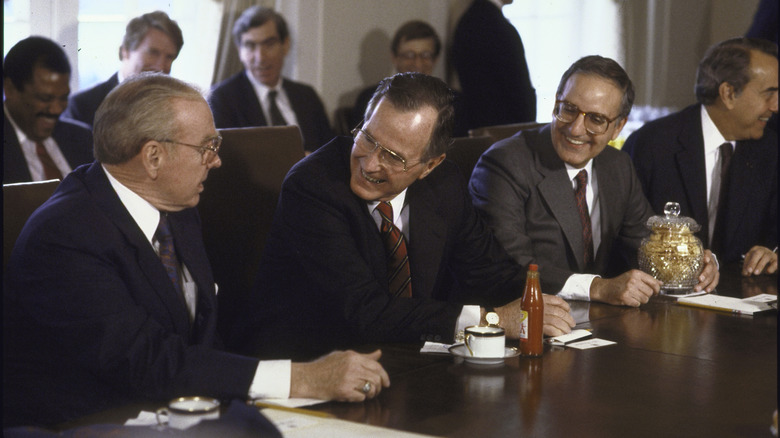
The United States' 43rd president was a bit of a culinary trendsetter in the '80s, bringing to the forefront of national chatter the humble pork rind. Made from the fresh hides of hogs, pork rinds are dried, smoked, and fried to crackling, crispy perfection before being enjoyed plain, with toppings like hot sauce, or even as a crunchy salad topper.
Bush Sr.'s affinity for this salty snack became clear during his presidential campaign, and it led to a noticeable increase in pork rind sales for companies like the Rudolph Foods Company. Founder and president of Rudolph Foods Company, John E. Rudolph, told the New York Times in 1989 that employees were having to work overtime to meet the demand. The company even began producing pork rinds under a special red, white, and blue label, dubbed the President's Favorite. It should come as no surprise that Congressional leaders seeking to curry favor with President Bush gifted him pork rinds on at least one occasion as an act of goodwill.
11. George W. Bush's raw lamb meat
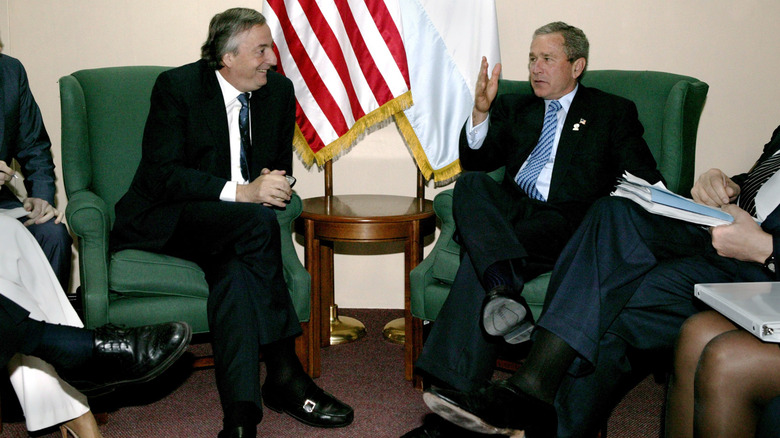
There isn't a lot of context around the most unusual food gift received by George W. Bush, but we can paint a picture: The year is 2003 and Nestor Kirchner wins Argentina's general election in the spring, becoming president of a nation with deep roots in sheep farming across the Patagonian landscape. In what is presumably his first gesture of hospitality toward the U.S. president of the day, Kirchner presents Bush with 300 (!) pounds of raw lamb meat.
Perhaps it was a move informed by Bush's West Texas ranch upbringing. Or maybe it was meant as a demonstration of one of Argentina's finest edible exports. Either way, the hyper-fresh offering could not be stored in the National Archives with other presidential gifts due to its perishable nature, and it was handled by the General Services Administration. We may never know if the Bushes enjoyed braised shanks and grilled lamb chops throughout 2003 or if the meat was simply destroyed by the Secret Service. It's the thought that counts.
12. Barack Obama's life-dize gingerbread man
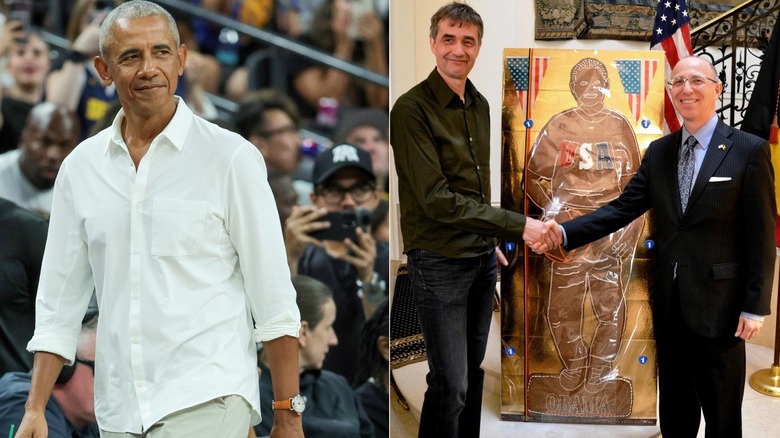
President Barack Obama received a lot of thoughtful gifts throughout his presidency from diplomats and citizens alike, but this odd offering didn't likely win brownie points with the former commander in chief– and not just because it was gingerbread. In March 2014, a "satiric" story ran in Belgian newspaper De Morgen, depicting both President Obama and First Lady Michelle Obama as apes. Surprising to no one, it was not received as satire and was heavily criticized in both Belgium and the United States for its overt racism before the paper issued an apology.
In February 2014, with Obama's trip to Europe on the horizon, hosts of the radio show Fallow on Radio 1 in Belgium quipped that it would be fun to present the U.S. president with a giant gingerbread cookie. They sought out a local baker to design and produce a cookie, likely unaware that it would become official state business. In a hasty attempt at reconciliation after the racist caricature was published, Belgian officials hopped on board the cookie train to add a little sugar to the situation. The baker's artistic decisions went over well when delivered to officials at the U.S. Embassy in Brussels, despite the life-sized cookie Obama sporting a casual athleisure look, holding a basketball.