

The Gross Kitchen Cleaning Habit Newer Generations Have Left In The Past (Fortunately)

We may receive a commission on purchases made from links.
Our grandparents had some interesting kitchen habits — including some that (thankfully) haven't stood up to the test of time. While there's no doubt Grandma did her absolute best to keep her kitchen clean, we now know that certain habits did the opposite of creating a food-safe environment. One of those habits: using the dishwashing sponge as a catch-all cleaner for counters, the stovetop, and more. While it's certainly convenient to have a go-to cleaning sponge in the kitchen, the practice readily spread germs and bacteria across counters and onto other surfaces that should have been food-safe, increasing the likelihood of foodborne illness.
Instead of using the old-school kitchen sponge on the counter method, many are making the safer choice of using a clean cloth with a bit of dish soap. In the event that you do need to use a kitchen sponge to clean your counter (for example, you've just kneaded bread dough and need a scrubby surface to get your counters clean), use a brand-new one. After you're done, wash it thoroughly, and don't be afraid to toss it if you're unable to remove visible bits of debris. If you're looking for a sponge you can clean in the dishwasher, consider trying a Scrub Daddy — they're super durable and dishwasher safe.
How to keep your kitchen sponge clean
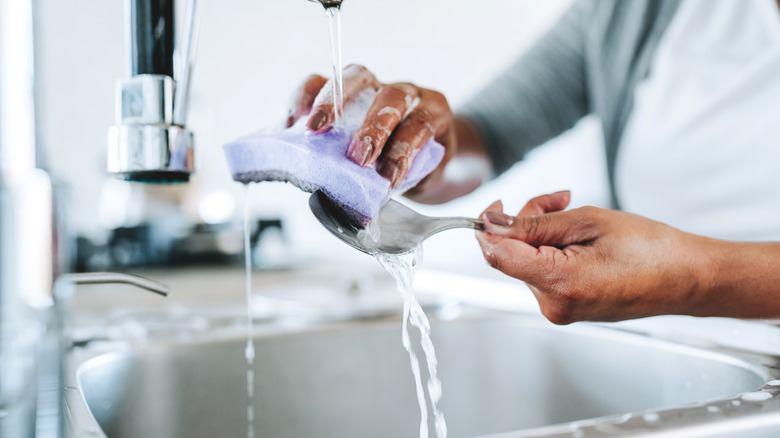
You know that you shouldn't use your kitchen sponge to clean your countertops — but how long can you use the same sponge in your sink? Replacing your sponge at regular intervals can stop it from becoming a germ-spreading menace that does the opposite of helping you keep your kitchen clean. There's not a hard-and-fast rule about how often you should replace your sponge, but you'll want to toss it as soon as you notice that it's showing signs of wear and tear — or if it's getting stinky. To help extend the life of your sponge, take a few minutes each day to give it a wash. Use a bit of dish soap and hot water, and be sure to wring it out thoroughly.
You might have heard about the old trick of tossing your sponge into the microwave for a minute to kill bacteria. While research shows this does reduce the amount of bacteria on a sponge's surface, it doesn't eliminate the bacteria completely, so it's best to just replace your sponge if you notice it's starting to get a little funky (before it hits the trash can, you can use your old sponge to clean stubborn spots in your home that don't have contact with food, like the interior of your garbage can). If you decide to microwave your sponge, make sure it's saturated with water, then let it heat up for a minute or so. If you notice a stale odor when you open the microwave, it's likely that it's time for your sponge to be replaced.