

This Is The Frozen Trader Joe's Ingredient That Gives My Grocery Budget Some Breathing Room
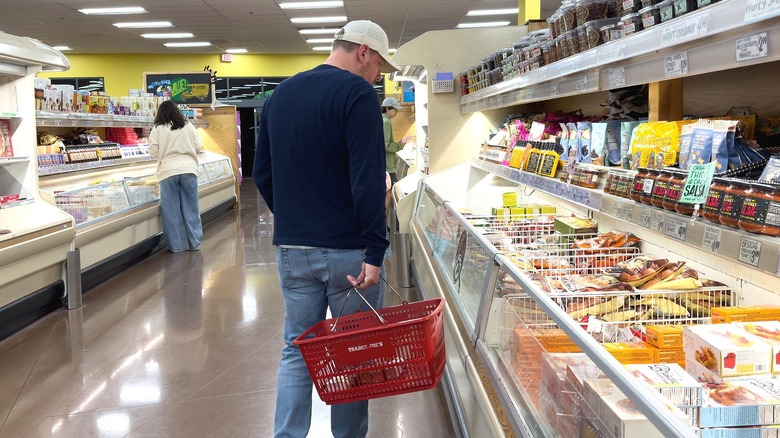
My grocery shopping lists have gotten shorter as prices have gone up, and I know I'm not the only one who's ever spent time crossing off items and calculating the exact total. Protein has been especially difficult to cut. I eat cheaper options like beans and eggs, but there are times when only meat or poultry will do. However, they've also increased quite a bit in price. (You won't believe how much a pound of ground beef cost in 1970 compared to today.)
Enter Trader Joe's and its four-pack of frozen turkey burgers. These are quarter-pound discs of ground turkey with nothing else but salt and rosemary extract. The patties have 22 grams of protein each. As of mid-January 2026, they cost $3.79 per box. That's 1 pound of turkey, already formed and seasoned, for less than $4.
The Walmart near me sells turkey patties in a 2-pound box for $9.12, nearly a dollar more per pound than Trader Joe's. If you're going to say a tray of plain ground turkey would be cheaper, yes, I can find a cheaper item; Walmart's got a 16-ounce chub for $1.98. But it's frozen, meaning I'd have to thaw the whole thing, divide it, re-freeze the remainder, and season and form the patties. That's not hard if you've got the time and ability to do it. But if you're busy or have health conditions that make that work more difficult to do, it ends up not being a great deal. My days necessitate quick food preparation, so Trader Joe's works best for me.
The easiest way to cook these turkey burgers
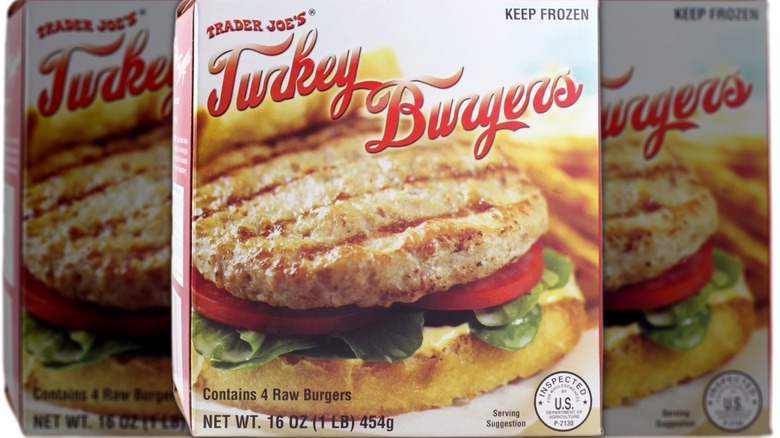
With these Trader Joe's turkey burgers, there's no need for advance thawing. Cook these from frozen either on a grill you've preheated or in a pan with some oil. Give them six to eight minutes per side, check them with a meat thermometer, and you're ready to go. They are raw patties, so don't set the heat too high because the center needs to cook properly while not letting the exterior burn (raw turkey is a major cause of foodborne illness at Thanksgiving, but it can strike any time). That meat thermometer needs to read at least 165 degrees Fahrenheit when the burgers are done.
You may notice meat "bubbles" forming on the patty. This is steam percolating up into the meat and causing the protein to pop up. You can remove the bubbles with the edge of a turner or leave them alone, as you prefer.
They do spatter a lot, so cover the pan with either a splatter screen or a lid. If you use a lid, the burgers will end up steaming instead of searing, but they still cook through and taste good. I admit I use the glass lid that came with my fry pan so I can monitor the patties as they cook (and because I keep forgetting to buy a splatter screen). Steaming is fine with me, though, if it cuts down on the amount of grease that flies onto the stovetop. As for serving, these patties have a mild flavor and play well with different burger toppings (the ideal amount is up to you). I've even cut them into strips after cooking to wrap in a tortilla. Enjoy.