

Grits Or Oatmeal: Which Serves The Biggest Protein Punch?
We may receive a commission on purchases made from links.
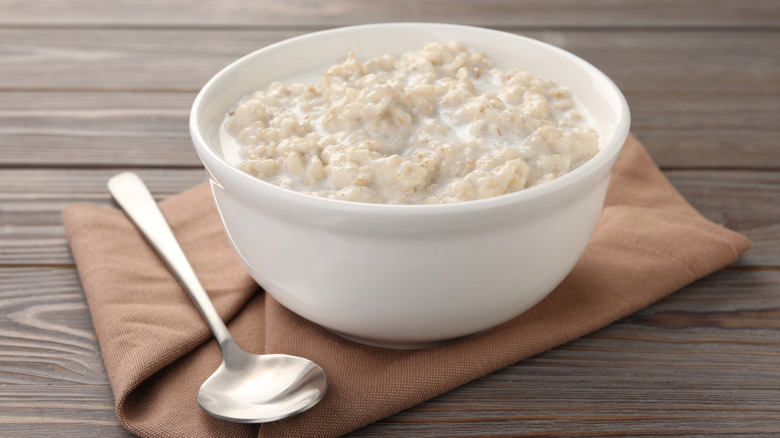
If you're hoping to cram some protein into your breakfast and choosing between grits and oatmeal, know that oatmeal generally delivers more protein than grits when comparing typical servings of the two. Oatmeal — especially in whole-grain or protein-enhanced varieties — typically has a higher protein content than plain old corn grits. For example, a 28-gram packet of Quaker original instant oatmeal contains 4 grams of protein. Generally speaking, oats have a protein content of around 11% to 17% by weight. Of course, you can get protein-boosted varieties from brands like Quaker, but we'll leave those out here since it should be little surprise that this version has more protein in it (around 20%, for the record).
In contrast, a comparable serving of Quaker's original instant dry grits have 2 grams of protein in a 28-gram packet (as do most of the flavor varieties), both a lower proportion and a lower total amount of protein compared to oatmeal. Uncooked grits are around 8% protein overall. This difference reflects the grains that are used for each product: Oats are whole grains with a higher proportion of protein and fiber, while grits are made from ground corn and often have less protein unless fortified (although it doesn't seem that companies like Quaker offer a protein-boosted grits product, as they do with oatmeal).
Are oatmeal or grits high-protein breakfast foods overall?
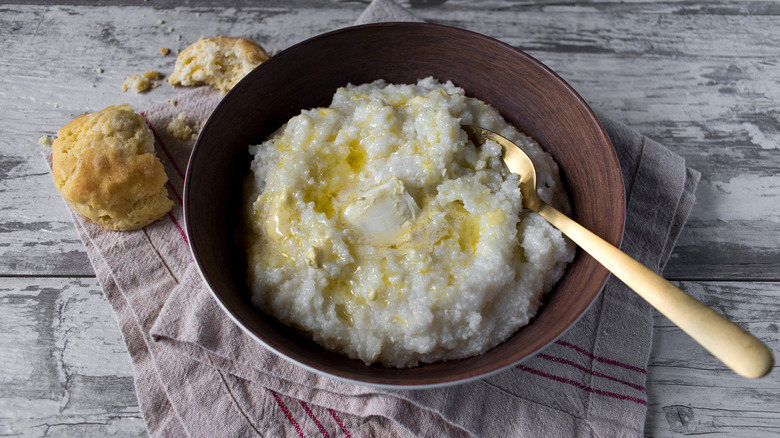
If pure protein content per serving is your metric, oatmeal packs a bigger punch than grits. But relative to other breakfast foods, you can probably get more protein elsewhere. Let's start with grits: These are considered a pretty low-protein food overall. They're corn-based, and corn is generally not considered to be a great source of the macronutrient. It's a little tougher to assess whether oatmeal is a "high" protein food overall. Some nutritional sources argue that they are high in protein, but this is often considered relative to other grains. Realistically (and again, we're excluding oatmeals that feature added protein), oats are probably more of a medium-level protein source.
A basic serving of either alone is not high in protein compared with eggs, Greek yogurt, or meat. Of course, if we're talking about prepared grits or oatmeal, there are easy ways to add more protein to these breakfast staples. For oatmeal, you can prepare it with ingredients like Greek yogurt or cottage cheese, or add toppings like nuts or seeds. (When it comes to dairy, bear in mind that protein levels vary: Regular yogurt and milk are lower in protein than Greek yogurt and cottage cheese, for example). Obviously, you could just dump a scoop of protein powder in there, too. With grits, it's arguably even easier, as the classic Southern-style add-ins center around high-protein ingredients such as shrimp, eggs, cheese, or sausage. Of course, you can also take a savory route with oatmeal and add meat or eggs, too. That means that if you want a protein boost in the morning, it's not just about the base grains, but also how you prepare your grits and oatmeal.