

The Tell-Tale Signs Your Steak Has Gone Bad
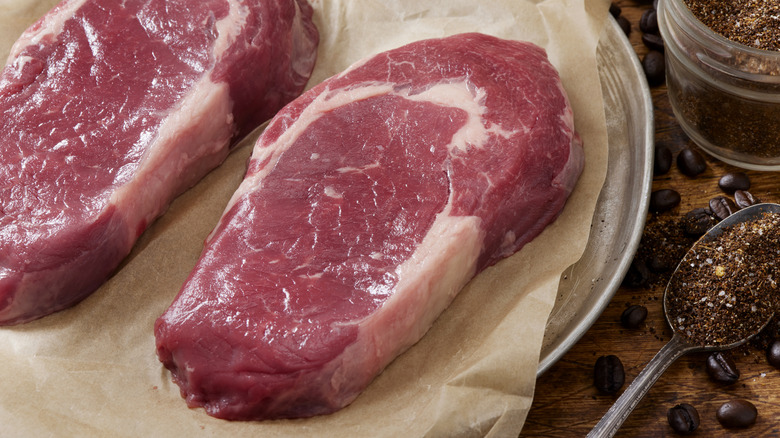
If you've ever forgotten about a piece of meat sitting in the corner of the freezer for who knows how long, trust you're not alone. Aside from not being able to save money and cut down on food waste, leaving expired food in the fridge can also pose health risks if you don't know what to look for. To see if your meat is still safe for dinner or if it belongs in the garbage can, you'll want to look for odd smells and textures, along with other clues that can either be obvious or sneaky.
While expiration dates on the packaging are a good guideline for freshness, you don't have to be completely reliant on them. According to the USDA, when meat passes its best-if-used-by date, it can still be safe to eat — but not always. If proper handling is observed and there are no tell-tale signs your steak has gone bad, you can eat frozen meat that has expired. For a more solid benchmark when it comes to spotting expired meat, here are the tell-tale signs your steak has gone bad.
Funky smell and weird texture
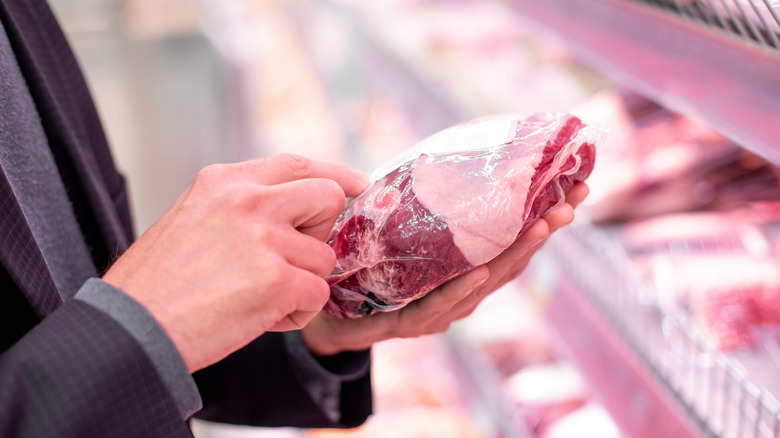
When you open the packaging, get a whiff of the meat. It's one of the easiest ways to tell whether the steak has gone bad. Meat that is still safe for consumption can smell metallic, and while it's still not a super pleasant aroma, that's just how steak usually smells. Meanwhile, a bad steak smell is when there's a rotten egg-like scent that you just can't stomach. Sometimes it can be sour, coupled with other signs. If you think it smells rotten, then it usually is. If there's any uncertainty, it's best not to consume it at all. However, there are pre-seasoned steaks on the market that carry a strong marinade aroma, which can make them harder to detect as fresh. In this case, you can look for other signs it has gone bad, regardless of the smell.
For instance, a good steak should feel dry and springy. If there's a slimy film, without a doubt, throw it out — but the smell has most likely already thrown you off by then. Extremely dry meat, and possibly even rough and slimy, is another solid piece of evidence. You can further assess its freshness by pressing the meat and seeing if it springs back. If it doesn't, it's either way past its prime, or the quality is simply poor. Admittedly, the latter can make it confusing, but you can check for other signs of spoiled meat if you're not entirely sure.
Discoloration and mold
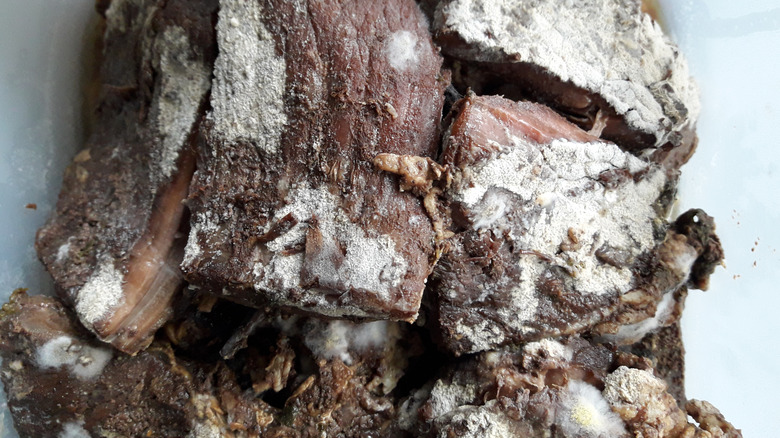
Fresh raw steak should have a bright red color. A dull-colored, uncooked steak is not a good sign. We're not talking about it simply turning brown here. Steak tends to brown, and that's completely normal as it matures. There are some cases, especially when it's in vacuum-sealed packaging, where steak can look a bit browner, too. Ideally, you should look for a really discolored steak in a lackluster gray or sickly green. Yellow spots are another obvious sign of bacterial growth.
Mold, a cotton-like growth, is a clear indicator of spoilage, whether it has developed a whole new ecosystem on your meat or it looks like a small, harmless dot. What appears to be a small area visible to the naked eye has actually developed deeper than you think. Obviously, you don't want to accidentally ingest moldy food, but remember not to inhale any spores by sniffing the steak, either.
Bloated packaging
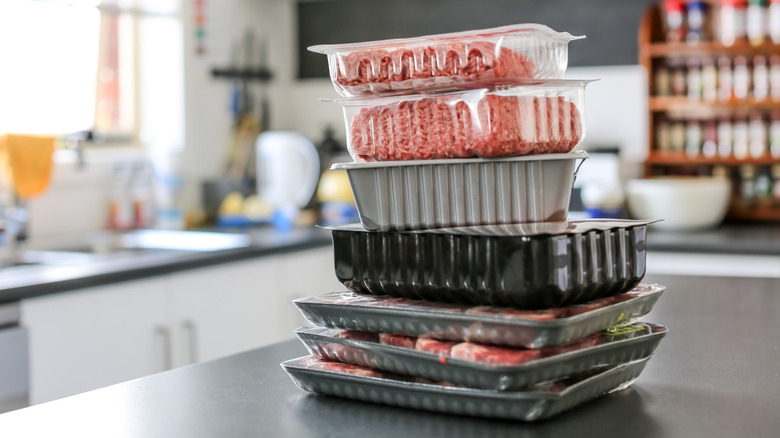
You can tell a lot about a meat's freshness just based on the packaging. No, we're not talking about the best-before date. Swollen meat packaging is a red flag, and can be a sign that it's time to get rid of it. However, this isn't an absolute rule since there's another reason why meat packaging bloats.
To prolong the freshness of the meat and help keep its hue vibrant, meat sometimes undergoes modified-atmosphere packaging, which consists of filling the container with gases such as nitrogen, carbon dioxide, or both. There are also less chemical preservatives and additives with this process, so in some cases, bloating is actually a good sign. This is typically present in meat encased in Styrofoam packaging with a plastic wrap or vacuum seal. These types of meat are still safe to consume, especially if you've bought them recently. When in doubt, however, check for other signs of spoilage. But, of course, it's always better to be safe than sorry.